
1.
Conestoga College 4.7/5 (21 reviews)
2.
British Columbia Institute of Technology (BCIT) 4.85/5 (7 reviews)
3.
Mohawk College 4.7/5 (7 reviews)
4.
Southern Alberta Institute of Technology (SAIT) 3.4/5 (8 reviews)
5.
Northern Alberta Institute of Technology (NAIT) 3.15/5 (6 reviews)
6.
Centennial College 4.55/5 (9 reviews)
7.
St. Lawrence College 5/5 (4 reviews)
8.
Humber College 4.7/5 (28 reviews)
9.
Fanshawe College 4.3/5 (7 reviews)
10.
George Brown 3.55/5 (11 reviews)
11.
Seneca College 4.4/5 (37 reviews)
12.
Durham College 4.75/5 (4 reviews)
13.
Red Deer Polytechnic 5/5 (1 reviews)
14.
Algonquin College 4.6/5 (12 reviews)
15.
Canadore College 4.8/5 (5 reviews)
16.
Sheridan College 4.8/5 (5 reviews)
Conestoga College


Conestoga College is one of the fastest growing colleges in Ontario and a leader in polytechnic education. Students across southern Ontario in Kitchener, Waterloo, Cambridge, Guelph, Stratford, Ingersoll and Brantford have access to industry standard equipment that is used in project-based courses, supplemented with apprenticeship and co-op opportunities. Conestoga has more than 4,000 students in co-op programs, covering 64 areas of expertise. Conestoga prides itself on what it refers to as “technology-enhanced learning,” which connects students to lessons through online programs and mobile devices. That helps students stay ahead of the curve when joining an ever-growing digital workforce.
What Students Are Saying
“I am not a student but a business owner. My experience recruiting carpentry and woodworking graduates from Conestoga has been excellent. My company depends on graduates from Conestoga for a variety of woodworking jobs and we are proud to support the college in whatever way we can. I would encourage people who want to work with their hands and contribute to building critical infrastructure and homes for people to live in, who enjoy good pay, and who want to take advantage of the many job opportunities available for skilled trades people today, to consider Conestoga. ”
Marco Romano, Carpentry and Renovation Technician
Popular Programs
Conestoga offers 60 trades programs. Students can enroll in one advanced diploma program, 12 certificate programs, 14 diploma programs and an impressive 33 college certificate programs. Conestoga offers students some of the best variety for trades skills all within the same walls, giving students the chance to see a variety of skilled trades in person. Industries such as construction, motorcycle repair, carpentry, woodworking and welding are covered.
Conestoga has one of the largest electrical training facilities in the province, while its woodworking and cabinetmaking programs are among the best-of-their-kind in Canada. Also noteworthy is The Women in Skilled Trades General Carpenter Pre-Apprenticeship program, which provides the skills needed to earn an apprenticeship, and start working with industry standard equipment. Each of the programs range in duration from a number of applied hours required to three-year diploma programs.
Locations
Kitchener, Doon, Waterloo, Cambridge and Guelph, Ontario
British Columbia Institute of Technology (BCIT)


The British Columbia Institute of Technology (BCIT) is one of the largest postsecondary institutions in the province, and its biggest trades training provider. The Burnaby-based school prides itself on delivering real-world technical skills through programs designed to teach you a trade and get you into the workforce in as little as six months.
As part of its focus on practical, hands-on education, students have access to highly specialized labs and equipment, from welding and automotive shops to actual jets and ships. That focus on real-world prep pays off for students: according to school statistics, nearly half of graduates found a job in under a month, and 90 per cent were employed within 4 months, earning an average $24 an hour.
Popular Programs
BCIT’s school of Trades & Apprenticeships delivers 118 specialized programs and 137 standalone courses in transportation, electrical, mechanical and construction trades. The construction field alone has 48 full- and part-time programs, including carpentry, house inspection, interior design, ironwork, plumbing and security systems. Among its popular programs is the telecommunications systems technician, a full-time, in person certificate program teaching transferable skills widely used telecom technology such as fibre optics and Voice over IP (VOIP). Also notable is Trades Discovery for Women, a 16-week full-time program, teaching hands-on skills in 15 different trade disciplines, including piping, welding, wiring, and automobile and aircraft wiring systems.
Locations
Burnaby and Vancouver, British Columbia
Mohawk College


Mohawk College in Hamilton, Ontario offers 19 apprenticeship programs, making it one of the best choices to get started in the trades. In fact, Mohawk is the largest trainer of apprentices in the province, with nearly 3,000 apprenticeship students each year. The college’s Stoney Creek campus in eastern Hamilton is the home of the Marshall School of Skilled Trades & Apprenticeship. Mohawk’s partnership with McMaster University gives students in automotive engineering technology, automotive and vehicle engineering technology, and biotechnology a rare opportunity to enjoy 700 hours of experience in a state-of-the-art university lab.
Popular Programs
The 19 apprenticeship programs include a variety of areas that students can work in, such as auto body and collision damage repair, general carpentry, metal fabrication and welding. Ontario College Certificates can be earned in 14 programs such as construction techniques, gas and oil burner technician, and utilities systems operator. Diplomas are available in seven programs: construction engineering technician, construction engineering technician and building renovation, electrical engineering technician, general arts and science, manufacturing engineering technician, mechanical technician, and motive power technician.
Locations
Hamilton, Ontario
Southern Alberta Institute of Technology (SAIT)
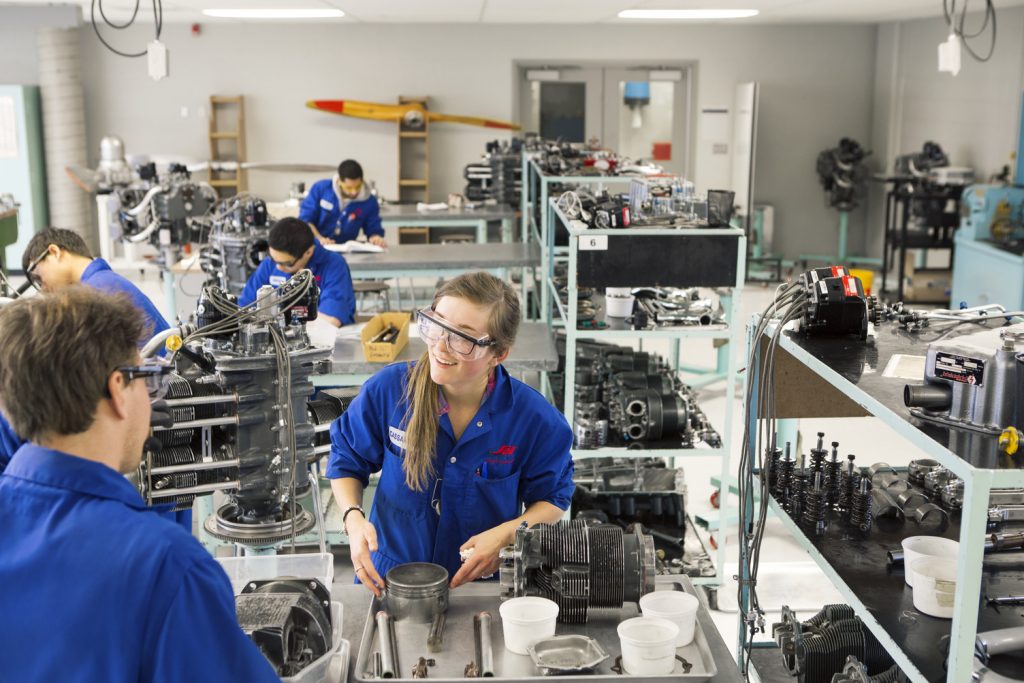

The Southern Alberta Institute of Technology was founded in 1916 (with 11 registered students that year), making it the second oldest post-secondary institution in Calgary. Since then, the school has grown into one of the best destinations in Canada for those looking to learn a skilled manual trade. More than 11,000 industry partners assist SAIT in developing programs that students will get employer demanded skills from, and with 91 per cent of graduates getting hired within a year of leaving SAIT, and an average post-grad salary of more than $52,000, SAIT produces some of the best equipped graduates in the country.
What Students Are Saying
“The Electrician program saved me a lot of grunt work. Compared to pre-employment graduates or people who start apprenticeships without work experience, you are basically jumping the line. Really good instructors and so many relationships with companies that you're going to get a good job out of this program if you do the work. I had a retail job in Calgary until I was 23, which is when I decided I wanted to challenge myself and start a new career. Looking back, I wish I started at SAIT sooner! ”
Chris Williams, Electrician
Popular Programs
There are more than 30 construction, trades and apprenticeship programs for students to discover at SAIT organized and administered by the School of Construction. Certificates in areas like pre-employment welding, machinist technician, or pre-employment carpenter are earned in the classroom in 12 weeks. Diplomas in Civil engineering technology, architectural technologies, engineering design and drafting technology and geomatics engineering technology can be earned in two years. A popular bachelor degree in the science of construction project management is also available. Apprenticeship options in areas like welding, sheet metal worker, roofer, glazier, concrete finisher, and bricklayer are also popular among students.
Locations
Calgary, Alberta
Northern Alberta Institute of Technology (NAIT)


The Northern Alberta Institute of Technology is one of the largest producers of trades students and apprentices in Canada, with more than 10,000 each year. More than 40 trades and apprenticeship programs are offered at NAIT, giving thousands of students the option to explore a number of branches of the trades. As Calgary is to SAIT, Edmonton is to NAIT, with three campuses in Alberta’s capital and one in the nearby city of Spruce Grove. In total from trades and other programs, there are approximately 120 total programs for students to choose from at NAIT.
Popular Programs
Diplomas in advanced plumbing, advanced welding, building environmental systems, electrical installations technology and several more are available in one to two years. Certificates in millwork and carpentry, CNC machinist technician, HVAC technician, pre-employment auto body repair, and pre-employment automotive service technician are earned in 15 weeks to one year. More than 30 apprenticeship programs are available in subjects such as boilermaker, gasfitter, insulator, and welder. Those looking to earn a degree can join NAIT’s Trades to Degrees program, one of the first in North America that lets students who have already worked in the trades join a bachelor of business administration program to complement their training.
Locations
Edmonton, Alberta
Centennial College


If you’ve ever taken your car into a mechanic in Canada, there is a 50 per cent chance a Centennial grad worked on it, Centennial says. The school worked for the last half-century to establish an international presence in countries such as China, India, South Korea and Brazil to further its reach to international students. Its four campuses in Toronto give 26,000 full-time and 19,000 part time students the skills required to stand out in their field as soon as they’re ready to join the workforce. Whether they be in Canada or around the world, Centennial students leave school set up for success.
Popular Programs
Centennial offers apprenticeship programs in everything from automotive repair to early childhood education. Engineering apprenticeships cover electrician and construction maintenance, and refrigeration and air conditioning systems mechanic. There are eight options for those in the transportation industry covering autobody repair, motorcycle technician, power lift truck technician and more.
Centennial also offers what it calls “modified apprenticeships” which are eight semesters long and are more robust than a traditional apprenticeship. The modified options are delivered with some of the biggest auto manufacturers on earth, including Honda, Toyota, Ford and General Motors.
Locations
Toronto, Ontario
St. Lawrence College
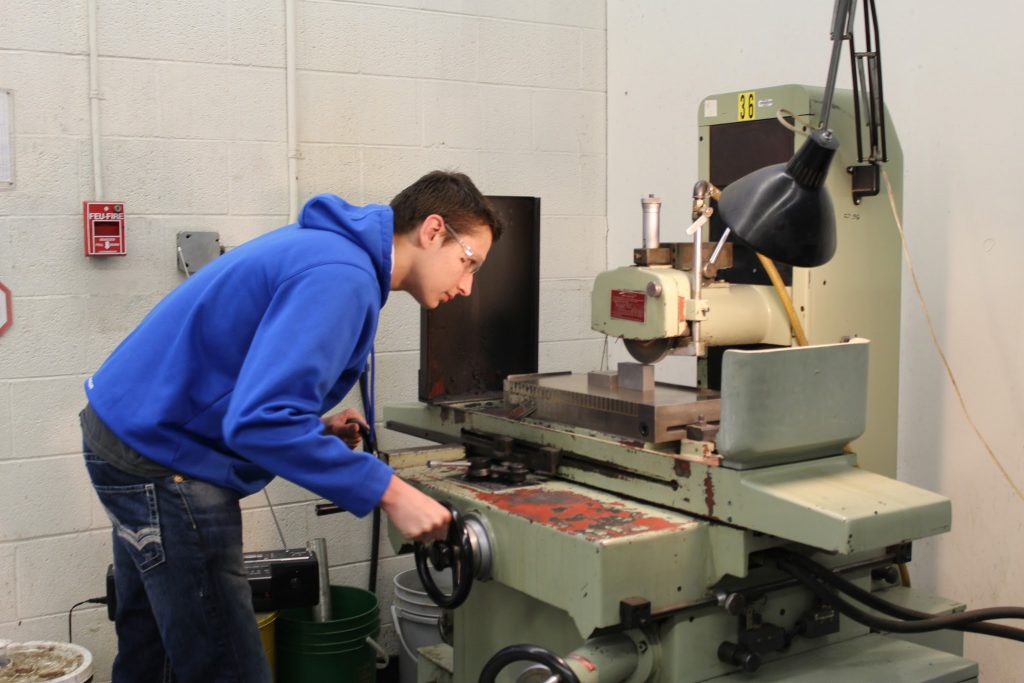
St. Lawrence College splits its trade programs between all three of its Ontario campuses in Kingston, Brockville and Cornwall. More than 6,700 full-time and 20,000 part-time students make up St. Lawrence’s 100+ programs. The variety of available courses at St. Lawrence means all students are able to find what suits them and succeed, with the school offering “fast track” delivery certificates which take one year to full-on four year degrees.
Popular Programs
St. Lawrence College offers 11 apprenticeship programs that include industrial electrician, general machinist, industrial mechanic, plumber, welder, electrician for construction and maintenance, two carpenter programs, brick and masonry, and automotive service technician. Diplomas in hairstyling, mechanical technician, motive power technician, welding and fabrication technician, esthetician, and electrical engineering technician are earned in 49 weeks to two years. Additionally, an Ontario College Certificate in general construction carpentry techniques can be earned in one year.
Locations
Kingston, Brockville and Cornwall, Ontario
Humber College


Humber College is Canada’s largest college with more than 27,000 full-time and 50,000 part-time students. That size extends into the number of programs offered, with 71 skilled trades and apprenticeship programs. Most of the trades programs are offered at the north campus in Etobicoke, Ontario, with only a few available at the new International Graduate School campus in downtown Toronto, which opened last year.
Popular Programs
Humber’s trade school offerings include eight semester degrees in three types of engineering, industrial design and interior design. Certificates of achievement in programs such as arborist, cabinet making and horticultural technical can be earned in anywhere from eight weeks to three semesters. Advanced diplomas in electronics engineering, computer program, and agricultural technology, among others, are earned across six semesters. There are 12 diploma programs, which are earned in four semesters. These include building construction technician, electromechanical engineering technician, industrial woodworking technician and more.
Locations
Toronto, Ontario
Fanshawe College


Fanshawe is one of the largest colleges in Ontario with more than 200 programs spread across multiple campuses in London St. Thomas, Simcoe and Woodstock, Ontario. More than 40 of those programs specialize in skilled trades and apprenticeships and are offered in almost any way students could need from full-time in-person to online. Fanshawe has one of the highest job placement rates (after six months) of any college at more than 90 per cent.
Popular Programs
Apprenticeship programs offered at Fanshawe include brick and stone mason, general carpenter, plumber, resident air conditioning systems mechanic, sheet metal worker, general machinist, industrial electrician, industrial mechanic and tool and dye maker. Certificates in carpentry and renovation, electrical techniques, and welding are also available. Diplomas in manufacturing engineering, electrical engineering , mechanical engineering, renewable energies, and carpentry and renovation can also be earned.
Locations
London, St. Thomas, Simcoe and Woodstock, Ontario
George Brown


George Brown College, named after one of Canada’s Fathers of Confederation and founder of what is now The Globe and Mail, is renowned in Canada as a premier institution for culinary arts, business and trades. The college focuses on experiential learning, which allows students to gain real world experience through placements, co-ops and simulations. Students in 98 per cent of career-focused programs get at least one experiential learning opportunity while attending George Brown. These experiences and partnerships with businesses range from cooking meals at The Chefs House marketplace to assisting in care programs at one of George Brown’s 12 child care centres across Toronto.
Popular Programs
George Brown College offers certificate programs in plumbing, welding, electrical and construction techniques which can each be earned in one year. The certificate programs cover residential and commercial applications for plumbing and electrical, labs and virtual training for welding (one of the most in-demand trades in Canada), and a number of choices on where to branch out after completing the construction techniques certificate.
Diploma programs include Heating, Refrigeration, and Air Conditioning Technician as well as Carpentry and Renovation Technician programs, both of which are earned over two years. Advanced diplomas in Heating, Refrigeration, and Air Conditioning Technology, which teach you how to design energy-efficient HVAC systems, and Building Renovation Technology, which dives into custom home design and renovation, are earned over three years.
Locations
Toronto, Ontario
Seneca College
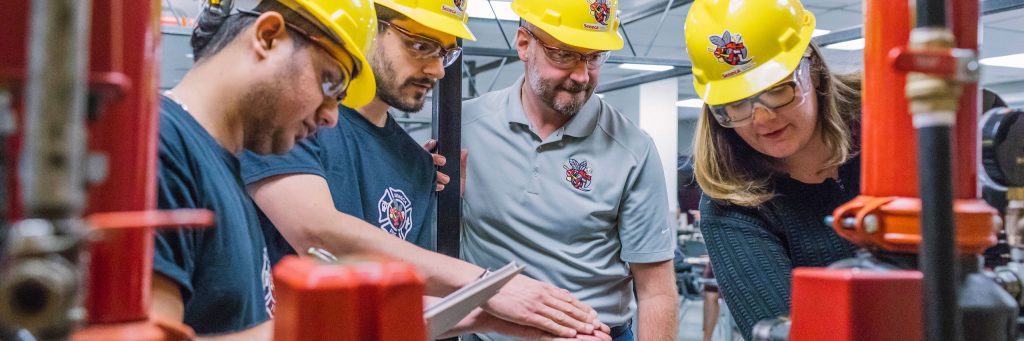

Seneca College in the Greater Toronto Area is home to more than 100,000 combined full-time and part-time students across seven campuses. More than 80 per cent of Seneca students find a job in their field within six months of graduating. Seneca prides itself on applied research, helping students gain real world experience while offering top-notch support staff. Areas of applied research include software and data sciences, life sciences, design and animation, engineering, health sciences, and business and finance.
Popular Programs
Seneca offers one of the leading fire programs in the country, with areas of study including fire investigation, wildland fire suppression, and fire related computer software systems. Seneca’s fire program is also associated with nearly a dozen professional fire associations on regional, provincial, and national levels. Specific programs in fire protection engineering technician or technology earn diplomas in two and three years, respectively.
Diplomas in mechanical engineering technician, tool design, CNC programming, building systems engineering, chemical engineering, civil engineering technician, civil engineering technology, building sciences, electromechanical engineering automation, electronics engineering technician, and electronics engineering technology are available in two to four years. Certificates in tool, die and mould making, and underwater skill and environmental project management, are earned in 34 weeks to eight months.
Locations
Toronto, Ontario
Durham College


Durham College’s Faculty of Skilled Trades & Apprenticeship (STA) is located in Whitby, Ontario. There are 11 apprenticeship programs and 15 post-secondary programs with many offering co-ops and placements. Durham has 15 trades programs available for students that cover a range of areas of expertise from welding to HVAC to millwrighting techniques.
Popular Programs
Durham’s crane operation, rigging and construction techniques program is the only one of its kind in Ontario and designed to give students an edge over the competition when finished. The program uses simulations to provide students with expertise they can show a future employer, which other candidates lack.
Four semester Ontario College Diploma programs include automotive technician, building construction technician, carpentry and renovation technician, electrical engineering technician, elevating devices, millwright and welding engineering technician. Ontario College Certificate programs, earned in two semesters, include crane operation, rigging and construction techniques, electrical techniques, gas technician 2, HVAC techniques, plumbing, power engineering techniques – fourth class, and trades fundamentals. Durham offers its own certificates in gas technician 2 and 3, as well as one bachelor’s degree in construction management, which takes eight semesters and is split between the Oshawa and Whitby campuses.
Locations
Whitby, Ontario
Red Deer Polytechnic


Red Deer College began as a small community college to further the education for residents of the Alberta town, which has since grown into the fourth largest in the province. Red Deer’s two campuses offer more than 100 programs to about 7,000 full-time and 10,000 non-credit students. As students work on apprenticeship programs, they’ve developed a reputation among surrounding businesses that results in a 92 per cent job placement rate after six months of graduation.
Red Deer College was granted polytechnic status by the Alberta government in 2021, allowing it to offer apprenticeships, degrees, diplomas, and certificate programs in-line with local industry needs.
What Students Are Saying
“Teachers and facilities are great. It's a smaller school where you feel like part of a community. The other great thing about RDC is all the apprenticeship programs it has. Many companies in Alberta work with RDC and create opportunities for students to get local work experience. The college becomes a polytechnic in 2021. I hope it keeps on serving Albertans for years to come. ”
Kai Davis, Pharmacy Technician Diploma
Popular Programs
Red Deer College offers 17 apprenticeship programs available to students from its main campus. In four years, students can work on their apprenticeships as automotive service technician, carpenter, electrician, heavy equipment technician, industrial mechanic (millwright), instrumentation and control technician, plumber, sprinkler systems installer, or steamfitter/pipefitter. Students looking to become a cook, locksmith, materials technician, parts technician, or welder are able to do so through three-year programs. Additionally, there is a two-year program in water well drilling and a one year program as a gasfitter.
Locations
Red Deer, Alberta
Algonquin College


Algonquin College is recognized as one of the best options for people looking to start an apprenticeship in Canada, thanks in large part to the sheer number of choices offered. Programs ranging from carpentry to woodworking mean that nearly 20,000 full-time and 37,000 part-time students are ready to join the workforce with the skills needed already in hand, alongside their tools. Algonquin’s three campuses in Ottawa, Perth and Pembroke offer students 19 apprenticeship programs, 52 co-op programs and 10 bachelor degree programs.
Popular Programs
Trades programs at Algonquin cover introductions to Autocad software, green roof and living wall technology, and three separate types of welding. Algonquin College also offers diplomas in building construction, cabinetmaking and furniture, heating, refrigeration and air conditioning, each of which is earned in 42 weeks. Additionally, horticultural industries and powerline technician diplomas take two years to complete. Most diploma programs also offer co-ops. Ontario college certificates in carpentry and renovation, general arts and science (pre trades) and mechanical techniques are earned in one year, while a welding and fabrication certificate is earned in 42 weeks.
Locations
Ottawa, Perth and Pembroke, Ontario
Canadore College


North Bay, Ontario’s Canadore College is among the smallest entries on this list, with just about 3,500 full-time students. More than 60 full-time courses, covering everything from police studies, indigenous studies, design and dramatic arts are offered across four campuses. More than one quarter of Canadore’s student body is First Nation, Métis or Inuit, according to Maclean’s, which is far higher than Ontario’s provincial average. The school prides itself on its diverse population, opening the Village in 2018, a facility which blends Indigenous, Eastern and Western healing and wellness.
Popular Programs
Canadore offers unique hybrid business-trades programs where students can learn the administrative side of things. The part-time programs Marketing a Trades Business and Operating a Trades Business take place over 14 weeks. More traditional trades programs include a building construction technician program, which takes 42 weeks and earns graduates a diploma. Renovation techniques and mechanical techniques are each 28-week-long courses that earn students an Ontario College Certificate. Trades fundamentals courses outline the basics of motorcycle service, plumbing, electrical and carpentry, welding, AutoCAD and machining over 28 weeks. Apprenticeships such as truck and coach technician (see truck driving schools), general machinist, and mechanical technician – welder-fitter are also popular options at Canadore College. The College has three campuses — the Aviation Campus, Commerce Court and the Education Centre, all situated on a 650-acre wooded escarpment overlooking North Bay.
Locations
North Bay, Ontario
Sheridan College


Sheridan College offers nine trades programs from its Davis campus in Brampton, Ontario. Instead of offering students co-ops and apprenticeships while in school, Sheridan’s courses prepare students for those next steps that they can take on their own, after earning either a certificate or diploma. Sheridan grew from a college of only 400 students in the 1960s to one of Ontario’s largest colleges by offering students unparalleled insight into what it takes to thrive in any subject. In fact, five former Sheridan animation students worked on the Disney film Moana, which won the Oscar for Best Animated Feature in 2017.
Popular Programs
Students looking to join a trades program but unsure of where to get started can join Sheridan’s Technology Fundamentals program, which introduces students to the basics of chemistry, engineering, architecture, information technology and trades. Those who know which trade they want to work in have the options of electrical engineering, plumbing, tool making, or welding and fabrication technician programs, each of which are two years. There are also certificates in plumbing, tool and die making, electrical, and welding techniques which take one year each.
Locations
Brampton, Ontario
This is amazing! Thank you. Anything about aviation or aircraft maintenance?
And no love for Loyalist College 🙁
Mohawk College has a new (facility opened in 2021) School of Aviation Technology at the John C. Munro Hamilton International Airport (YHM). They offer Aviation Technician – Aircraft Maintenance, Avionics Maintenance and Aircraft Structures Programs. Last year the entire graduating class each received one or more job offers in their field. Their are lots of jobs at YHM which is Canada’s Cargo hub.
SAIT’s got a ton of aviation related programs (https://www.sait.ca/?q=aviation) – you should also look at the RPAS program (sait.ca/drones)!
Please, can international students be admitted to these schools?
Can international students apply for trade school certificates?