
-
 featured
 - featured
Tuition
$8,287
Scholarships available
- featured
University of Niagara Falls Canada (UNF)
Master of Computer Science in Applied Artificial Intelligence
Tuition
$22,500
Scholarships available
- featured
Tuition
$31,200
- featured
Sep 7 - Sep 7, 2030
Tuition
$55,290
Scholarships available
-

-

Tuition
$2,499
Scholarships available


About
Computer security keeps our most important systems and services, from banks to hospitals to transit systems, protected against the constant risk of attack or malfunction. Skilled professionals who can assess and mitigate computer security threats are essential to Canada’s economy, making computer security a fast-growing industry with no signs of stopping.
Many colleges and universities across the country offer top computer security programs, awarding graduate certificates, diplomas and degrees upon completion. Computer security programs can range from being just 30-weeks long to requiring four years of study, with many having co-op placements that provide students with vital real world experience in the field.
Spoiled for choice, computer security students have a sprawling breadth of specializations they can pursue, such as cyber security, computer systems design, ethical hacking and more.
By mastering leading technology skills, graduates at the top Canadian institutions will be armed to address computer security across a range of industries, such as government, finance, businesses and beyond. You’ll also learn advanced managerial, analytical and critical thinking skills, all of which are crucial to ensuring a successful career path in computer security.
Students can expect plenty of job opportunities upon graduation: the Canadian Job Bank predicts more than 143,000 job openings for systems security planners over the next 10 years.
While individual salaries vary, computer security professional\’s salaries range between $70,000 – $138,000 annually, according to Talent.com, Indeed and Glassdoor.
Frequently Asked Questions (FAQ)
What's the difference between computer security and cyber security?
While they might sound similar, there are some key differences between computer security and cyber security.
Computer security is all about protecting a computer’s external and internal hardware (everything from its monitors to its RAM), as well as protecting a computer’s software through precautions like updating operating systems to improve security features and fix performance bugs.
Cyber security, on the other hand, protects entire digital ecosystems. A digital ecosystem could be the internet-connected computers, cell phones and web applications of a company. By having a cybersecurity protocol, the company’s digital networks would be protected from cyber attacks like hacking or even accidental data breaches.
What skills are needed to be a computer security specialist?
Computer security specialists require technical and analytical skills to detect vulnerabilities within a technology system. As well as soft skills such as collaboration and continuous learning, technical skills include program scripting, intrusion detection, malware analysis and more. Writing security policies is also required for many computer security jobs.
How much does a computer security specialist earn in Canada?
Computer security professional salaries range between $70,000 – $138,000 annually, according to Talent.com, Indeed and Glassdoor, with the broad range reflecting different levels of seniority and specialization in the field.
An Information Security Analyst might earn $76,296 per year, for example, whereas an Information Security Manager could expect an annual salary closer to $135,527.
Is computer security a good field?
There is a pressing need for computer security specialists: digitization is transforming the world, affecting everything from the economy to democracy. The Canadian government is actively looking to hire cybersecurity specialists to tackle the uptick in cyber threats and ransomware attacks since the COVID-19 pandemic. In addition, a 2021 study by the Information and Communications Technology Council found that Canada employs around 124,000 cybersecurity professionals, and will need up to 25,000 more to meet current demands.
What’s more, there is plenty of job diversity within the computer security industry. Graduates can choose to specialize, tailoring their skills to align with their interests, whether that be coding as a security software developer, crisis management as an incident responders, or more.
Certification
Colleges, universities and bootcamps offer a mix of degrees, diplomas and certifications in computer science. Computer science degrees are typically four-year programs that offer a comprehensive, theory-heavy approach to the subject, whereas diplomas can be shorter (one to three years), with a more hands-on, technical approach. Certifications can serve those new to computer security interested in an initial introduction to the topic, or those already in the field looking to upskill and earn additional qualifications. These short term programs typically develop specific skills over the course of a few weeks or months.
Having a degree or diploma is an essential foundation for a career in computer security. While a Bachelor’s degree is helpful and can lead to higher-paying jobs, employers may also accept a college diploma in computer science-related studies, such as network administration or information technology.
From there, an employer may require that an employee completes more specific certifications such as CompTIA A+, Certified First Responder (CRF), and Cyber Safe, which focus on a specific software or security compliance standard. These types of certifications are ideal for professionals who are already in the computer security field, and are looking to further specialize, upskill, or stay up-to-date on the latest technology advancements.
Certifications can also help professionals looking to transition into more senior roles, those seeking to switch careers, or those who have completed a diploma or degree, but do not yet have experience working in computer security.

triOS College’s Cyber Specialist program offers a comprehensive and practical pathway for students aiming to enter the fast-growing cybersecurity field. Through hands-on, project-based learning, students develop the skills to configure, automate, and manage servers within cloud and enterprise environments using … Continue reading
Nov 2 - Nov 19, 2027
Tuition
$17,500
Scholarships available
Tuition
$17,500
Scholarships available
Humber’s Computer Engineering Technology advanced diploma program provides students with the knowledge and training necessary to design and develop the advanced technologies that drive modern businesses and government operations worldwide. Students receive instruction from industry professionals in small class settings, … Continue reading
Students in the University of Fredericton’s (UFred’s) Bachelor of Computer Science (BCS) program gain a comprehensive understanding of computing theory and develop practical, real-world skills to meet the demands of today’s digital workforce. The BCS includes a structured mix of … Continue reading
Tuition
$31,200
Tuition
$31,200
The Computer Systems Technology – Network Administration and Cybersecurity program at Mohawk College equips students with the skills needed to manage, secure, and protect IT infrastructures, both on-premises and in the Cloud. Through hands-on learning, students gain expertise in network … Continue reading
Tuition
$8,287
Scholarships available
Tuition
$8,287
Scholarships available

The Master of Computer Science in Applied Artificial Intelligence (MCSAAI) at the University of Niagara Falls Canada is designed to prepare students for leadership in the rapidly evolving field of artificial intelligence. This graduate program offers a rigorous and comprehensive … Continue reading
triOS College’s Cybersecurity & Cloud Professional program is designed to prepare learners for the demands of today’s fast-paced tech environments. The program offers a comprehensive foundation in systems administration, cloud technologies, and cybersecurity, delivered through real-world, hands-on learning and project-based … Continue reading
Tuition
$23,995
Scholarships available
Tuition
$23,995
Scholarships available

In the Network Security Technician Program students will learn about system analysis and how to ensure network and system security. Students will gain an understanding of network operation, computer and Internet security, cybercrime and ways to combat cybercrime. What You’ll … Continue reading
Oct 26 - Nov 26, 2027
Tuition
$16,995
Scholarships available
Tuition
$16,995
Scholarships available

Learn to collect digital evidence after a cybersecurity breach and help recover information after a cyber threat or hardware failure. Analyze systems to detect compromises and close the system security gaps through legal hacking. Gain skills in penetration testing, digital … Continue reading
Tuition
$6,300
Scholarships available
Tuition
$6,300
Scholarships available

The Network and Security Architecture Graduate Certificate program will cover the key aspects of designing, deploying, supporting, and securing small, medium, and enterprise network and server infrastructures. It will cover the fundamentals of advanced networking and security concepts to work … Continue reading

Eastern College’s Cybersecurity & Cloud Professional program provides students with a comprehensive foundation in IT, covering infrastructure automation, cloud computing, and cybersecurity. Students gain hands-on experience configuring, automating, and managing servers in both enterprise and cloud environments while learning to … Continue reading
Tuition
$23,995
Scholarships available
Tuition
$23,995
Scholarships available
Tuition & Completion Data
Domestic

Last updated: September 4, 2026
International
See below for the latest data on international student tuition across Canada, excluding housing costs and ancillary fees.
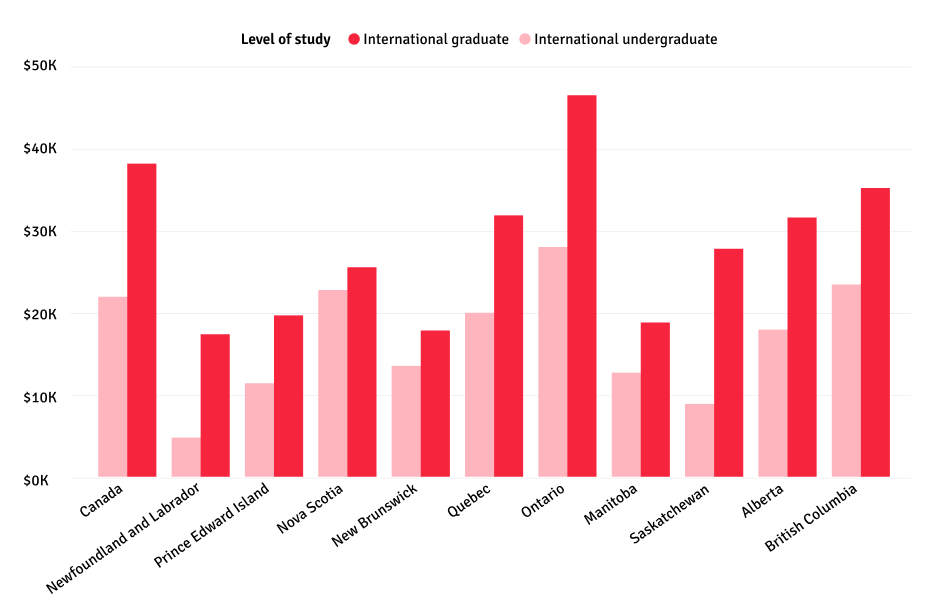
Source: Statistics Canada 2023
Careers
Whether public or private, every major organization in Canada stores their information digitally – meaning computer security specialists will find ample opportunities for employment. Computer security professional salaries range between $70,000 – $138,000 annually, according to Talent.com, Indeed and Glassdoor, with the broad range reflecting different levels of seniority and specialization in the field.
Information Security Analyst – $76,296
True to the name, information security analysts monitor the networks of their employer to find evidence of security breaches. Should a breach be detected, the analyst will investigate how it occurred, and take necessary steps to prevent recurrences.
Systems Analyst – $84,086
A systems analyst finds technology solutions in the market to solve a business’ needs. While this role isn’t hands-on with managing cyber-security threats, it does play a key role in evaluating and improving an organization’s digital networks and systems.
Systems Security Planner – $90,667
Systems security planners work to develop, monitor and improve the network of their employer, while creating policies that govern how that employer’s data will be used and protected.
Ethical Hacker – $91,804
Sometimes, the best way to determine a computer system’s data-breaching vulnerability is to test its defenses yourself. Ethical hackers do just this, simulating cyber-attacks by trying to ‘break’ into their employer’s computer systems in a safe, controlled environment, learning all that they can in order to mitigate real, malicious attacks.
Cybersecurity Manager – $126,557
Playing a key role in incident response, cybersecurity managers lead cybersecurity teams in maintaining an organization’s digital infrastructure, overseeing day-to-day security operations as well as developing long-term strategies for protecting against emerging threats like hacking or phishing.
Information Security Manager – $135,527
Responsible for managing a company’s security team, Information Security Managers oversee an organization’s data protection strategy, develop security policies and protocols, and are responsible for coordinating responses to security incidents. Information Security Managers also ensure that an organization is compliant with industry regulation standards.
Chief Information Security Officer (CISO) – $179,557
A CISO is a senior-level executive who oversees a company’s information, cyber and technology security. The role also requires developing, implementing, and enforcing security policies.
Salaries
Computer security professionals’ salaries range between $70,000 – $138,000 annually. Here is a closer look at salary ranges based on job type and seniority, based on data from Talent.com, Indeed, Glassdoor and Canada’s Job Bank:
| Role | Average Salary in Canada |
|---|---|
| Information Security Analyst | $76,296 |
| Systems Analyst | $84,086 |
| Systems Security Planner | $90,667 |
| Ethical Hacker | $91,804 |
| Cybersecurity Manager | $126,557 |
| Information Security Manager | $135,527 |
| Chief Information Security Officer (CISO) | $179,557 |