
-
 featured
Tuition
$1,967
Scholarships available
-
 featured
 - featured
Sep 7 - Sep 7, 2029
Tuition
$5,524
Scholarships available
-

Online
Sep 16 - Nov 16, 2026
Plus 3 other start datesOct 14 - Dec 14 2026
Nov 11 - Jan 11 2027
Dec 16 - Feb 15 2027
Tuition
$224
Scholarships available
-

Online
Sep 16 - Nov 6, 2026
Plus 3 other start datesOct 14 - Dec 4 2026
Nov 11 - Jan 1 2027
Dec 16 - Feb 5 2027
Tuition
$225
Scholarships available
-

-
Online
Oct 19 - Nov 16, 2026
Tuition
$300
Scholarships available


About

Photography is more than just a hobby; for those with an eye for composition, framing, and light, it’s a creative career where no two shoots are the same. From family portraiture to weddings, photojournalism to editorial fashion shoots, product photography to wildlife photography, there are a variety of photographer specialties – and a diversity of photography courses and programs where beginners and advanced shutterbugs alike can hone their skills.
With no professional certification requirements, photographers can hold a diploma or degree from a college or university in visual arts or photography specifically; they might complete specialized training at a private institution, or have done extensive training under the supervision of a professional. No matter the path to education, a photographer’s portfolio is their most important asset when securing jobs; it must showcase their breadth and depth of ability, highlighting their very best work, while also reflecting the niche of photography they wish to pursue.
Many programs serve as an introduction to photography, teaching the basics of digital photography using a DSLR (digital single-lens reflex) camera that can be applied to many photo occasions including portraits and live events. These courses typically cover camera components, framing and composition, shooting, and editing. Some schools also offer specific courses focused on portraiture, wedding photography, and wildlife photography, as well as photography business courses designed to help budding photographers develop sustainable, profitable enterprises.
Photographers are often self-employed or freelancers today, hired by newspapers, magazines, studios, CPG and retail brands, and individuals for special occasions like weddings. The Canadian Job Bank projects a balanced outlook for job prospects among photographers in Canada between 2022-2031, with 6,800 job openings and about the same number of job seekers. According to federal data and Indeed, the average hourly rate for photographers is about $20-22, or roughly $50,000 per year. With more experience and specialization, senior photographers can make upwards of $73,000 annually.
Frequently Asked Questions (FAQ)
Is it worth it to take a photography course?
If you’re a beginner photographer who has dabbled in taking photos as a hobby, but don’t have a fulsome understanding of the technical aspects of photography, a course could be right for you. You’ll learn key technical aspects like composition, lighting, and camera settings.
You’ll also be connected with experts, who can offer constructive advice and mentorship, as well as a cohort of peers that you can go to with questions, and ultimately leverage as a professional network down the line. The connections you make might help you get a foot in the door as a photography assistant or a similar role while you build up your portfolio.
If your course includes classes about the business side of photography, you’ll also learn about pricing, negotiating, and building up a client base.
What jobs can you do with photography?
The many photography specializations out there leave lots of room to pursue work you’re passionate about. These are just a few of the potential roles you could take on:
Commercial photographer: Capturing products for CPG/retail brands and others in the advertising industry.
Wedding photographer: Capturing proposals, engagement shoots, and day-of wedding portraits.
Pet photographer: Capturing people’s dogs and cats in posed studio shoots or out and about.
Professional headshot photographer: Capturing people’s professional portraits, including work for individuals or companies.
Do photographers make good money?
A photographer’s income might vary widely depending on their experience and their specialty. According to federal data and Indeed, the average hourly rate for photographers is about $20-22, or roughly $50,000 per year. With more experience and specialization, senior photographers can make upwards of $73,000 annually, with commercial photographers who work with large brands surpassing six-figure salaries.
Photographers can also diversify their income stream by teaching in-person or online workshops or courses, selling prints, or licensing their images to stock photography banks.
Certification
Photographers aren’t required to have professional certifications, but many hold diplomas or degrees in photography or visual arts from colleges or universities. You might pursue specialized training at private institutions, or gain extensive experience through apprenticeships with established professionals.
Beginner or introductory photography courses will likely cover the fundamentals of framing and composition, shooting, and editing. Advanced classes will invite more specialization, as students establish their own photography style, likes and dislikes. They will also likely get into more complex use of editing software.
Regardless of your educational path, a photographer’s portfolio is the most critical tool for landing jobs. It should display a wide range of skills, feature your strongest work, and reflect the specific niche of photography you aim to specialize in.
Students in Mohawk College’s Photography – Still and Motion program will gain essential skills in still photography and video in this rapidly evolving industry through lectures, shoots, and critiques. Focusing on both still and motion photography, students will be trained … Continue reading

George Brown College’s part-time Digital Photography Program is designed to support learners in reaching their personal or professional photography goals—whether they are beginners, passionate hobbyists, aspiring commercial photographers, or individuals seeking to refine their existing skills. Taught by experienced instructors … Continue reading
Oct 15 - Oct 15, 2029
Jan 13 - Jan 13 2030
Feb 18 - Feb 18 2030
May 5 - May 5 2030
Jul 8 - Jul 8 2030
Tuition
$2,223
Tuition
$2,223
Students in Georgian’s Photography: Starting Business course will learn the fundamentals of setting up a small business to utilize their photographic skills. Topics covered include the essential aspects of operating a small business, with a focus on the photography market. … Continue reading
Tuition
$300
Scholarships available

Durham College’s Photography program focuses on providing a balance of still and motion photography to meet the needs of a changing industry. This hands-on digital program teaches photography from a professional skills perspective, emphasizing both stills and video, while fostering … Continue reading

Today’s art world and photography industry are continually evolving, encompassing areas like web and installation design and emerging technologies such as augmented reality. The internationally renowned Image Arts: Photography Media Arts degree program offers a comprehensive approach to lens-based practices, … Continue reading
Tuition & Completion Data
Domestic
Below are CourseCompare’s real-time tuition calculations based on hundreds of programs and courses across Canada. These exclude ancillary fees (fees for on-campus services, textbooks, athletics, insurance and more).

Last updated: September 11, 2026
International
See below for the latest data on international student tuition across Canada, excluding housing costs and ancillary fees.
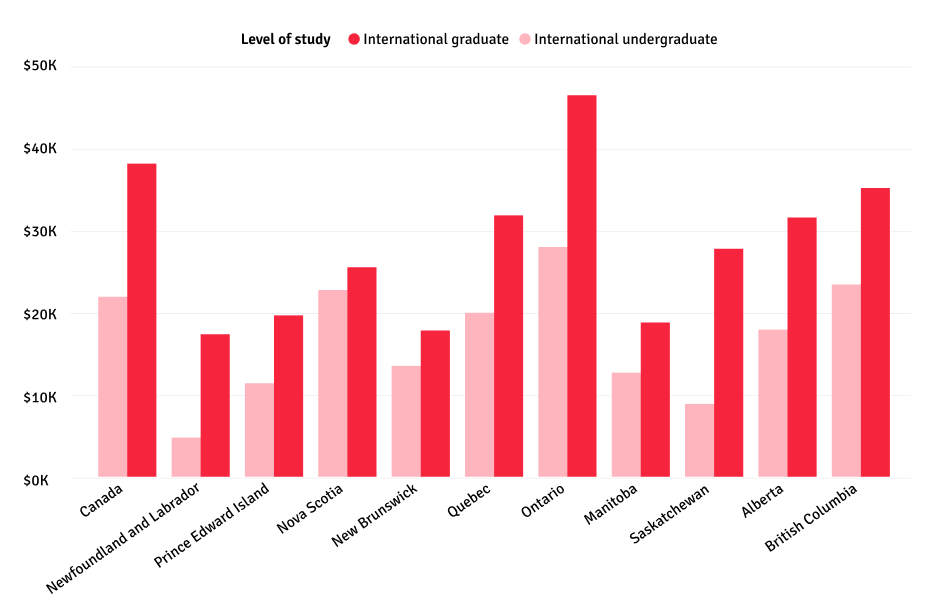
Source: Statistics Canada 2023
Careers
Today, many photographers work as freelancers or are self-employed, taking on assignments from newspapers, magazines, studios, retail and CPG brands, as well as private clients for events like weddings.
The Canadian Job Bank forecasts stable job opportunities for photographers between 2022 and 2031, with approximately 6,800 job openings expected, matching the number of job seekers.
According to federal data and Indeed, the average hourly rate for photographers is about $20-22, or roughly $50,000 per year. With more experience and specialization, senior photographers can make upwards of $73,000 annually.
Photography Assistant – $37,727
A photography assistant, or photo assistant, supports the lead photographer in planning, setting up, and executing photo shoots, at a studio or on-location. They might also do some administrative work, file organization, and minor editing.
Photojournalist – $39,686
A visual journalist who captures newsworthy events on camera for publication in newspapers, magazines, and digital media. They often work alongside traditional journalists who complement their photographs with essays or articles.
Photo Editor – $49,573
A creative media professional who handles the selection and post-production of photos before they’re shared or published.
Photographer – $50,609
A professional image capturer who takes photos for commercial purposes, including but not limited to product shots, advertising, and special events.
Senior Photographer – $73,372
A photographer with years of experience, who likely has a reliable roster of clients in their area of specialization.
Art Director – $80,892
The lead responsible for overseeing and managing the visual aspects of a creative project, including ads and commercials, videos and films, or editorial media. They establish and ensure execution of the artistic vision for the project.
Director of Photography – $141,839
The DOP (sometimes referred to as the cinematographer) oversees the camera and light crews on major filming projects including TV, movies, music videos, and commercials.
Salaries
The average salary for photographers in Canada is $20-22 per hour, or roughly $50,000 per year, based on data collected from Indeed and Canada’s Job Bank. Here is a closer look at salary ranges based on job type and seniority:
| Role | Average Salary in Canada |
|---|---|
| Photography Assistant | $37,727 |
| Photojournalist | $39,686 |
| Photo Editor | $49,573 |
| Photographer | $50,609 |
| Senior Photographer | $73,372 |
| Art Director | $80,892 |
| Director of Photography | $141,839 |