


If you’re looking for a career that will offer unmatched office views and global mobility, consider training as a pilot.
Although licence numbers have started to rebound since they dropped more than 80 percent between 2019-2022, airlines, charter operators, and aviation regulators continue to flag pilot shortages as air travel rebounds, retirements accelerate, and regional routes expand across the country.
In other words: aircraft are flying, but trained pilots remain in short supply—especially those progressing toward commercial and airline roles. That’s why flight training continues to be a high-stakes, high-opportunity investment in 2026.
Becoming a pilot in Canada follows a clear, structured pathway. Most students begin with a Student Pilot Permit, which allows supervised solo flying during training. From there, pilots typically earn a Private Pilot Licence (PPL) for recreational flying, followed by a Commercial Pilot Licence (CPL) which allows you to fly for pay. Pilots aiming for airline careers ultimately work toward an Airline Transport Pilot Licence (ATPL), which is required to act as captain on multi-crew aircraft and comes with significant flight-time and proficiency requirements.
Because building flight hours is mandatory, where you train matters. Access to aircraft, instructor availability, airspace conditions, and scheduling flexibility can all affect how quickly you progress—and how much your training ultimately costs.
In Canada, aviation training is offered through two main types of institutions: college or university programs, and independent flight centres.
College and university programs often appeal to students who want to earn a diploma or degree while completing pilot training. These programs tend to cost more (you can compare prices here), but they provide access to student loans and grants, structured academic pathways, and additional career credentials that some airlines prefer.
Independent flight centres operate at airports across the country and focus exclusively on flight training. They usually offer lower overall costs, highly flexible scheduling, and a variety of fleet options. Many have long histories and strong hiring networks built through decades of graduate placements.
CourseCompare reviewed aviation programs across Canada based on fleet size and condition, curriculum structure, airspace complexity, student outcomes, and verified reviews. If you’re serious about turning a passion for flying into a profession, these are the best flight schools in Canada of 2026.
CourseCompare’s annual school rankings are determined using a process that considers several core metrics and principles. Read more about our methodology here.
Seneca Polytechnic
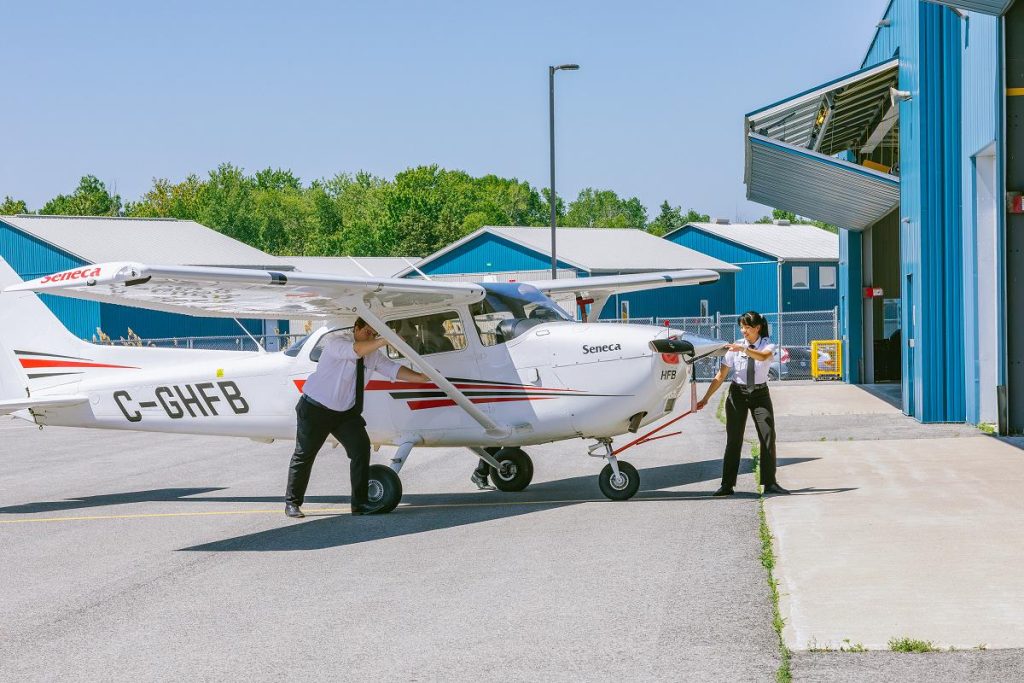

Seneca Polytechnic has been training aviation professionals for more than half a century and is widely recognized for producing strong, industry-ready graduates. The School of Aviation operates through a two-campus model: academic courses begin at Seneca’s Newnham Campus in Toronto, and all advanced aviation and flight training takes place at the Peterborough Campus, located at the Peterborough Airport.
What Sets Seneca Apart
Applied learning is built into Seneca’s program. Students complete a mandatory work term of at least 420 hours, giving them exposure to real aviation operations and early career networks. Seneca also maintains long-standing industry pathways, including collaborations with Jazz Aviation and instructor development programs, which help position graduates for roles in commercial aviation, flight instruction, operational control, and regulatory environments.
What You’ll Learn
Successful completion of the Seneca program requires eight semesters of study. Students begin with foundational math, science, communications, and aviation theory at Newnham before progressing into intensive aviation coursework, simulator training, and flight operations at the Peterborough site. The curriculum covers aircraft systems, aerodynamics, navigation, meteorology, human factors, safety management, and professional standards, culminating in Transport Canada licensing requirements.
Diploma or Degree
Truly distinguishing itself as a leader in aviation, Seneca College offers the only four-year technology-based aviation degree program in the country through its highly competitive Honours Bachelor of Aviation Technology with a September-only start date.
Outside of the cockpit, the school also offers a three-year advanced diploma in aviation safety, and a two-year diploma in aviation operations.
Pilot Licences
- Private Pilot Licence
- Commercial Pilot Licence
Pilot Ratings
- Instrument Rating
- Multi-Engine Rating
Aircraft Fleet
- Beechcraft B58
- Cessna 172
- Beechcraft B58 G1000
- Cessna 172 G1000
Flight Simulators
- B200 Turboprop Simulator
- CRJ 200 Regional Jet Simulator
- Redbird Crosswind Simulator
Locations
Newnham and Peterborough, Ontario
Mount Royal University
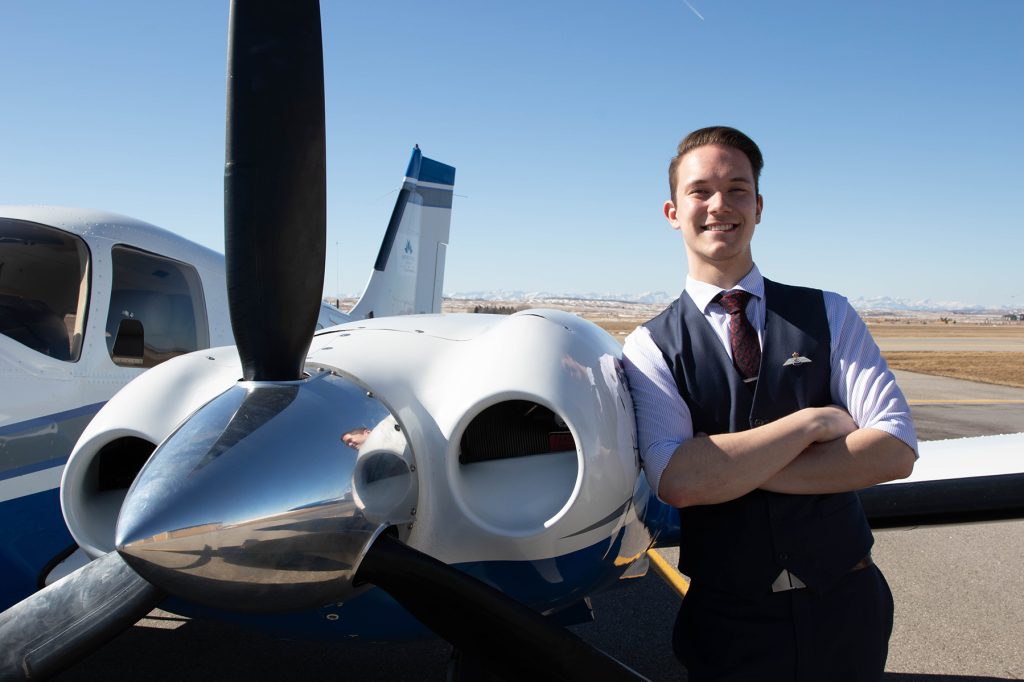

Mount Royal University (MRU) has been training pilots for nearly four decades and is known for pairing rigorous flight education with strong business foundations. Based in Calgary, Alberta, the program is designed to develop pilots who understand both the technical and operational sides of commercial aviation.
What Sets Mount Royal University Apart
On top of its decades-long track record of exceptional pilot training, MRU is one of only two Aviation Accreditation Board International (AABI)-accredited programs in Canada, ensuring students receive the highest calibre of flight education. Through the Jazz Aviation Pathways Program, eligible graduates with a 3.0 GPA may qualify for a first-officer interview, giving them a clear route from training into the regional airline environment.
What You’ll Learn
MRU’s curriculum blends aviation science, flight theory, and business training. Students study meteorology, navigation, flight operations, and safety management alongside management principles, aviation law, statistics, and professional communication. Electives in areas such as economics, marketing, and business law support students preparing for leadership roles within commercial aviation. Skill-building courses, including wilderness survival, round out the applied training.
Diploma or Degree
The program leads to an Advanced Aviation Diploma and a Commercial Pilot Licence over two years of full-time study. Students must enter the program with a Private Pilot Licence (PPL), or complete PPL training through MRU at an additional cost.
Pilot Licences
- Commercial Pilot Licence (CPL)
Pilot Ratings
- Instrument Rating
- Multi-Engine Rating
- Night Rating
Aircraft Fleet
- Cessna 172
- Piper Seneca V (twin-engine)
Flight Simulators
- Alsim ALX 20
- Frasca Mentor
- Redbird Crosswind Trainer
Locations
Calgary, Alberta (with flight training at Springbank Airport, west of the city)
Centennial College
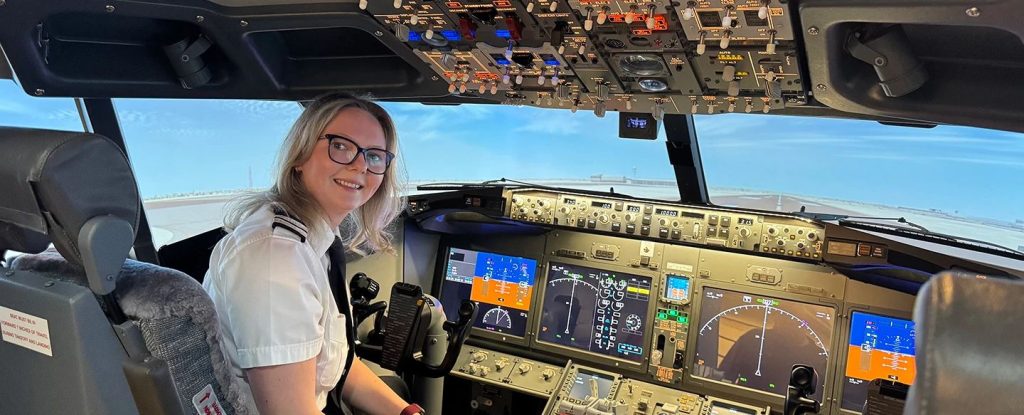
Centennial College plays a significant role in Canadian aviation education. For more than 45 years, the college has developed a strong industry presence supported by modern facilities at its Downsview aerospace campus and long-standing partnerships with airlines and manufacturers.
Centennial runs one of Ontario’s most structured commercial pilot pathways and is currently preparing for a major transition. Its flight-training operations are moving from Oshawa Airport to a larger, dedicated aviation campus at Peterborough Airport, expected to be completed in early 2026.
What Sets Centennial Apart
Centennial operates inside one of Canada’s largest aviation-training ecosystems, combining pilot education with aerospace manufacturing, aircraft maintenance, and avionics programs at its Downsview campus. Students in the Canadian Integrated Airline Transport Pilot Licence program benefit from being part of a wider aviation environment that includes industry-standard labs, a full hangar of maintained aircraft, and exposure to modern aerospace technologies that most flight centres don’t have.
Centennial maintains active relationships with major aerospace firms through the Downsview aerospace cluster, including Bombardier, Diamond Aircraft, De Havilland Canada, and the broader DAIR consortium. These partnerships influence curriculum and support co-ops, applied research, and training opportunities across maintenance and technology programs, giving students real industry touchpoints while they study.
The CIATPL itself is a structured, Transport Canada–approved integrated pathway built to reflect airline operations. Ground school, simulator time, and aircraft training follow a fixed schedule that introduces Standard Operating Procedures (SOPs), Crew Resource Management (CRM), Multi-Crew Cooperation (MCC), and Scenario-Based Training (SBT) from the outset, mirroring professional multi-crew environments more closely than most self-paced flight-school models.
Centennial is also in the middle of a major facilities upgrade. Its flight-training operations, currently based at Oshawa Airport in partnership with Toronto Airways Inc., are being relocated to a larger, purpose-built aviation campus at Peterborough Airport. The move, expected to be fully completed in early 2026, will expand aircraft capacity, increase training space, and create a dedicated flight-training hub designed for long-term growth.
What You’ll Learn
The CIATPL program is delivered in a structured sequence that takes students from foundational theory through advanced flight operations. Ground school covers core Transport Canada subjects including air law, meteorology, flight operations, aircraft systems, navigation, and human factors.
Flight training and simulator instruction are currently conducted through Centennial’s partner operator at the Oshawa Airport. As the program transitions to its new training base at Peterborough Airport, these components will shift to expanded facilities designed specifically for integrated commercial training. Throughout the program, students gradually progress from basic handling and navigation to multi-engine procedures and instrument operations.
Graduates finish with the flight time and knowledge required for a Commercial Pilot Licence with multi-engine and instrument ratings, and the operational grounding needed for entry-level commercial and multi-crew roles.
Diploma or Degree
The CIATPL is a two-year Transport Canada–approved training certificate with fall and winter intake dates. Because it is classified as a certificate rather than a diploma or degree, it does not qualify for OSAP funding.
Centennial also delivers several aviation technician and technology programs at its Downsview aerospace campus, including:
- Aircraft Maintenance – Aviation Technician (2 years)
- Avionics Maintenance – Aviation Technician (2 years)
- Avionics Maintenance and Management – Aviation Technology (3 years)
These programs support the broader aerospace ecosystem connected to Centennial and offer additional career pathways in maintenance, avionics, and manufacturing.
What Students Are Saying
Paramveer, Canadian Integrated Airline Transport Pilot Licence (CIATPL)“I joined Centennial’s ATPL program because I was serious about becoming a pilot, and I liked that the program was structured and college-backed. Some of the instructors are fantastic — super knowledgeable and supportive. Like any flight school, there have been a few hiccups along the way, especially with scheduling and communication, which can be frustrating when you're eager to move forward. That said, I’ve learned a ton and met some really great people in the program. The flying itself has been incredible, and when things click, it all feels worth it. Just go in knowing it's a big commitment and try to stay flexible — it’s a solid program if you're ready to put in the work. ”
Pilot Licences
- Private Pilot Licence (PPL)
- Commercial Pilot Licence (CPL)
- Airline Transport Pilot Licence (ATPL)
Pilot Ratings
- Instrument Rating
- Multi-Engine Rating
- Night Rating
Other Aviation Career Training
- Aircraft Maintenance and Management – Aviation Technology
- Avionics Maintenance – Aviation Technician
- Aircraft Maintenance – Aviation Technician
Aircraft Fleet
- Cessna 152
- Cessna 172S
- Piper Seminole
Flight Simulators
- Cessna 172S Simulator
- King Air C90 Simulator
Locations
Oshawa, and Peterborough, Ontario; Online.
University of Waterloo


The University of Waterloo runs the largest university-level aviation program in Canada, offering two full undergraduate degrees that integrate academic study with professional pilot training. Since launching its aviation pathways in 2007, Waterloo has become a major entry point for students who want both a university education and a Commercial Pilot Licence upon graduation.
What Sets University of Waterloo Apart
Waterloo is the only university in Canada that offers two full bachelor’s degrees built around professional pilot training. Science and Aviation gives students a technical foundation in physics, earth sciences, and environmental science, while Geography and Aviation focuses on geomatics, mapping, weather analysis, and spatial data. Both programs let students earn a university degree while completing integrated flight training at the Waterloo Wellington Flight Centre.
The university also supports aviation students through structured advising, industry-linked programming, and access to on-campus expertise, including the Pilot-in-Residence role, which brings in active aviation professionals to mentor students and offer guidance on career paths, training choices, and industry expectations.
What You’ll Learn
Both aviation degree pathways combine university academics with professional pilot training completed through the Waterloo Wellington Flight Centre. Students take aviation-focused courses covering meteorology, air law, navigation, human factors, and aircraft operations, while progressing through ground school, simulator work, and in-aircraft training toward a Commercial Pilot Licence with multi-engine and instrument ratings.
Your academic coursework depends on the degree you choose. Science and Aviation students complete foundational and upper-year courses in areas such as biology, chemistry, earth sciences, and environmental science. Geography and Aviation students focus on subjects like cartography, geomatics, spatial analysis, environmental systems, computing, and statistics.
By the end of the program, graduates earn a full bachelor’s degree plus the licences and ratings required for entry-level commercial aviation roles.
Diploma or Degree
Both programs run over four years and lead to a full undergraduate degree. Students graduate with either a Bachelor of Science (BSc) in Science and Aviation or a Bachelor of Environmental Studies (BES) in Geography and Aviation.
Pilot Licences
- Private Pilot Licence (PPL)
- Commercial Pilot Licence (CPL)
Pilot Ratings
- Instrument Rating
- Multi-Engine Rating
- Night Rating
Aircraft Fleet
- Cessna 172
- Diamond DA40
- Diamond DA42
- Piper Seminole
Flight Simulators
- ALSIM AL250
- ALSIM ALX
Locations
Waterloo, Ontario
Mount Allison University
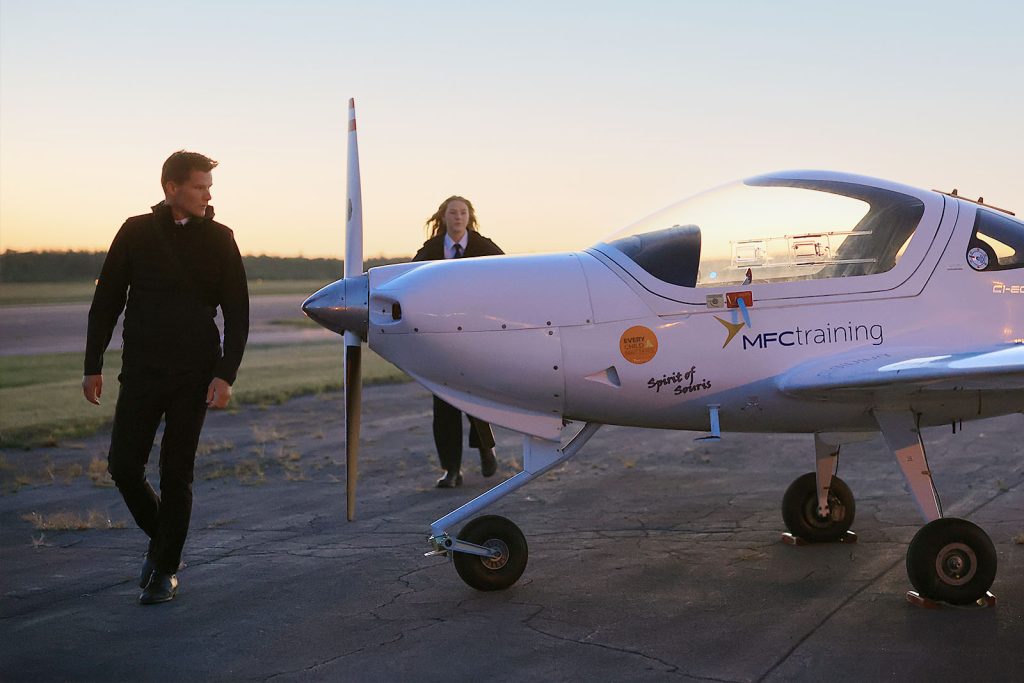

New Brunswick’s Mount Allison partners with MFC Training to offer the only university-degree aviation pathway in Atlantic Canada. Students complete a full undergraduate program in Arts, Commerce, or Science while progressing through professional pilot training at MFC’s training centre in Dieppe. The result is a combined academic and flight-training experience that stands out in the Maritimes.
What Sets Mount Allison Apart
Mount Allison is one of only three Canadian aviation education institutions to offer a full undergraduate degree paired with integrated commercial pilot training, giving students two distinct advantages. First, academic flexibility lets them major in fields like Commerce, Physics, Geography, or Computer Science while earning their CPL. Second, they get access to MFC Training, one of Canada’s most established flight-training providers, with structured progression from PPL to Night Rating to Commercial, and a dedicated Multi-Crew Coordination and turbine-operations phase in the recently-added BE200 simulator.
On-campus flight simulators in the Dunn Building give students the ability to practice procedures, planning, and PPL-level skills without leaving campus. Paired with MFC’s advanced simulators and over 200 hours of flying time, students get a mix of campus-based academic life and professional-grade aviation training that’s uncommon anywhere in the country.
What You’ll Learn
Mount Allison students complete their academic curriculum covering core aviation subjects including navigation, meteorology, flight operations, human factors, and air law. Ground school is delivered in structured phases and prepares students for Transport Canada exams at each licence stage.
Flight training takes place out of the Greater Moncton International Airport, where students log more than 200 hours in the air and train in controlled airspace with access to multi-engine aircraft and instrument-approach procedures. By the end of the program, students earn a Commercial Pilot Licence with a multi-engine rating and Group 1 instrument rating, with the option to complete integrated Airline Transport Pilot coursework if they choose.
The combined academic and flight curriculum prepares graduates for commercial aviation roles and gives them the broader analytical, managerial, and communication skills associated with a university degree.
Diploma or Degree
Students graduate with a full four-year undergraduate degree from Mount Allison—a BA, BSc, or BComm—depending on their chosen academic major. Alongside the degree, graduates complete the requirements for a Commercial Pilot Licence with multi-engine and Group 1 instrument ratings through MFC Training.
What Students Are Saying
Rob Smith, Aviation“I went through the program, and after graduation, I spent some time accumulating hours as a flight instructor and am now a commercial pilot for one of Canada’s major airlines. Many of my peers, and students, were international students. ”
Pilot Licences
- Commercial Pilot Licence (CPL)
Pilot Ratings
- Instrument Rating (Group 1)
- Multi-Engine Rating
Aircraft Fleet
- Cessna 172 M
- Diamond DA20-C1 Eclipse
- King Air C90B
- Piper Seminole PA-44-180
Flight Simulators
- BE200 King Air Simulator
Locations
Sackville and Dieppe, New Brunswick
Western University
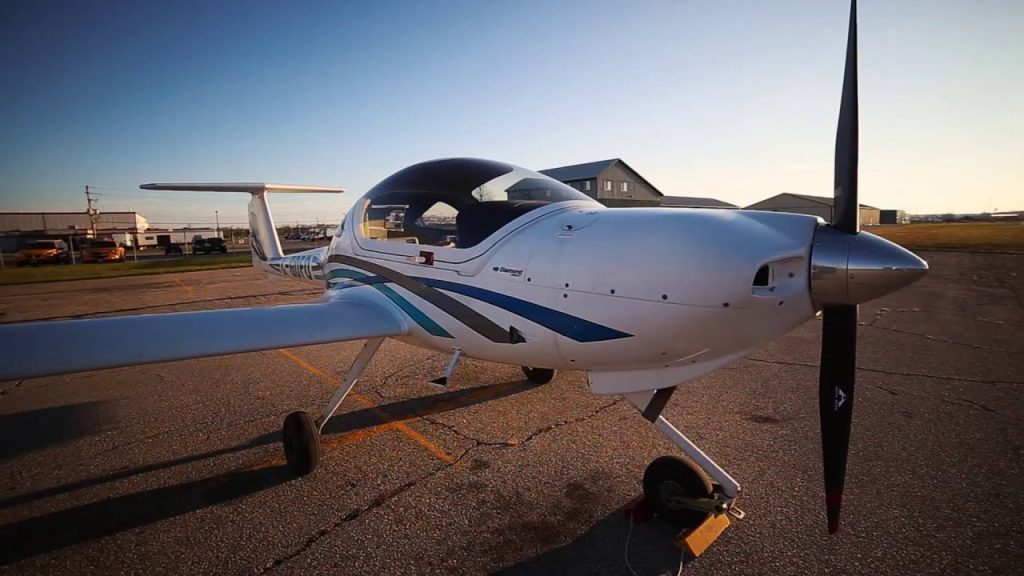

Western University in London, Ontario is one of the country’s largest research institutions, and its Commercial Aviation Management (CAM) program remains one of the only degree pathways in Canada that blends aviation operations, business training, and an Integrated Commercial Pilot Licence. The program attracts students who want a flight career and a management skill set that opens doors beyond the cockpit.
What Sets Western University Apart
Western’s CAM degree offers a unique combination of university-level aviation management education and, for students who choose the flight option, integrated pilot training through MFC Training (a national flight school operating multiple campuses in New Brunswick and Ontario) at CYXU. Students graduate with a BMOS degree, and those in the flight stream complete a Transport Canada–approved Integrated Commercial Pilot Licence with multi-engine and Group 1 instrument ratings. Flight training begins in second year and follows a structured progression through single-engine, multi-engine, and instrument operations.
A significant advantage for CAM students is MFC Training’s scale. The school operates Canada’s largest fleet of Diamond training aircraft, including 45 DA20-C1 Eclipse units, which ensures consistent aircraft availability and standardized training conditions. The program also supports a non-flight track for students aiming for careers in airline operations, airport planning, or aviation management.
What You’ll Learn
CAM blends aviation studies with a full management curriculum. Aviation courses introduce air law, meteorology, human factors, navigation, safety systems, and airline operations. The BMOS structure adds accounting, finance, economics, organizational behaviour, statistics, marketing, analytics, and leadership. Students who pursue the flight option train with MFC Training and complete roughly 200 to 260 hours in the air, progressing from foundational procedures to multi-engine and instrument flight. Honours and specialization modules offer additional depth in aviation operations and managerial decision-making.
Diploma or Degree
CAM students graduate with a Bachelor of Management and Organizational Studies (BMOS). Those in the flight option complete Transport Canada’s requirements for an Integrated Commercial Pilot Licence through MFC Training, including multi-engine and Group 1 instrument ratings.
Pilot Licences
- Integrated Commercial Pilot Licence (CPL)
Pilot Ratings
- Group 1 Instrument Rating
- Multi-Engine Rating
Aircraft Fleet
(Operated by MFC Training)
- Diamond DA20-C1 Eclipse
- Cessna 172S
- Piper Seminole PA44-180
- King Air C90B
Flight Simulators
Students train on a broad suite of aviation training devices, including:
- 3 Situational Awareness Trainers
- 5 Level II FTDs
- 1 Diamond DA40 Level V FTD
- 1 King Air B200 Level V FTD
- CR12 and DA42 FTDs (for G1000 and instrument work)
- Level 5 DA42 FTD (for multi-engine procedures)
Locations
London, Ontario
Fanshawe College
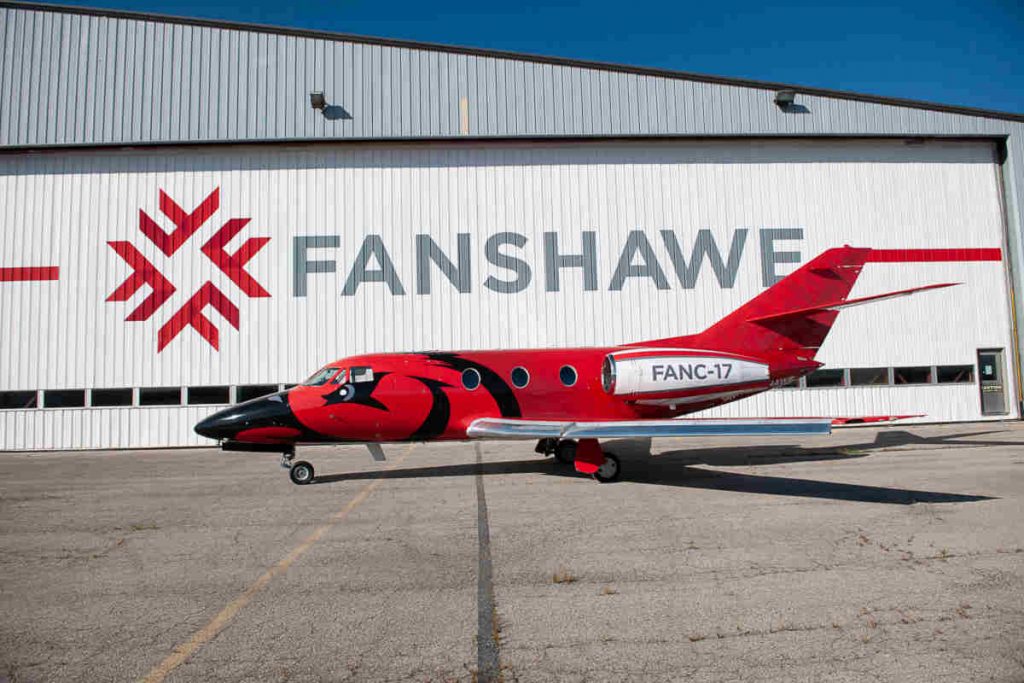

Fanshawe College delivers one of Ontario’s most immersive aviation environments through its Commercial Flight and Aviation Leadership Advanced Diploma, taught at the Norton Wolf School of Aviation & Aerospace Technology. The school is based directly at London International Airport (CYXU), which gives students day-to-day exposure to airline activity, airport operations, and a broad cross-section of the aviation workforce. Training is delivered in partnership with Diamond Flight Centre London (DFCL), which provides access to modern Diamond aircraft and structured commercial pilot training.
Fanshawe appeals to students who want a focused aviation pathway that blends professional pilot training with leadership and management development, making it suitable for those who want to fly and for those building toward roles in airline operations, corporate aviation, or airport management.
What Sets Fanshawe Apart
Fanshawe operates inside an 80,000 square-foot aviation training facility located on the CYXU airfield. Students study steps away from active flight lines and airport operations, which creates daily exposure to real-world airline environments. CYXU consistently ranks among Canada’s busiest regional airports for passenger traffic, and the configuration of DFCL’s fleet provides experience with G1000 glass-cockpit avionics, multi-engine platforms, and structured IFR training.
The Norton Wolf School also delivers one of the largest selections of aviation and aerospace programs in Canada, which means pilot-training students interact with learners in aircraft maintenance, manufacturing, avionics, and flight services. This creates a cross-disciplinary environment that reflects how modern aviation organizations actually function.
What You’ll Learn
The Commercial Flight and Aviation Leadership program combines academic aviation studies, business-oriented coursework, and full commercial pilot training. The aviation curriculum covers meteorology, air law, navigation, flight operations, human factors, avionics systems, and safety practices. Leadership-oriented classes include project management, professional communication, critical reasoning, and fundamentals of organizational behaviour tailored to aviation contexts.
Flight training through Diamond Flight Centre London includes approximately 205 hours in the air, progressing from PPL to CPL, multi-engine, and instrument flight. Training is conducted on modern Diamond aircraft equipped with G1000 avionics, providing experience that aligns with industry expectations for glass-cockpit proficiency.
Diploma or Degree
Fanshawe’s Commercial Flight and Aviation Leadership program is a three-year advanced diploma. It runs approximately 90 weeks and prepares students for entry-level pilot roles and for emerging positions in aviation leadership and operations.
In addition to this flagship program, Fanshawe offers several aviation and aerospace programs across maintenance, manufacturing, flight services, safety, and aerospace operations.
Pilot Licences
- Private Pilot Licence (PPL)
- Commercial Pilot Licence (CPL)
Pilot Ratings
- Group 1 Instrument Rating
- Multi-Engine Rating
- Night Rating
Aircraft Fleet
(Operated by Diamond Flight Centre London)
- Diamond DA20-C1
- Diamond DA40-180
- Diamond DA42-TDI
Flight Simulators
- Diamond DA42 FTD (Level 5)
- Precision Flight Controls CR-12 (Level 2)
- Precision Flight Controls GT1000 (Level 2)
- VMT simulator used for instrument and procedural training
Locations
London, Ontario
British Columbia Institute of Technology (BCIT)
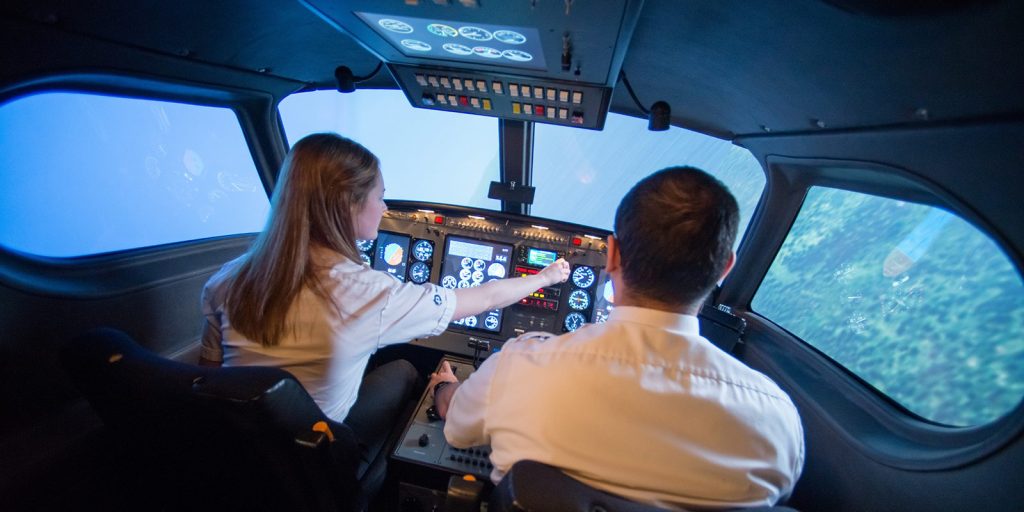

BCIT operates one of the most complete aviation training environments in the country. The Airline and Flight Operations diploma programs sit within the BCIT Aerospace Technology Campus in Richmond, supported by long-standing partnerships with Pacific Flying Club for fixed wing and Coast Helicopter College for rotary wing training. Students move between BCIT’s aviation campus and Boundary Bay Airport, which creates steady contact with active aircraft, operations teams, maintenance shops, and airport activity.
These programs are part of a broader aerospace ecosystem that includes maintenance, avionics, composites, and airport operations programs, which gives students access to perspectives across the industry.
Based on a three-year average from 2022 to 2024, 90 percent of graduates from the Airline and Flight Operations program are employed, and 80 percent hold full-time positions in the industry.
What Sets BCIT Apart
The BCIT Aerospace Technology Campus offers an environment that few colleges can match. Students train inside a purpose-built aviation facility equipped with full-size airframes, composite-materials labs, avionics shops, engine test cells, and advanced simulation suites. This setup places pilot students alongside maintenance, avionics, and aerospace technology programs, which creates daily immersion in the broader aviation ecosystem rather than a flight-school-only setting.
BCIT is also one of the rare institutions in Canada offering both fixed-wing and rotary-wing commercial pilot diplomas. Each program follows its own structure, partner school, aircraft, and training sequence, giving students two distinct entry points into the aviation industry.
The fixed-wing diploma stands out for its accelerated 64-week structure, which is shorter than the 2.5-3 year timelines found in many similar college pathways. The streamlined sequence allows students to reach CPL, multi-engine, and instrument qualifications sooner and begin working earlier.
BCIT also uses a more selective admissions process than many Canadian flight colleges. Applicants must meet academic requirements, complete mechanical and abstract reasoning assessments, secure a Transport Canada Category 1 Medical, and participate in a multi-mini interview. (BCIT recommends completing the medical early, since the process can take time.)
What You’ll Learn
The Airline and Flight Operations – Commercial Pilot (Fixed Wing) diploma blends academic aviation studies with Transport Canada–approved flight training over 64 weeks. Students cover air law, navigation, meteorology, aviation safety, human factors, aircraft systems, ground operations, communications, and leadership. Training at Pacific Flying Club follows a clear progression from initial flight exercises to cross-country navigation, night flying, multi-engine operations, and instrument flight. The program includes roughly 205 hours in the aircraft along with structured simulator time.
The Airline and Flight Operations – Commercial Pilot (Rotary Wing) diploma follows a separate 57-week format delivered with Coast Helicopter College. It leads to a commercial helicopter licence and associated ratings, with a curriculum shaped around rotary-wing flight and operational procedures. This stream suits students who want to move directly into helicopter roles such as utility, heli-tourism, patrol, or entry-level commercial operations.
A minimum grade of 70 percent is required in each academic course, and the Student Pilot Permit exam requires 90 percent.
Diploma or Degree
The Airline and Flight Operations – Commercial Pilot (Fixed Wing) diploma is a 64-week program delivered with Pacific Flying Club at Boundary Bay Airport. Graduates earn a BCIT diploma along with a Private Pilot Licence, Commercial Pilot Licence, Multi-Engine Rating, and Group 1 Instrument Rating.
The Airline and Flight Operations – Commercial Pilot (Rotary Wing) diploma is a 57-week program delivered with Coast Helicopter College in Nanaimo. Graduates earn a BCIT diploma and a commercial helicopter licence with the associated ratings required for entry-level rotary-wing operations.
BCIT also offers additional aviation and aerospace programs, including AME Category M and Category E diplomas, Aerospace Technology programs, Aircraft Gas Turbine Technician training, and a part-time Airport Operations associate certificate.
Pilot Licences
Fixed Wing
- Private Pilot Licence (PPL)
- Commercial Pilot Licence (CPL)
Rotary Wing
- Commercial Helicopter Licence
Pilot Ratings
Fixed Wing
- Group 1 Instrument Rating
- Multi-Engine Rating
Rotary Wing
- Ratings as required for commercial helicopter operations
Aircraft Fleet
Fixed Wing (Pacific Flying Club):
- Cessna 152
- Cessna 172 including G1000 models
- Piper PA-34 Seneca
Rotary Wing (Coast Helicopter College):
- Robinson R22
- Robinson R44
Flight Simulators
- Alsim ALX
- Alsim 250
- Redbird full-motion device
Locations
Richmond, Delta, and Nanaimo, British Columbia
Douglas College
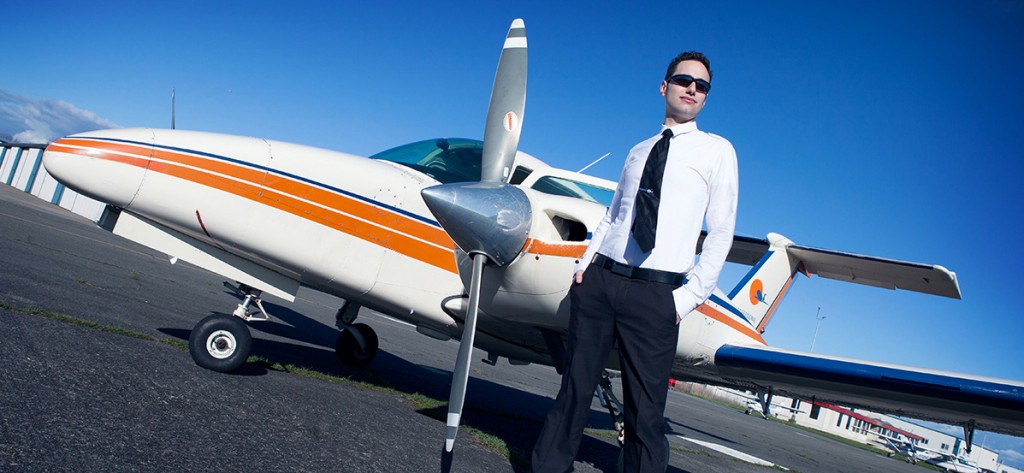
Douglas College offers a combined academic and flight-training pathway through its Associate of Arts for Future Professional Pilots (AAFPP) program. Students complete a 60-credit university-transfer associate degree while training for a Commercial Pilot Licence through the Professional Flight Centre (PFC) at Boundary Bay Airport in Delta, British Columbia. The structure appeals to students who want both a post-secondary credential and a full commercial pilot training progression.
The AAFPP program blends classroom studies with ground school and flight training delivered by PFC. Students apply to both institutions separately and complete the academic and flight components in parallel.
What Sets Douglas College Apart
Douglas is one of the few Canadian institutions offering a university-transfer associate degree designed specifically for aspiring commercial pilots. This gives students the option to continue into a bachelor’s degree while completing the flight training required for commercial aviation.
The partnership with the Professional Flight Centre provides access to an established flight-training environment at Boundary Bay Airport, with structured training leading toward Commercial Pilot Licence qualifications.
What You’ll Learn
Students complete 60 credits of university-transfer coursework, including classes in geography, climate and weather, psychology, statistics, communications, and selected business electives. These courses broaden students’ academic foundation while supporting aviation-related studies.
Flight training through the Professional Flight Centre includes the instruction and flight experience required to work toward a Commercial Pilot Licence, Multi-Engine Rating, and Instrument Rating, including ground school, simulator training, and dual and solo flight time.
Diploma or Degree
Graduates earn an Associate of Arts degree from Douglas College upon completing the required 60 credits. Students who complete their flight training with the Professional Flight Centre and meet Transport Canada requirements can obtain a Commercial Pilot Licence, Multi-Engine Rating, and Instrument Rating.
Douglas College also offers a Concentration in Management in Aviation.
Pilot Licences
- Commercial Pilot Licence (CPL)
Pilot Ratings
- Multi-Engine Rating
Aircraft Fleet
(Owned and operated by Professional Flight Centre)
- Cessna 152
- Cessna 172
- Cirrus SR-20 (G1000)
- Piper PA-28 Warrior II
- Piper PA-44 Seminole
- Diamond DA-42 Twin Star
Flight Simulators
- ALSIM 250
- Redbird FMX full-motion simulator
Locations
Vancouver and Delta, British Columbia
University of the Fraser Valley
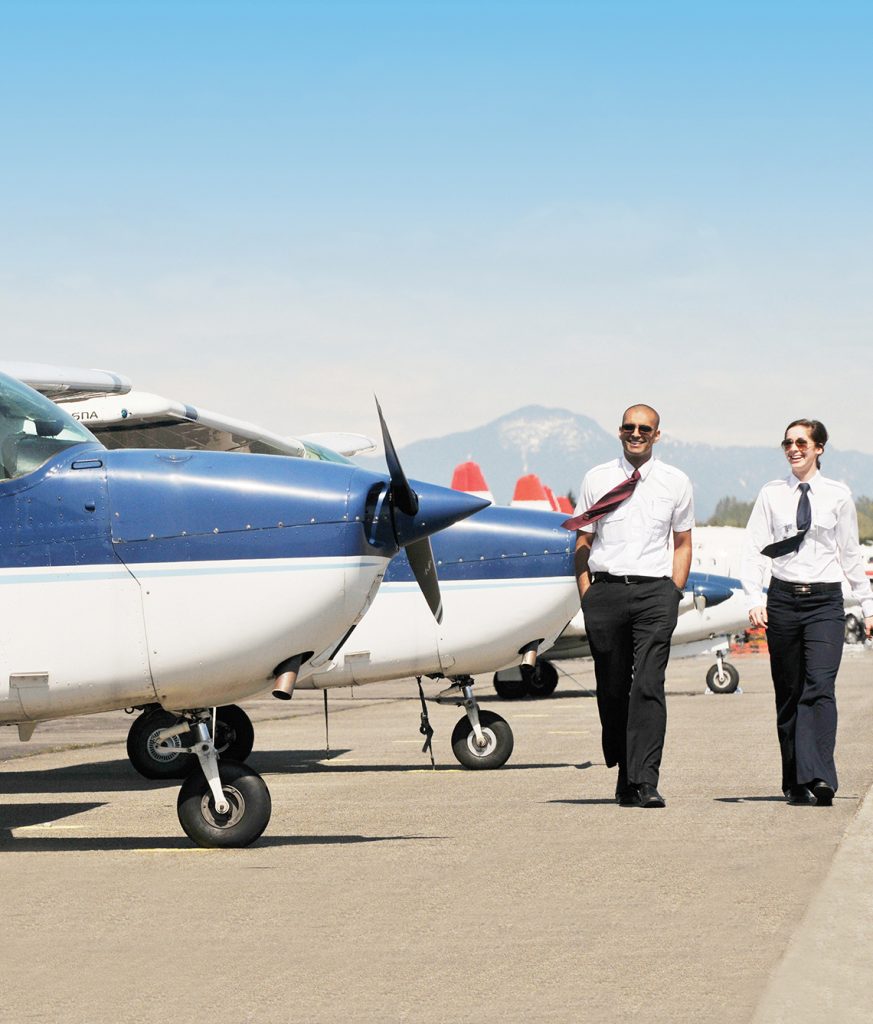

University of the Fraser Valley (UFV), located in Abbotsford, British Columbia, offers business-focused aviation pathways designed for students who want a recognized post-secondary credential alongside professional pilot training. UFV does not operate its own flight school, so students complete Transport Canada–approved pilot training at an external provider of their choice while earning a diploma or degree at UFV. The institution grants academic credit for flight training through an established assessment and transfer process.
What Sets University of the Fraser Valley Apart
UFV takes a different approach from schools that combine flight training and academics under one umbrella. Instead of running its own aviation school, UFV focuses on business education, flexible degree pathways, and the ability to integrate external pilot training into a recognized post-secondary credential.
Students complete their licences through an approved flight school of their choice, then apply that training for academic credit at UFV. This creates unique flexibility: Students can finish flight training before starting at UFV, complete it alongside their coursework, or pursue it after they graduate, and still align their aviation experience with a diploma or degree.
UFV’s emphasis on business fundamentals also sets it apart from most aviation-focused institutions. Courses in management, accounting, operations, and marketing give graduates the skills needed for roles in flight operations, dispatch, safety, and airline administration, as well as pilot careers. For students who want to build a broader academic foundation, UFV’s Bachelor of Integrated Studies lets them fold aviation credits into a customizable degree pathway.
What You’ll Learn
The business-focused aviation curriculum covers subjects such as economics, accounting, marketing, management, aviation safety, aerodynamics, meteorology, and aviation operations. The depth of business training increases at the BBA level, where students complete advanced coursework in finance, strategy, operations, and leadership.
UFV does not provide flight training directly. Instead, students complete Private and Commercial Pilot Licence training, plus ratings, at a Transport Canada–approved flight school of their choice. UFV grants academic credit for completed flight training according to established articulation and assessment guidelines. Students may complete flight training before, during, or after their academic studies, provided they meet UFV’s credit requirements.
This structure gives students control over cost, pace, and preferred training environment, though students must independently coordinate flight-school admissions, scheduling, and progression.
Diploma or Degree
Depending on the chosen pathway, students may graduate with:
- Aviation Diploma (two years)
- Bachelor of Business Administration – Aviation (four years)
- Bachelor of Integrated Studies with aviation-related credits applied toward the degree
What Students Are Saying
Lane Anderson, Business Administration - Aviation Diploma“UFV provides an amazing educational experience. Class sizes are small and there are plenty of opportunities to really get to know your professors. There are some really helpful support systems available for students to help them succeed in school. I give UFV a lot of credit for my personal and professional success. ”
Pilot Licences and Ratings
In UFV’s program, you complete pilot training at the school of your choice, so the licence and rating options and training fleets will depend on your choice.
Locations
Abbotsford, Chilliwack, Mission, and Hope, British Columbia
MFC Training
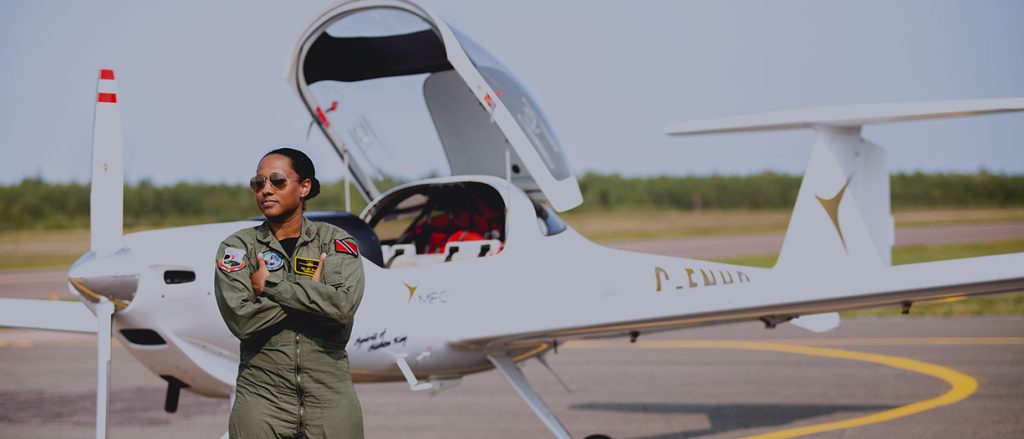
MFC Training (formerly Moncton Flight College) is one of the largest and longest-operating flight-training institutions in Canada. Founded in 1929, it now graduates more than 350 commercial pilots per year and operates one of the country’s biggest training fleets, including Diamond, Cessna, Piper multi-engine aircraft, and turbine-class King Air platforms. With campuses in Dieppe and Lincoln, New Brunswick, MFC offers structured training environments, controlled airspace access, and program pathways that prepare students for entry-level employment across commercial aviation.
What Sets MFC Training Apart
Scale is MFC’s defining strength. With more than 59 aircraft, multiple simulator suites, and two major campuses located at busy regional airports, students benefit from high availability, diverse training conditions, and consistent access to aircraft and instructors. MFC has a long history of delivering commercial-pilot training to Canadian and international airlines, which has helped shape its standardized procedures, multi-crew orientation, and operational approach.
MFC also stands out for the breadth of its academic partnerships. It delivers integrated university-level aviation degrees with Mount Allison University and St. Thomas University, allowing students to work toward a full undergraduate credential while completing professional pilot training. Its 20-month Integrated Airline Transport Pilot (IATP) diploma remains one of the more structured commercial pathways in Canada, progressing students from Private Pilot Licence to multi-engine and instrument qualifications under a tightly managed schedule.
What You’ll Learn
MFC offers more than a dozen training programs ranging from foundational licences to advanced professional pathways. The Integrated Airline Transport Pilot (IATP) Diploma is its flagship offering. Over 20 months, students complete:
- Private Pilot Licence
- Commercial Pilot Licence
- Multi-Engine Rating
- Group 1 Instrument Rating
- Advanced theory modules
- Aviation Safety Management coursework
- Crew Resource Management (CRM) and Multi-Crew Cooperation components
Graduates finish with more than 200 hours of flight time, multi-crew readiness, and a diploma that supports both flight and aviation-operations career routes.
Diploma or Degree
The Integrated Airline Transport Pilot (IATP) program culminates in a diploma.
MFC’s degree-pathway programs with Mount Allison University and St. Thomas University allow students to combine a full undergraduate degree with structured CPL, multi-engine, and instrument training completed through MFC.
Pilot Licences
- Private Pilot Licence (PPL)
- Commercial Pilot Licence (CPL)
- Commercial Pilot Licence with multi-IFR
Pilot Ratings
- Flight Instructor Rating
- Instrument Rating
- Multi-Engine Rating
- Night Rating
- VFR Over-the-Top Rating
Aircraft Fleet
- Cessna 172S
- Diamond DA20-C1 Eclipse
- Piper Seminole PA-44-180
- Beechcraft King Air C90B
Flight Simulators
- Diamond DA40/DA42 Flight Training Devices (FTDs)
- King Air B200 Level 5 FTD
- Multi-Crew / CRM simulator suite
- Instrument and navigation procedural trainers
- Situational awareness trainers
Locations
Dieppe, and Lincoln, New Brunswick
Winnipeg Aviation
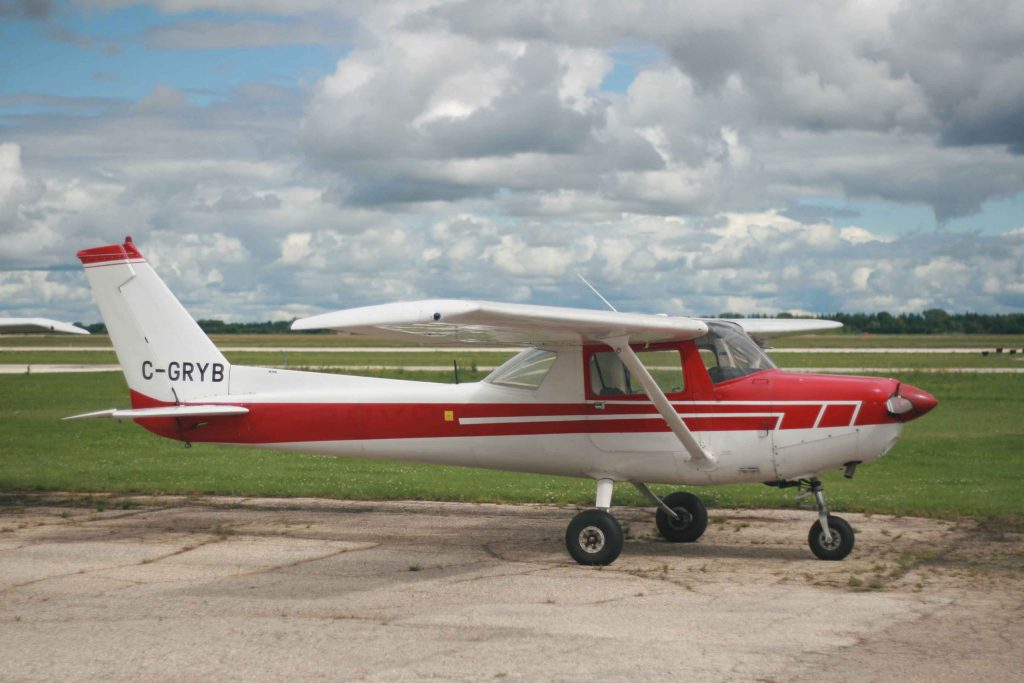

Winnipeg Aviation has been training pilots for more than 45 years and remains one of Manitoba’s most established fixed-wing flight schools. Operating out of St. Andrews Airport just north of Winnipeg, the school provides year-round access to controlled and uncontrolled airspace, three runways, and training conditions that prepare students for Canadian commercial and recreational flight environments. Winnipeg Aviation is known for consistent instructional quality, long-tenured instructors, and a broad menu of licence and rating options.
What Sets Winnipeg Aviation Apart
Winnipeg Aviation is known for its experienced instructors, many of whom have spent decades teaching rather than using instruction as a brief stepping-stone. Students frequently cite the consistency and depth of instruction as reasons for choosing the school or transferring in from other training environments.
The school also offers specialty training options not commonly available at many Canadian flight centres, including aerobatics in a Super Decathlon and seaplane ratings. These advanced skill-building opportunities allow students to broaden their capabilities beyond standard commercial training requirements.
St. Andrews Airport provides an ideal training environment with multiple runways, mixed airspace, and lower congestion than major urban airports, which helps students progress efficiently through solo, cross-country, multi-engine, and IFR stages.
What You’ll Learn
Winnipeg Aviation offers one of the broadest ranges of fixed-wing training options in Manitoba. Along with core Transport Canada licences and ratings, the school provides specialty training such as aerobatics in a Super Decathlon and a Seaplane Rating for pilots interested in float operations.
Students pursuing a commercial career can enroll in the Professional Pilot Course, a comprehensive pathway that includes the Private Pilot Licence, Commercial Pilot Licence, Night Rating, VFR Over-the-Top Rating, Multi-Engine Rating, and Multi-Engine Instrument Rating. The program is structured around approximately 200 hours of total flight time, combining dual, solo, cross-country, multi-engine, and IFR experience.
Diploma or Degree
Winnipeg Aviation offers only licensing programs, with no accompanying diploma or degree.
Pilot Licences
- Private Pilot Licence (PPL)
- Commercial Pilot Licence (CPL)
Pilot Ratings
- Night Rating
- VFR Over-the-Top Rating
- Multi-Engine Rating
- Multi-Engine Instrument Rating
- Single-Engine Instrument Rating
- Flight Instructor Rating
- Seaplane Rating (Float Rating)
- Aerobatics Training (Super Decathlon)
Aircraft Fleet
- Cessna 152
- Cessna 172
- Cessna 182
- Piper PA-28-140 Cherokee
- Piper PA-34 Seneca
- Super Decathlon (aerobatics)
Flight Simulator
- Redbird FMX
Locations
Winnipeg, Manitoba
Brampton Flight Centre
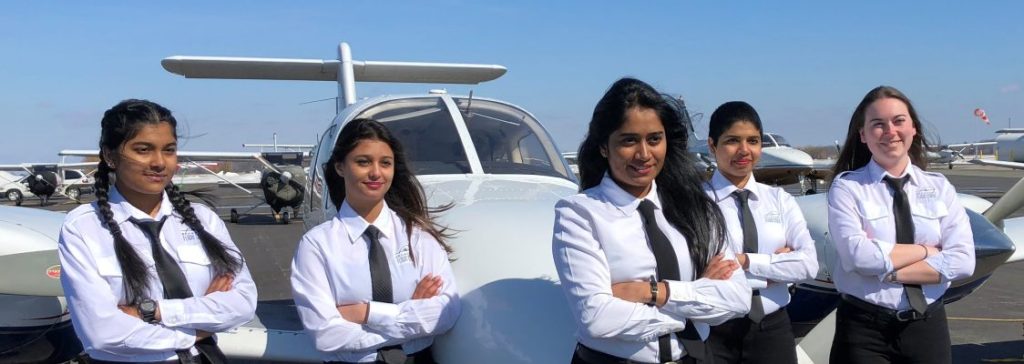

Brampton Flight Centre (BFC), operated by the Brampton Flying Club, has trained pilots since 1946 and remains one of the most established general-aviation training environments in Canada. It is one of the few flight schools in the country that owns and operates its own airport, creating a self-contained training environment with on-site maintenance, facilities, and a large community of private and commercial pilots. BFC graduates have gone on to fly for major Canadian carriers including Air Canada, Porter, Jazz, and Cargojet, as well as international airlines.
What Sets Brampton Flight Centre Apart
Brampton Flight Centre operates out of the Brampton–Caledon Airport, a privately owned, 240-acre airfield housing more than 200 private and business aircraft. Because the airport is operated by a not-for-profit organization, all revenue is reinvested directly into training facilities, fleet improvements, and community aviation programming.
BFC is known for instructional quality and consistency, with long-tenured instructors and strong industry connections. The school maintains pathway opportunities such as Jazz Aviation’s Airline Pathway Program through its Integrated ATPL stream, and its college-track Professional Pilot Diploma includes structured job-readiness preparation such as resume development and mock interview training.
Note: The school has paused international student admissions, so current programs are open only to domestic students.
What You’ll Learn
BFC offers self-paced and structured commercial pathways. Students pursuing a career route commonly choose one of two options:
- Integrated ATPL: A full-time, structured Transport Canada–approved program covering PPL, CPL, multi-engine, IFR, and advanced theory under a fixed progression model.
- Professional Pilot Diploma Program (through Brampton Flight College): A 14-month curriculum that combines academic aviation courses with full pilot-licence progression and industry-aligned job-readiness training.
Students in all pathways have access to glass-cockpit training through G1000-equipped Cessna 172s, multi-engine training on Piper Seminoles, and specialty training such as tailwheel conversion.
Diploma or Degree
Brampton Flight College offers a Professional Pilot Diploma, a 14-month program developed with input from Transport Canada, industry pilots, and ATAC. It combines academic study with full commercial pilot training and prepares students for entry-level commercial roles.
What Students Are Saying
S. Sahota, Private Pilot Licence (PPL)“This airport is very good. The simulators that they have are very good and the seem realistic. The planes that they have are in great condition and they know what they are doing. The place is clean and the staff is really friendly. The flight shop is small, but it does have a lot to offer. Overall, if you are a pilot or want to be one or even if you like flying, this is the place to go. ”
Pilot Licences
- Private Pilot Licence (PPL)
- Commercial Pilot Licence (CPL)
- Integrated Airline Transport Pilot Licence (ATPL)
Pilot Ratings
- Night Rating
- VFR Over-the-Top Rating
- Multi-Engine Rating
- Instrument Rating
- Flight Instructor Rating
- Tailwheel/Aerobatics Intro (Citabria)
Aircraft Fleet
- Cessna 152
- Cessna 172/172S (including G1000-equipped models)
- Piper PA-44 Seminole
- Citabria (tailwheel)
Flight Simulators
- Fasca TruFlite
- Redbird FMX
Locations
Caledon, Ontario
Select Aviation College
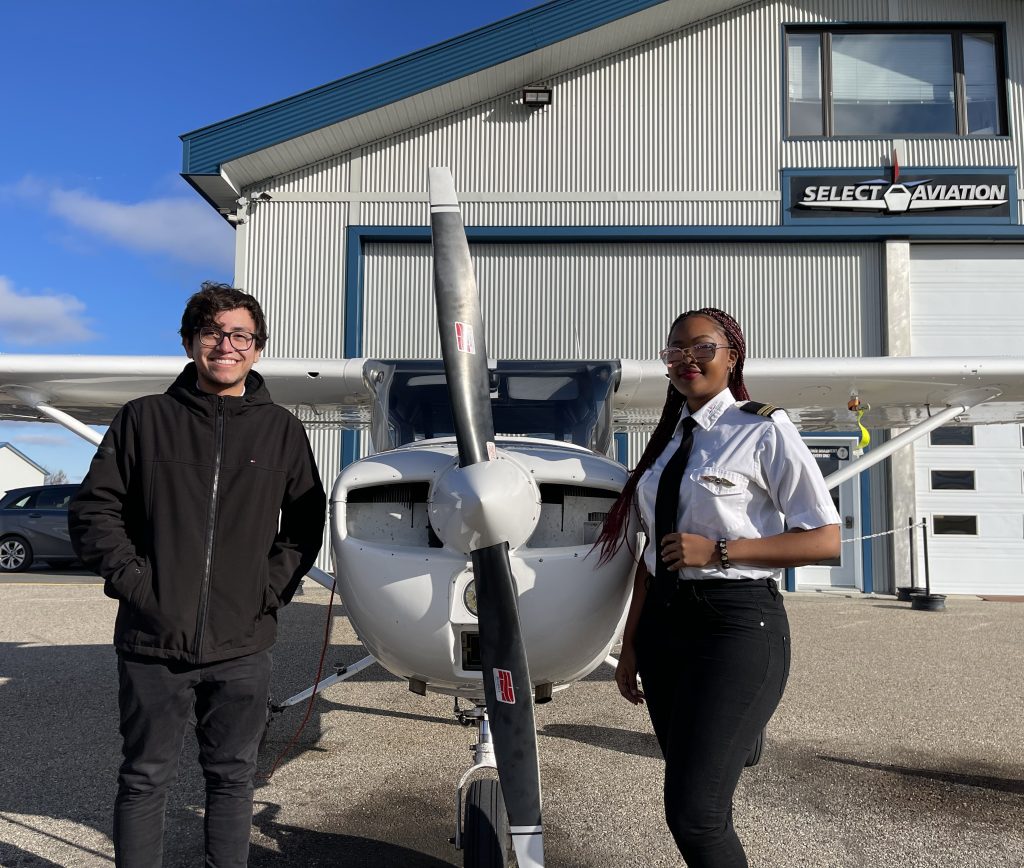
Select Aviation College operates at the Gatineau–Ottawa Executive Airport (CYND) in Quebec’s National Capital Region. It attracts students from across Canada and abroad and trains approximately 100 graduates per year. With more than 40 aircraft across single-engine, multi-engine, bush, and helicopter operations, Select Aviation offers one of the most diverse training fleets in eastern Canada.
What Sets Select Aviation College Apart
Select Aviation enrolls students from more than 35 countries, and its diploma programs are offered in English and French. (Note: The school does encourage students to train in English, acknowledging it as the standard operational language of international aviation.)
Domestic students benefit from a rare advantage among private flight colleges: access to government financial aid, including Quebec’s AFE program, OSAP for eligible Ontario residents, and federal living-allowance support when applicable.
A defining feature of Select Aviation is the breadth of its training environment. CYND is equipped with a Flight Service Station (FSS), multiple IFR approaches, and varied airspace that supports advanced training. Students progress through structured diploma tracks or flexible modular licensing, depending on their goals and schedule.
What You’ll Learn
Students can train through modular licensing (pay-as-you-go licences and ratings) or one of several Attestation of College Studies (ACS) diploma programs. Modular training allows students to progress at their own pace, while ACS programs follow a full-time schedule that includes approximately 25 hours of instructor-led classroom study per week.
Diploma programs combine Transport Canada ground school, simulator training, and flight hours on a diverse fleet that spans Cessna aircraft, tailwheel platforms, multi-engine training aircraft, and turbine helicopters (Bell 505). Students in bush-pilot training complete time on rugged tailwheel aircraft suited to off-strip operations.
Diploma or Degree
Select Aviation offers the following Attestation of College Studies (ACS) programs, Quebec’s college-level diploma equivalent. Programs take 18 to 24 months depending on stream:
- EWA.1F Commercial Air Transport Pilot – Integrated ATPL
- EWA.16 Commercial Air Transport Pilot – Airplane
- EWA.18 Commercial Air Transport Pilot – Bush Pilot
- EWA.1G Commercial Air Transport Pilot – Helicopter CPL
Graduates finish with the licences, ratings, and hours required for entry-level commercial aviation roles.
What Students Are Saying
John S., Commercial Air Transport Pilot Airplane“I was looking at Seneca and Western but my jaw dropped at the tuition. I already had a BSc and had taken odd jobs for several years before deciding to become a Pilot. My key revelation was that the top flight schools place as many students as the colleges with big airlines. Select Aviation was a faster path to where I wanted to go in the end. I finished 220+ hours and 75 simulator hours and got my commercial license in about 20 months. Select Aviation was a great place to learn with dedicated instructors. I would definitely recommend it. ”
Pilot Licences
- Private Pilot Licence – Airplane
- Private Pilot Licence – Helicopter
- Commercial Pilot Licence – Airplane
- Commercial Pilot License – Bush Pilot
- Commercial Pilot License – Helicopter
- Integrated Airline Transport Pilot Licence
Pilot Ratings
- Flight Instructor Rating
- Instrument Rating
- Multi-Engine Rating
- Night Rating
- Seaplane Rating
- VFR Over-the-Top Rating
Airplane Fleet
- Cessna 150
- Cessna 172
- Cessna 180
- Cessna 185
- Piper Seminole (glass cockpit)
Helicopter Fleet
- Bell 505
- Robinson R44
Flight Simulators
- ALSIM AL-250
- ALSIM ALX
Locations
Gatineau, Quebec
International Pilot Academy
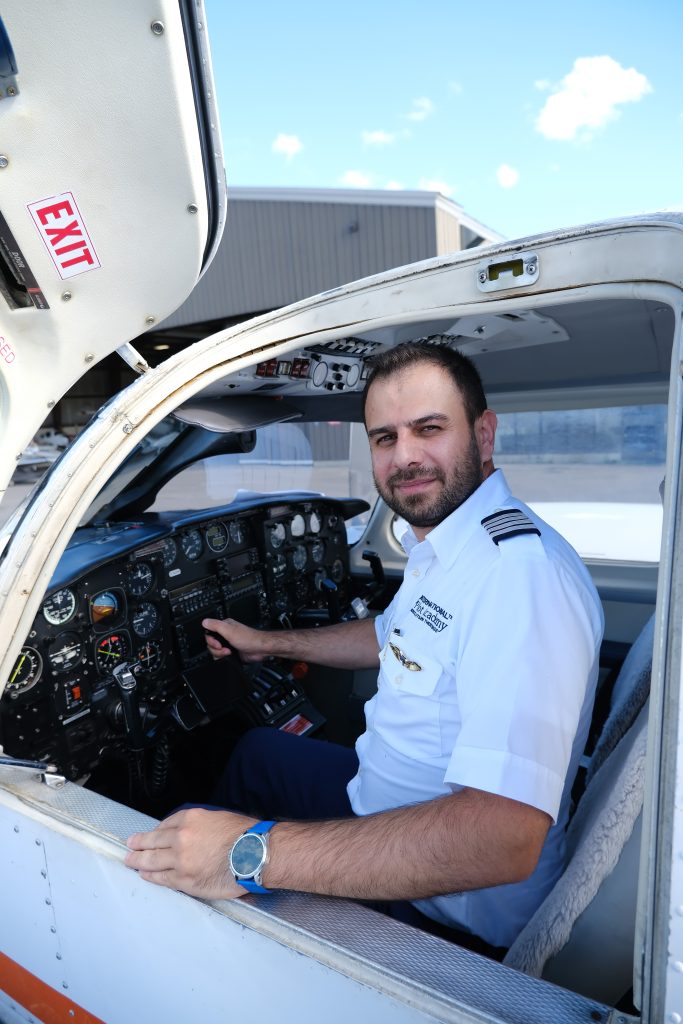
International Pilot Academy (IPA), based at the Gatineau–Ottawa Executive Airport, has been training pilots since 2011 and offers a full suite of fixed-wing programs from recreational flying through to integrated airline-transport pathways. The school focuses on accessible, flexible flight training supported by a diverse fleet and instructors who bring experience from both civilian and commercial aviation.
What Sets International Pilot Academy Apart
IPA offers a broader mix of training options than many small flight centres, including aerobatics, instructor ratings, and an MCC with jet-orientation training for students preparing to transition into multi-crew environments. It also partners with Cégep Heritage College, allowing students to complete a college-recognized Private Pilot Licence within a formal academic framework.
Because it operates out of CYND (the same airport used by Select Aviation) IPA has access to multiple instrument procedures, a Flight Service Station, and a training environment that supports private and commercial progression.
What You’ll Learn
IPA’s programs range from modular PPL and CPL training to its structured Integrated ATPL, which includes approximately 900 hours of ground school, and 227 flight-training hours delivered over two years. Students move through single-engine, multi-engine, instrument, and advanced crew procedures, supported by aircraft-specific instruction across high-performance, complex, and multi-crew platforms.
The Heritage College partnership provides a route for beginners who want a college-recognized academic credential aligned with their pilot training.
Diploma or Degree
IPA offers only licensing programs, with no accompanying diploma or degree.
Pilot Licences
- Recreational Pilot Permit
- Private Pilot Licence (PPL)
- Commercial Pilot Licence (CPL)
- Integrated Airline Transport Pilot Licence (ATPL)
Pilot Ratings
- Aerobatics Training
- Flight Instructor Rating
- Instrument Rating
- Multi-Engine Rating
- Night Rating
Aircraft Fleet
- Cessna 172N
- Cessna 172P
- Piper PA-38-112 Tomahawk
- Symphony SA-160
- Piper PA-31-350 Navajo Chieftain
Flight Simulators
- Redbird Jay (procedural simulator; not Transport Canada-approved for credit)
Locations
Gatineau, Quebec
Genesis Flight College

Genesis Flight College, based at the Collingwood Regional Airport, offers modular, integrated, and cadet-style commercial pilot pathways. The school focuses on structured progression using an all-Diamond fleet with modern glass-cockpit avionics and provides flexible training models for students who want accelerated programs or part-time scheduling. They also have a network of rental units for students who need accommodation.
What Sets Genesis Flight College Apart
Genesis operates one of Ontario’s most advanced all-Diamond training fleets, including G1000-equipped DA20, DA40, and DA42 aircraft. Students train exclusively in glass-cockpit environments, which closely reflect the avionics used in modern commercial aircraft. This reduces the transition curve for graduates moving into multi-crew or airline environments and provides an advantage in instrument procedures, situational awareness, and cockpit management.
The school’s structured programs include modular training, an Integrated ATPL-style pathway, and a selective cadet stream where accepted students receive a conditional employment offer through participating partner airlines upon successful completion of training.
Genesis is also a registered private career college, which gives students access to a one-year Commercial Pilot Diploma that can be completed alongside their flight training.
What You’ll Learn
Genesis offers three main commercial pathways:
Modular Pilot Program
Flexible, pay-as-you-go licensing designed for students who want to train part-time or customize their pace. Covers PPL, CPL, and ratings.
Integrated ATPL-style Program
A structured 18-month pathway for students seeking an accelerated route to a commercial career. The program includes Private and Commercial Pilot Licences, Multi-Engine Rating, Group 1 Instrument Rating, and advanced theory aligned with ATPL knowledge requirements. (Note: Students do not graduate with an actual type rating, which must be issued by an airline on a specific aircraft.)
Cadet Program
A selective training stream where students receive a conditional job offer with a partner airline, subject to completion of all training requirements. This program includes additional professional skills training, airline-style procedures, and advanced simulator time.
Students train primarily on G1000 avionics, learning instrument procedures, automation management, multi-engine operations, and complex flight planning using modern electronic flight information systems.
Diploma or Degree
Genesis Flight College is registered as a private career college in Ontario and offers a one-year Commercial Pilot Diploma. Students may complete the diploma concurrently with their modular or integrated flight training programs.
What Students Are Saying
Peter Gallant, Private Pilot Licence (PPL)“I recently completed my multi-engine rating at Genesis in the amazing Diamond DA42. Genesis is extremely well-run, has a very well-maintained fleet of state-of-the-art Diamond aircraft, and everyone - from the owner Dave to the dispatchers and my instructor Ted Lee are focused, professional and caring. My highest recommendation for anyone looking for a quality flight training experience! ”
Pilot Licences
- Private Pilot Licence (PPL)
- Commercial Pilot Licence (CPL)
Pilot Ratings
- Flight Instructor Rating
- Instrument Rating
- Multi-Engine Rating
- Night Rating
- VFR Over-the-Top Rating
Aircraft Fleet
- Diamond DA40
- Diamond DA20
- Diamond DA42 Twin Star
Flight Simulator
- G1000-equipped Flight Training Device (FTD)
Locations
Collingwood, Ontario
Canada Aviation Academy
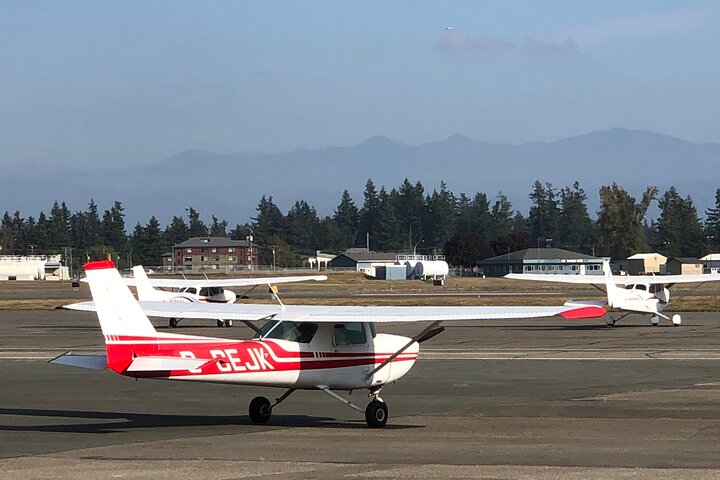
Canada Aviation Academy (CAAI) operates out of Abbotsford International Airport in British Columbia and has been training recreational and professional pilots since 2013. It is a Transport Canada–approved Flight Training Unit and a designated private career institution in B.C., with Education Quality Assurance (EQA) status and Designated Learning Institution (DLI) approval for international students.
What Sets Canadian Aviation Academy Apart
CAAI focuses on a clear, licence-driven training pathway rather than academic credentials. Students can progress from a Recreational Pilot Permit through Private and Commercial licences at a single school, with structured lesson plans published openly so trainees know exactly how each phase of training unfolds.
CAAI also offers “Recency/Finish Up” training tailored to pilots who started training elsewhere or who have been out of the cockpit for several years, making it a practical option for people returning to flying after a long break.
What You’ll Learn
CAAI’s training follows a clear progression from foundational flying to advanced commercial procedures. Students begin with core Private Pilot Licence coursework, including air law, meteorology, navigation, and aircraft operations, before moving into increasingly complex flight skills such as cross-country planning, emergency procedures, and controlled-airspace operations.
Commercial Pilot Licence training expands that foundation with advanced handling, extended cross-country flights, enhanced instrument procedures, and higher-precision flight exercises required for professional-level competency. Night Rating and VFR Over-the-Top add layered weather and visibility scenarios that prepare students for real-world operational environments.
Pilots returning after time away or transferring from other schools can complete structured recency or finish-up training, allowing them to meet outstanding Transport Canada experience requirements or refresh skills to licence standard. Flight Instructor Rating candidates receive dedicated preparation in pedagogy, lesson-planning, air exercises, and evaluation techniques required to teach safely and effectively as Class 4 instructors.
Diploma or Degree
CAAI offers only licensing programs, with no accompanying diploma or degree.
Pilot Licences
- Recreational Pilot Permit
- Private Pilot Licence (PPL)
- Commercial Pilot Licence (CPL)
Pilot Ratings
- Flight Instructor Rating
- Night Rating
- VFR Over-the-Top Rating
Aircraft Fleet
- Cessna 150
- Cessna 172
Locations
Abbotsford, British Columbia
Coastal Pacific Aviation
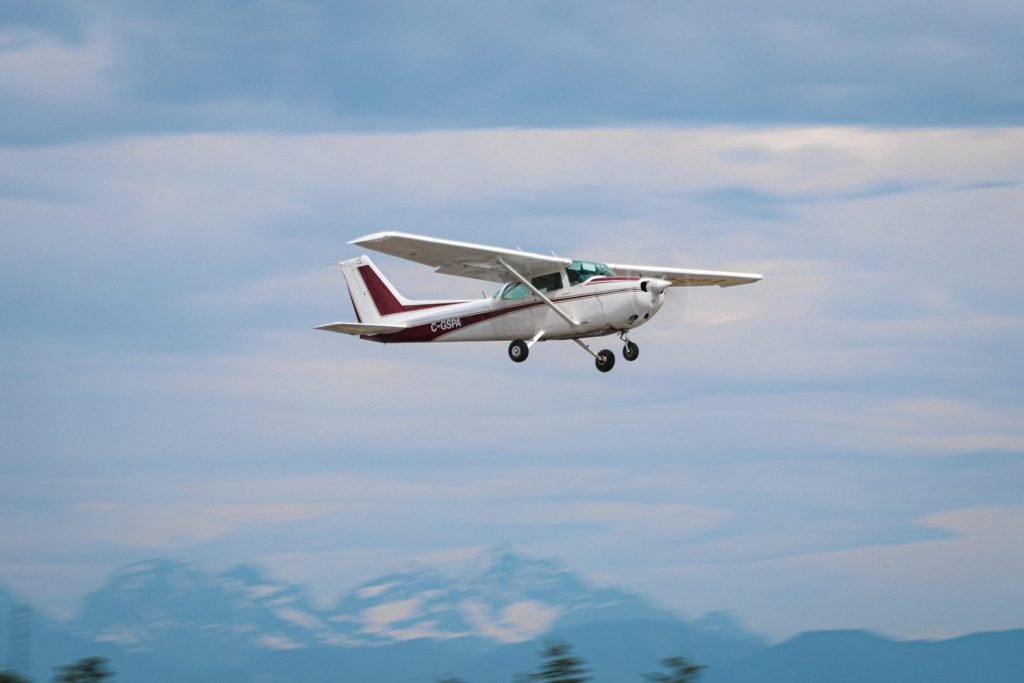
Coastal Pacific Aviation (CPair) has been training pilots at Abbotsford International Airport since 1973. The school operates one of the larger fixed-wing training fleets in British Columbia and offers a mix of modular licences and structured professional pathways that take students from first flight through advanced commercial qualifications.
What Sets Coastal Pacific Aviation Apart
On top of its other course offerings, CPA delivers an Accelerated Professional Pilot Program, which bundles your PPL, CPL, Multi-engine Class Rating and Multi-Engine Instrument Rating into an intensive 12-month curriculum. However, the school notes that you’re not required to finish within a year; in fact, just 20 percent of students complete the program in that time.
Whether your pursuit of becoming a pilot is personal or professional, CPA will prepare you with a holistic educational experience. The school boasts structured training, a strong alumni network, a commitment to safety and stability, and state-of-the-art facilities and resources.
What You’ll Learn
CPair offers modular training and two structured professional pathways: the Accelerated Professional Pilot Program, which brings together PPL, CPL, Multi-Engine, and Group 1 IFR in a continuous full-time sequence, and the Airline Transport Pilot Licence (Aeroplane) Integrated Program (IATPL), a Transport Canada–approved curriculum that integrates early licences, advanced instrument training, and multi-crew procedures.
CPair’s fleet includes Cessna 172s, a Diamond DA42, Piper PA-30 multi-engine aircraft, and a Cessna 185 floatplane, allowing trainees to advance from foundational flying to complex, multi-engine and float operations within the same training environment.
Students also benefit from CPAIR’s multi-platform training ecosystem, which includes PFC and Redbird simulators used for instrument procedures and scenario-based training. The modular format allows students to progress at their own pace, while the accelerated and integrated pathways give full-time trainees a clearer, more streamlined route into commercial aviation.
Diploma or Degree
CPair offers only licensing programs, with no accompanying diploma or degree.
Pilot Licences
- Private Pilot Licence (PPL)
- Commercial Pilot Licence (CPL)
- Airline Transport Pilot Licence – Integrated (ATPL)
Pilot Ratings
- Flight Instructor Rating
- Instrument Rating
- Multi-Engine Class Rating
Aircraft Fleet
- Cessna 172
- Diamond DA42
- Piper PA-30
- Cessna 185 floatplane
Flight Simulators
- PFC FLight Training Device
- PFC-V
- Redbird simulator
Locations
Abbotsford, British Columbia
Harv’s Air
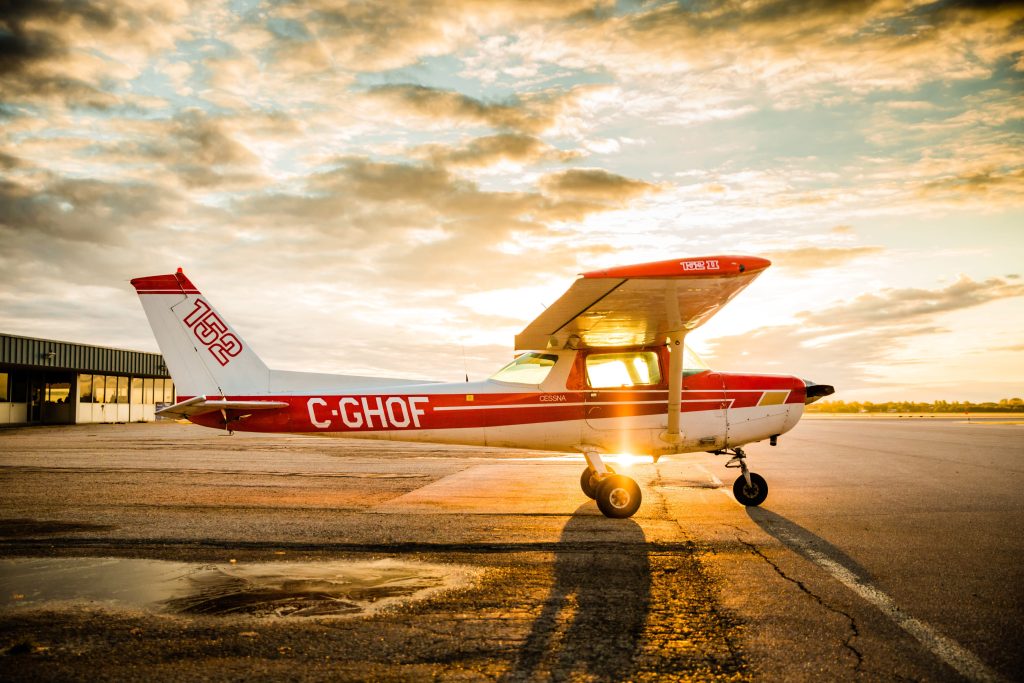
Harv’s Air has been training pilots for nearly 50 years across two Manitoba locations, offering modular and integrated programs designed for flexible progression. The school trains in flat prairie airspace with low traffic density and more than 300 VFR days per year, giving students consistent flying conditions throughout the year.
What Sets Harv’s Air Apart
Harv’s Air is a family-run operation led by founder Harv Penner, a Class I Flight Instructor with more than 37 years of teaching experience and 25,000+ flight hours. Students gain mentorship from one of the most experienced instructors in Canada, supported by a team with deep instructional backgrounds.
The school is one of the few in Canada to offer aerobatics training in both a Citabria and a Pitts S-2B, along with an Aerobatic Instructor Rating, creating a training environment that goes well beyond standard PPL/CPL progression.
Harv’s Air delivers modular training on a pay-as-you-go basis, plus Integrated ATPL programs that begin three times per year (January, April, September). Students can choose between a self-paced pathway or a structured full-time environment. For travelling trainees, on-site accommodation is available, and the school provides rentable vehicles due to limited public transit access.
What You’ll Learn
Harv’s Air offers more than a dozen licence and rating pathways, from foundational PPL and CPL training to advanced multi-engine, IFR, aerobatics, and instructor qualifications. The Multi-Engine Instrument Program prepares students for multi-crew and commercial operations through combined multi-engine and instrument training.
Those pursuing professional careers can enroll in the Professional Pilot Course or the Integrated ATPL, both designed to take students from zero time through commercial proficiency with structured ground school, scenario-based simulator training, and progressive flight exercises. Additional specialty options include FAA licences, foreign conversion training, and single-engine IFR.
Diploma or Degree
Harv’s Air offers only licensing programs, with no accompanying diploma or degree.
Pilot Licences
- Recreational Pilot Permit
- Private Pilot Licence (PPL)
- Commercial Pilot Licence (CPL)
- Airline Transport Pilot Licence (ATPL)
- FAA Pilot Licence (conversion or training)
- Foreign Pilot Licence Conversion
Pilot Ratings
- Aerobatics
- Aerobatic Instructors Rating
- Flight Instructor Rating
- Multi-Engine Rating
- Multi-Engine Instrument Rating
- Single-Engine Instrument Rating
- Night Rating
Aircraft Fleet
- Cessna 150
- Cessna 152
- Cessna 172
- Citabria
- Piper Twin Comanche
- Piper Seminole
- Pitts S-2B
Flight Simulators
- Redbird FMX (full-motion)
- Elite BATD
- Elite Pro Panel
Locations
Steinbach, and St. Andrews, Manitoba
Island Air Flight School and Charters Inc.
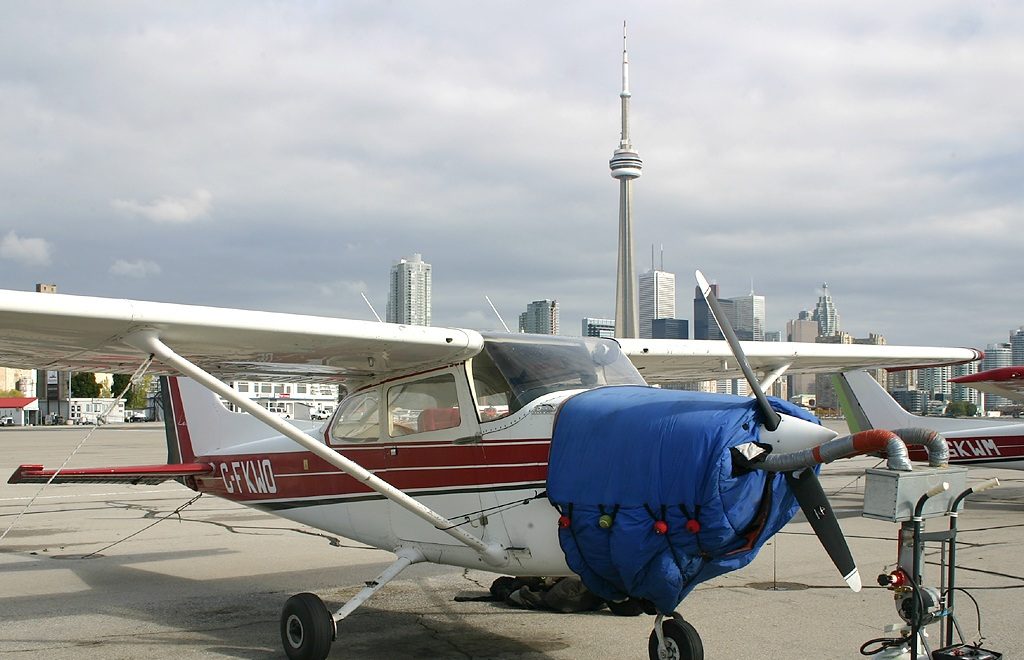
Centrally located on the Toronto Islands, just steps away from the heart of the city, Island Air Flight School (Island Air) delivers comprehensive training with spectacular views of the Toronto skyline. With a fleet of 14 aircraft, including a Cessna equipped with a G1000 glass cockpit, IAFSC has the expertise and technology to earn your wings in no time.
What Sets Island Air Flight School Apart
Island Air offers an accelerated ground school delivered over four intensive weekends, a faster option compared to standard multi-week formats. Each class is capped at 18 students, creating a more focused learning environment and easier access to instructors.
The fleet includes 14 aircraft, ranging from Cessna 150/152 trainers to a Garmin G1000-equipped Cessna 182 and a multi-engine Piper Aztec. Students learn in a busy towered airport environment, gaining early experience with radio procedures, sequencing, and situational awareness in controlled airspace.
The school’s pay-as-you-go structure supports financial flexibility, and students consistently highlight the quality of instruction and the unique training environment created by flying out of Toronto’s downtown airport.
What You’ll Learn
Island Air provides modular training across recreational, private, and rating pathways with structured ground school, instrument procedures, dual flight lessons, and solo progressions. The school offers both single-engine and multi-engine instrument training, along with night and VFR OTT qualifications. Students train in an operationally complex airspace that strengthens communication skills, traffic management, and decision-making.
Ground school is delivered in small cohorts to support individualized instruction, with additional resources provided through student-specific materials and in-cockpit training across their Cessna and Piper platforms.
Diploma or Degree
Island Air offers only licensing programs, with no accompanying diploma or degree.
What Students Are Saying
Youssef A., Private Pilot License“Island Air is a great place to learn how to fly. Amazing views flying out Downtown Toronto at the island and it's a busy airport so you learn how to make proper radio calls with tower and deal with different situations and instructions from them. I have been to different airports and different flight schools during my training but my experience at Island Air was the best. The CFI Kiran is an amazing person and have a great team of instructors, some of whom I flew with like Vivek, Giorgino and Hassan. They played a very important role in helping me reached the airline world. The instructors are very resourceful, patients, friendly and always willing to help their students. Mel, the owner of the flight school is a great person and takes great care of the planes and maintain them well. He may come out as strict person but that's because of his passion about his flight school. I personally enjoyed my experience at Island Air since 2016 and thanks to the great team, I was able to become a successful pilot. ”
Pilot Licences
- Recreational Pilot Permit
- Private Pilot Licence (PPL)
Pilot Ratings
- Instrument Rating, Single Engine
- Instrument Rating, Multi Engine
- Multi-Engine Rating
- Night Rating
- VFR Over-the-Top Rating
Aircraft Fleet
- Cessna 150M
- Cessna 152
- Cessna 172M
- Cessna 172N
- Cessna 172S
- Cessna 182T (G1000 glass cockpit)
- Piper Aztec (PA-23D)
Locations
Toronto, Ontario
 Editorial Team
Greetings from Cameroon. My daughter’s wish is to become a pilot. She is in the high school and will be completing in June 2027. I wish her to start studies in September 2027. Please, can i have the brochures of the various aviation schools in Canada.? She wishes to do her studies in Canada.
Thanks as i anxiously wait to hear from you.
Hi Asaa Jonathan Neba,
Thank you for reaching out for more information. More details can be found through CourseCompare.ca Aviation subject page.
Aviation
https://www.coursecompare.ca/courses/subject/aviation-courses-training/
Additional information that might be helpful:
How to Become a Pilot in Canada
https://www.coursecompare.ca/how-to-become-a-pilot-in-canada/
How Much Does It Cost to Become a Pilot? Grants, Loans, and Scholarships in Canada
https://www.coursecompare.ca/how-much-does-it-cost-to-become-a-pilot/
If you have additional questions, you can reach out to our team at hello@coursecompare.ca or call us at 1 (800) 750-1392.
Thanks again,
The CourseCompare Team