


One of the first questions new grads ask is: How do I get a job now?
In a competitive labour market, post-secondary co-operative education, or co-op, can be the advantage students need. Co-op combines on-the-job experience with classroom learning—helping students develop practical skills like communication, problem-solving, real-world teamwork, and a sense of professional discipline, in addition to technical skills, before graduating. It gives students a foot in the door at companies hiring for their roles, while also helping fill out resumes with more than extracurriculars.
Plus, co-op pays—literally. Recent data from CEWIL Canada shows that the national average hourly wage for co-op students is around $23, with students earning between CAD $9,400 and $12,400 per work term on average, depending on their field.
Today, work-integrated learning (WIL) opportunities including co-ops are widely available across Canada. According to that same CEWIL Canada report, there are more than 6,200 WIL programs at over 80 post-secondary institutions nationwide.
When you evaluate co-op options, it’s worth checking key indicators: placement rates, average co-op wages, and whether employers actively participate. These data often reflect how well-connected a program is to real industry demand—and form the basis for our ranking of Canada’s best co-op programs.
Often, Canadian colleges and universities leverage their long-built reputations in particular fields to create robust employment networks for the co-op programs. There’s Humber Polytechnic’s connection to film and media, George Brown’s strong presence in the culinary industry, and Conestoga’s links to the skilled trades. If you’re serious about getting into the wine business, Niagara College is likely at the top of your list. Meanwhile, University of Waterloo has a long-standing reputation for placing its engineering and computer science students among the top tech companies, while a school like University of Toronto is world-renowned in medical sciences.
Looking for a co-op program that offers real-world training and helps you graduate job-ready? Our ranking of the 20 best co-op programs in Canada highlights institutions with strong records in job placement, student earning potential, and employer engagement. Read on to find the program that’s right for you.
University of Waterloo


University of Waterloo is the nation’s leader in co-operative education with the largest co-op program in North America. In some cases, co-op is mandatory, including undergraduate engineering and several arts and mathematics programs. (Waterloo also came out on top in our latest ranking of engineering programs.) Programs report high levels of employment for graduates, with 96 percent of employed co-op grads finding jobs related to skills gained at Waterloo and 8,000+ employers from more than 70 countries actively recruiting on campus.
What Students Are Saying
Chris Ward, Introduction to Java Programming“Waterloo's co-op programs for CS (Computer Science) students is the best in Canada and one of the best in the world. The students are very smart and motivated. Work is part of the learning experience, with rotating semesters in class vs. on the job. I'm in my third year but can already see people in my year and the year ahead of me getting job offers from Microsoft, Google, Meta, etc. -- the big names -- in Canada and in the U.S. I can't speak for other co-ops, but you can't find better than the CS opportunities here IMO. ”
What Sets UWaterloo’s Co-op Program Apart
The University of Waterloo is a member of Co-operative Education and Work-Integrated Learning (CEWIL) Canada, which established the Accreditation Council to regulate post-secondary co-operative education programs in Canada. The university has more than 120 CEWIL Canada accredited co-op programs across six faculties.
Co-op students at UWaterloo alternate study terms with work terms and graduate with up to two years of relevant, paid work experience—everything from applying skills to solve real-life problems to navigating the hiring process. Students can earn $9,000 – $22,000 per co-op term.
Locations
Waterloo, Ontario
Seneca Polytechnic


Seneca officially rebranded as Seneca Polytechnic in 2023, a move that reflected their long-standing polytechnic model which combines the best of both university and college educational approaches. Students can earn undergraduate degrees, diplomas and certificates at Seneca, and co-ops are a central part of the experience across many programs, from aviation and business management to child development and health administration.
What Students Are Saying
Chris Arnold, Animation“Seneca is one of the best options for students looking for an accredited diploma program. I myself am studying animation, and cannot picture myself picking another school. The instructors are clear and willing to offer assistance, and may have worked on some recognizable titles, it’s always great to listen to their stories before or after class. Located in Toronto, the campus is easily accessible with tons to do in between classes, or places to go after hours with classmates or the cool profs. The animation program is actually one of the hardest to get into in Canada, but that leads to some of the biggest animation studios in the world looking to Seneca for potential employees when it’s time to graduate. Calling the program anything short of Oscar worthy isn’t enough, it deserves Best Picture. ”
What Sets Seneca’s Co-op Program Apart
Seneca breaks down its work-integrated learning offerings into mandatory and optional co-ops and work terms. Co-op is mandatory for select undergraduate degree programs, with paid work terms happening over two academic semesters with a minimum requirement of 420 hours of work. Diploma and certificate programs at Seneca may include optional work terms over shorter periods, such as cosmetic science, supply chain management, esports marketing, and cannabis regulation & quality assurance.
Locations
Toronto, Markham, and Peterborough, Ontario
Conestoga College

Conestoga College has campuses in eight communities in Southern Ontario, a centre of economic growth in Canada. With more than 85 co-op programs, Conestoga offers a wealth of options for students seeking to gain the skills they need to hit the ground running in the work world.
What Students Are Saying
Kristen Chan, Bachelor of Early Learning Program Development (Honours)“Lots of work-integrated (WIL) learning and amazing community feel to this program at Conestoga. Invaluable experience in a kindergarten classroom topped off excellent classroom training by first-rate professors in this bachelor's degree program. Highly recommended. ”
What Sets Conestoga’s Co-op Program Apart
As the top ranked trade school in Canada, Conestoga particularly excels at delivering hands-on experiential learning opportunities for its skilled trades programs, which are delivered at multiple campuses to meet the needs of the construction, industrial, and service sectors. The school offers traditional apprenticeships as well as pre-apprenticeships in collaboration with private sector companies.
Co-op programs, which can be mandatory or optional depending on the program, span a wide array of disciplines, including applied artificial intelligence and machine learning, civil engineering technician, culinary management, and public relations.
Apprenticeships include automotive service technician, cabinet maker, brick and stone mason, roofer, welder, and general machinist.
Locations
Brantford, Cambridge, Guelph, Ingersoll, Kitchener, Milton, Stratford, and Waterloo, Ontario
Humber Polytechnic


Like Seneca, Humber officially rebranded as Humber Polytechnic to reflect its commitment to theoretical learning and hands-on experience. Co-op education at Humber is structured around diverse work-integrated learning opportunities to prepare students for their future careers, which can include field placements, apprenticeships, practicums, clinical placements, co-operative education work terms, internships, or service learning.
What Students Are Saying
Shane Ramirez, Array“Amazing teachers who have years of experience in their industries, BIG focus on industry connections and real-life case studies and practical examples. The Lakeshore Campus is also beautiful! ”
What Sets Humber’s Co-op Program Apart
Humber Polytechnic’s Faculty of Applied Sciences and Technology offers work placements in Canada and abroad, with degree and diploma programs in engineering, architectural technology, computer programming and more.
Students also get hands-on training at Humber’s Barrett Centre for Technology Innovation, which builds on the college’s expertise in areas including automation and robotics, systems integration, augmented and virtual realities and user experience testing. Students can also develop their media skills at Humber’s Digital Broadcast Centre, home to Humber TV and Radio Humber. It’s the only Greater Toronto Area college with a CRTC campus instructional license and fully operational radio station.
Locations
Toronto, Ontario
University of Toronto


The University of Toronto (U of T) offers co-op opportunities primarily at its Scarborough campus, with diverse academic specializations for students who are interested in building expert knowledge to prepare them for their careers.
What Sets U of T’s Co-op Program Apart
U of T co-ops entail eight to 16 months of full-time, paid on-the-job experience aligned with your field of study. The university’s co-op team helps students find and secure placements.
Arts and sciences co-op opportunities include linguistics, public policy, biology, math and environmental science, while the high-profile management co-op program offers practical experience in specializations from accounting to human resources to marketing.
According to the UTSC site, during a four-month work term, Arts & Science and Management co-op students can expect to earn an average salary of $12,000 to $15,000.
Co-op employers include major corporations such as Deloitte, Google and Microsoft, government agencies such as the federal Canada Revenue Agency and financial institutions such as Bank of Montreal, Scotiabank and Royal Bank of Canada.
Locations
Toronto, Ontario
Wilfrid Laurier University


Wilfrid Laurier University offers co-op education across a wide range of faculties – in some cases, it’s mandatory. Students get paid to work for employers for 12-16 weeks on average, alternating between school and as many as four work terms throughout their program.
What Students Are Saying
Miles Stephenson, Business Administration (BBA)“Great small university town in up-and-coming KW. Good reputation, great profs and smart students with awesome internship and co-op opportunities. This has to be one of the best undergrad business programs in the country. ”
What Sets Laurier’s Co-op Program Apart
Enrollment for most undergraduate co-op programs is competitive, based on grades, work experience, volunteer and extracurricular activities and an interview with the co-op office. Entry is automatic in some undergraduate programs, including the Business and Computer Science double degree and Business and Financial Mathematic and Analytics double degree.
Laurier is home to Canada’s largest business degree co-op program: 99 percent of its business and economics co-op students had jobs in 2024/25.
Locations
Waterloo, Brantford, and Milton, Ontario
University of British Columbia (UBC)


With multiple campuses in Vancouver and Kelowna, the University of British Columbia (UBC) offers a robust roster of co-op opportunities. Students are generally required to have full-time registration status and meet a minimum cumulative average, however, specific eligibility requirements vary by program.
What Students Are Saying
Leah Frontenac, Computer Science“Enrolling in UBC’s Computer Science department felt like diving into the deep end of the pool—but in a good way. The breadth of courses is impressive, spanning everything from foundational programming and algorithms to cutting-edge work in AI, graphics and data science. I appreciated how the program encourages students to engage with real projects and industry‐connections, and being in Vancouver gave me opportunities to network and participate in tech communities. ”
What Sets UBC’s Co-op Program Apart
While its acclaimed Science Co-op program is probably the most prominent, students can choose from a vast array of options in arts, humanities, social sciences, engineering, forestry, human kinetics, land and food systems. UBC’s Sauder School of Business also offers co-op in the form of three four-month work terms in a chosen field.
Students alternate between academic terms and paid work terms with partner employers that can range from private business to the public sector or non-profit organizations.
Locations
Vancouver, and Kelowna, British Columbia
George Brown Polytechnic


While George Brown has always been about real-world learning that sets students up for career success, this Toronto-based institution took a step to fully embrace its polytechnic roots in 2025 when George Brown College became George Brown Polytechnic. The school focuses on creating learning experiences that align with opportunities in the community and working with employer and community partners to make sure its programs reflect the latest techniques and technology used in the field.
What Students Are Saying
Bethany Flynn, Post-grad program gave me practical skills I was missing“This program gave me the practical skills and experience I didn't get during my undergraduate degree. Classes are taught by industry professionals and the co-op experience was a great way to give my education context. I highly recommend this program to anyone looking for a bridge between university and the digital marketing industry. ”
What Sets George Brown’s Co-op Program Apart
George Brown co-op programs enable students to work with industry professionals on applied research projects, field placements and on-campus incubators. For example, at The Chef School, culinary students develop skills and creativity in professional kitchens, tasting labs and bake shops. George Brown’s restaurant, The Chefs’ House, is the only student-run, fine dining restaurant in downtown Toronto.
Locations
Toronto, Ontario
Mohawk College


Mohawk was the first college in Canada to offer co-operative education, in 1969. Today, students who study through a co-op program at Mohawk College can expect to develop a wide and diverse network of contacts in their field that will improve their job prospects upon graduation.
What Students Are Saying
Li Wei, Computer Systems Technology - Software Development“I got to work with McMaster University through the BTech (bachelor of technology) partnership program. Through this I was able to complete my diploma at Mohawk and get a degree at McMaster in IT in about 2.5 years. I took the software engineering technology stream and learned more about how to "do" and build technology than some of my friends in university CompSci programs. A lot of my courses were online and I appreciated the free time this gave me to study when I wanted to. As an added bonus, I got a training in business and product development in building software and infrastructure. This is key because it helped me get a job and get promoted faster because I had the technical and PM experience. ”
What Sets Mohawk’s Co-op Program Apart
Co-op education at this Hamilton, Ontario-based college is primarily focused on business, engineering and technology, with popular programs including business administration – marketing, electrical engineering technology and computer services technician. Mohawk also offers co-op opportunities in the law enforcement sphere, such as police foundations and protection, security and investigation programs.
Locations
Hamilton, Ontario
University of Victoria


Co-op is an important part of the University of Victoria experience—the school says that almost half of their students take part in co-operative education and graduate with work experience in their field, with 75 percent of students who take part in co-op landing a job offer before they graduate.
What Sets UVic’s Co-op Program Apart
Located on Vancouver Island, UVic offers undergraduate and graduate co-op programs for disciplines including computer science, exercise science and health education, fine arts, humanities, law, science, social science, and education. Students earn units of credit for each co-op work term completed, which go towards the co-op designation.
As one of the best engineering schools in Canada, co-op is mandatory for undergraduate students studying biomedical engineering, civil engineering, computer engineering, electrical engineering, mechanical engineering, and software engineering.
For students who want hands-on experience but can’t commit to several work terms, UVic recommends exploring the work experience program option, a shorter, more flexible alternative to a traditional co-op.
Locations
Victoria, British Columbia
British Columbia Institute of Technology (BCIT)

The British Columbia Institute of Technology (BCIT) breaks down its work-integrated learning programs into co-ops, trade co-ops, and internships, practicums & projects, with most of BCIT’s full time programs having a WIL component.
The school says its co-op education has been shown to increase employment rates of its graduates, while student engagement with external communities enriches campus culture. Co-op placements can be found through BCIT’s job postings or independently.
What Students Are Saying
Kevin Spivak“ Studied to be a heavy duty equipment technician. I took the foundations course it was a long 9 months but well worth it, got an apprenticeship as a heavy equipment mechanic 7 months into the course. Teachers are well rounded with knowledge from many sectors of the industry. ”
What Sets BCIT’s Co-op Program Apart
BCIT runs many “work-integrated learning” programs through its Centre for Workplace Education, which was developed to provide quality experiences for students in a workplace setting.
Most programs prepare students for jobs that very hands-on, such as automotive service technicians, CNC machinist technician and heating, ventilation, air conditioning and refrigeration technician. Co-op terms are mandatory for that program, involving two 22-week work terms along with three technical terms.
Locations
Vancouver, Burnaby, Richmond, and Delta, British Columbia
Centennial College

Centennial College’s co-op offerings are part of its career-focused curriculum of full-time, market-driven programs. The Career Services and Co-operative Education Department at Centennial connects employers and job seekers with the right tools and services, in order to promote industry growth and career success.
What Students Are Saying
Larissa Black, Early Childhood Education“As a current student in Centennial College’s Early Childhood Education program, I’m loving the experience so far! The curriculum is really well-rounded, covering everything from child development to creating inclusive learning environments. The best part is the hands-on experience—we get to work with kids through placements, which is amazing for applying what we learn in class. ”
What Sets Centennial’s Co-op Program Apart
The Toronto-based school gives students a wealth of options in applied science, technology, trades and transportation, ranging from software engineering to game programming to biotechnology and health informatics technology. There are also several business options, including human resources, marketing and supply chain management.
One of the unique offerings at Centennial is the school’s Bachelor of Information Technology (Computer and Communication Networks) program. Ontario’s Ministry of Colleges and Universities specifically selected Centennial College to deliver the program to address the province’s critical need for IT infrastructure.
Locations
Toronto, Ontario
Toronto Metropolitan University


Since its founding as Ryerson in 1948, Toronto Metropolitan University (TMU) has had a commitment to career-focused education. Its co-op program opportunities span the arts, community services, engineering, architectural sciences and science faculties, as well as business at the Ted Rogers School of Management.
What Students Are Saying
Courtney H“After moving across the country from British Columbia to Toronto, Toronto Metropolitan University provided an environment that was welcoming and homey. Large enough to have many opportunities to meet new people everyday, but small enough to feel connected to everyone, including teachers, as part of the family. Most teachers know you by your first name, and care about the education and success of students in the classroom and as individuals. I am still a student here and TMU makes me excited for what I will be learning during my next two years here! I feel like the level of education here will provide me with the knowledge and hands-on experience in my field of study to be successful later in life. ”
What Sets TMU’s Co-op Program Apart
Through its Career & Co-op and Student Success Centre, TMU users a hub-and-spoke model of service delivery to connect employer partners with its diverse student body and network of alumni. Rather than being placed, co-op students must apply for positions as with any job search, with each paid work term running 35-40 hours a week for 16 weeks. A work term can even be extended to 8, 12 or 16 months of continuous employment.
Locations
Toronto, Ontario
Niagara College

With its roots in the heart of Ontario wine country, Niagara College offers more than 20 co-op programs that allow students to get paid so they can earn while they learn. A 2020 Niagara College Co-op Study found that 85 percent of participants said their co-op increased their confidence in job prospects after graduation, while 92 percent felt co-op helped them to better understand their career interests.
What Sets Niagara’s Co-op Program Apart
In keeping with its verdant location, Niagara has a focus on food and beverage education. Its School of Wine, Beer and Spirits offers unprecedented opportunities for students to learn via on-campus labs, a 40-acre vineyard and a teaching brewery, distillery, greenhouse, hop yard and apiary. Students in Niagara College’s culinary innovation and food technology program can study at the renowned Food and Beverage Innovation Centre and can do a co-op work term in food science and product development.
Beyond the culinary arts, the college’s co-op opportunities span many different industries, including horticulture, engineering, carpentry, business administration, computer programming and more.
Locations
Welland, and Niagara-on-the-Lake, Ontario
University of Alberta


The University of Alberta (U of A) offers co-op education across many different schools, including arts, business and engineering.
What Sets U of A’s Co-op Program Apart
The Alberta School of Business offers a co-op option for Bachelor of Commerce students that enables them to alternate periods of study with periods of paid work experience with participating employer organizations. According to the school, business co-op positions are paid an average salary of $3600 per month and approximately 50 percent of co-op students receive permanent offers from their co-op employers.
U of A’s engineering co-op program has been running since 1981; the current program allows students to do as much as 20 months of hands-on training and practical experience prior to graduation.
Locations
Edmonton, Alberta
Algonquin College


Based in the nation’s capital with satellite campuses in Pembroke and Perth, Ontario, Algonquin College has long focused on aligning its curriculum with the needs of the local business community. The school offers degree, diploma and certificate programs, with a strong emphasis on applied theory and practical experience. For students looking for experiential learning, Algonquin has you covered, with 16 apprenticeship programs, more than 50 co-op programs, and collaborative degree programs in partnership with schools including Carleton University and University of Ottawa.
What Students Are Saying
Jennifer C., Early Childhood Education (Intensive)“I studied at the Pembroke campus where I found my calling! The community of professors and students is close and the curriculum balances the practical and theoretical side of things very well with in-class lectures and many workshops. I also loved that I got three field placements, which is more than other programs. Everyone is working to support your success here and send you off into a secure and in demand job where you get to care for and help develop children. Dream come true. ”
What Sets Algonquin’s Co-op Program Apart
Co-op programs cover a wide area of subjects, including applied nuclear science and radiation safety, a Bachelor of Engineering with a focus on automation and robotics, interior design, cloud development and operations, cybersecurity analysis and horticulture. Students can even dedicate their co-op work-term to developing and launching their business idea with the support and expertise of Algonquin’s Entrepreneurship Centre, which supports students through weekly workshops and bi-monthly meetings with their dedicated mentor.
Locations
Ottawa, Pembroke, and Perth, Ontario
Fanshawe College
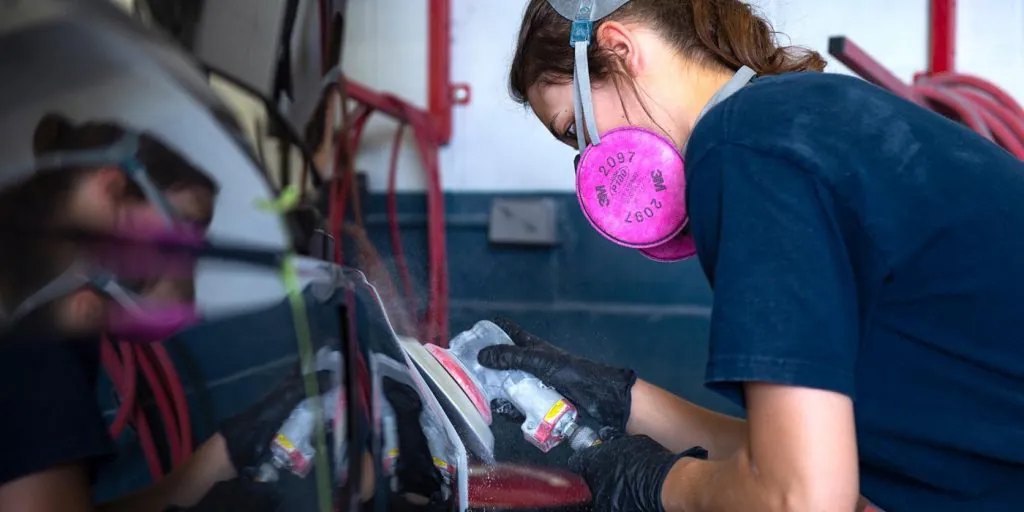

One of the leaders in the development of co-operative education at the college level in Canada, Fanshawe College has more than 70 co-op programs as part of its commitment to deliver career-focused programming with real-world applications, with an average co-op employment rate of 96 percent. Work semesters are spaced out through the academic program, typically running four months in duration with a pay rate that is usually the same as entry level workers at the participating employer.
What Students Are Saying
Gurshabad, Digital Communications Management“As a Fanshawe College’s Digital Communication Management program graduate, I can confidently say that this institution has been a game-changer for my career. The program’s focus on practical skills and industry relevance set Fanshawe apart. The faculty’s real-world expertise and commitment to our success translated into a learning experience that seamlessly blended theory with hands-on application. This balance deepened my understanding of digital communication and equipped me with the tools needed to thrive in the professional arena. Fanshawe’s modern facilities and emphasis on innovation create an environment that mirrors the fast-paced nature of digital communication. The career services provided invaluable connections, enabling me to participate in internships and networking events that directly influenced my career trajectory. The sense of community at Fanshawe is palpable. A diverse student body, supportive staff, and a focus on extracurricular activities contribute to a well-rounded and enjoyable college experience. In summary, Fanshawe College is not just an educational institution; it’s a dynamic launchpad for a career in digital communication. Highly recommended for those seeking a concise and impactful educational experience. ”
What Sets Fanshawe’s Co-op Program Apart
Co-op students do a pre-employment training program that includes information about careers related to their program, industry standards and workplace adaptation. Students are also paired with a Fanshawe co-op consultant and career services consultant who can provide personalized guidance throughout the co-op search, application and interview process, as well as through the work term.
Fanshawe also stands out for its Entrepreneurial and Freelance Co-ops, unique program structures designed for self-starter students seeking to chart their own industry experience independently.
Locations
London, Ontario
Carleton University


Carleton differentiates its co-op program through its proximity to government agencies, renowned research agencies, and high-tech companies in the nation’s capital. Students also get longer work terms to provide more in-depth experience, alternating study terms at Carleton with four, eight, twelve or sixteen month work terms. For those wishing to expand their horizons beyond Ottawa, Carleton will help students land co-op placements across the country and around the world.
What Sets Carleton’s Co-op Program Apart
The school offers co-op for both undergraduate and graduate students, including engineering, cognitive science, information technology, industrial design, environmental and climate change studies, political science and public policy and administration. Students are supported by career specialists and take a co-op prep course before they embark on their first work term.
Locations
Ottawa, Ontario
University of Ottawa


Co-op programs at the University of Ottawa have been running for more than 30 years and are available in 90 undergraduate and graduate programs. It boasts an employer network of more than 4,000 companies.
What Sets UOttawa’s Co-op Program Apart
Like Carleton, UOttawa has an edge because of its proximity to government. Employers participating in co-op with UOttawa include federal government departments, municipal and provincial government offices, not-for-profit organizations, educational institutions, Crown corporations, NGOs, private businesses and high-tech companies. Students can do placements locally in the nation’s capital, across Canada or abroad.
Students can also develop entrepreneurial skills through entrepreneurship internships and co-op placements with the Loh Entrepreneurship Experience Scholarship.
Locations
Ottawa, Ontario
Trent University


Co-op at Trent University is aimed at providing meaningful, purposeful, and career-boosting learning opportunities to help students succeed as they enter the workforce. Based in Peterborough, Ontario, with a satellite campus in Oshawa, Ontario, Trent has designed their co-op program so that students can graduate with a degree and 12 months of paid work in less than four years – the same amount of time as doing a degree alone.
What Sets Trent’s Co-op Program Apart
The school offers 29 co-op streams across the sciences, social sciences and humanities. Subjects with a co-op option include ancient Greek and Roman Studies, business administration, criminology, conservation biology, media studies and philosophy.
Locations
Peterborough, and Oshawa, Ontario
 Editorial Team
I’m so excited to see what Canada’s best co-op programs of 2023 have to offer! I’m a recent college graduate and I’m looking for a co-op program to help me gain some experience in my field of
Co-op programs truly bridge the gap between academic learning and real-world experience. They give students a valuable head start in building both professional skills and confidence. It’s a model that every institution should consider expanding for the future of education.
Co-op programs are such a valuable bridge between academics and real-world experience. They allow students to apply classroom learning in professional settings while building skills and connections that enhance their career prospects after graduation.
Canada’s co-op programs are a great way for students to gain real industry experience while studying. They help bridge the gap between classroom learning and future career opportunities.
Canada’s co-op programs provide students with a valuable combination of academic learning and paid work experience. They help build practical skills, expand professional networks, and improve career prospects after graduation