


Ask any parent waiting for a daycare spot and you’ll hear the same thing: Canada doesn’t have enough Early Childhood Educators.
With the nationwide rollout of $10-a-day childcare, demand for licensed spaces has surged—and so has the need for trained ECEs to staff them. Early Childhood Educators are the foundation of Canada’s early learning system, supporting children from birth to age five in the years that shape lifelong learning, health, and social development. They work across childcare centres, preschools, kindergarten classrooms, community programs, and home-based settings, combining play-based education with developmental support and family engagement.
Statistics Canada reports roughly 208,000 people working as early childhood educators and assistants as of 2021, yet centres nationwide continue to face acute staffing shortages. National data show that vacancies in childcare roles nearly doubled between 2019 and 2023, standing in the way of expanding access to affordable placements. In short: trained ECEs are urgently needed.
That demand is beginning to translate into stronger career prospects. While pay varies by province and employer, average ECE wages are typically in the low-to-mid $20s per hour, with higher earnings and better benefits increasingly available in not-for-profit centres, school-board-affiliated programs, and leadership or inclusion roles.
Education is one of the strongest predictors of earning potential for ECEs. Completing an approved ECE diploma or a degree in early childhood or child development expands job options, increases earning potential, and opens pathways into specialization, supervision, and program leadership.
CourseCompare’s ranking of ECE courses and certification programs reflect where early learning in Canada is headed. Using labour-market data, institutional research, and input from educators, employers, and graduates, we assess curriculum strength, hands-on training, delivery models, and career outcomes to identify the programs preparing ECEs for a system that is growing, funded, and essential.
Here is the list of the Best Early Childhood Education Programs in Canada for 2026.
CourseCompare’s annual school rankings are determined using a process that considers several core metrics and principles. Read more about our methodology here.
Conestoga College

Conestoga College is a leader in polytechnic education, delivering a full range of career-focused education, training and applied research programs to prepare students for success in the new knowledge economy and promote economic prosperity across Ontario.
What Students Are Saying
Kristen Chan, Bachelor of Early Learning Program Development (Honours)“Lots of work-integrated (WIL) learning and amazing community feel to this program at Conestoga. Invaluable experience in a kindergarten classroom topped off excellent classroom training by first-rate professors in this bachelor's degree program. Highly recommended. ”
What You’ll Learn
Conestoga’s Early Childhood Education diploma builds core skills for working directly with children in licensed early learning settings. Students study child development, play-based curriculum, observation and documentation, inclusion, health and safety, and professional practice. Learning is reinforced through four field placements in child development centres, kindergarten classrooms, early learning programs, and community agencies.
The Bachelor of Early Learning Program Development (Honours) takes those foundations even further. The degree focuses on curriculum leadership, program design, applied research, community partnerships, and policy. Students complete advanced course work and multiple practicum or co-op terms that prepare them for roles shaping early learning programs at a systems or community level.
Program Options
The two-year diploma prepares graduates to become Registered Early Childhood Educators in Ontario and to work directly with children and families in early learning environments.
The four-year honours degree is suited to learners who want broader responsibility, including program coordination, curriculum development, research, or community and policy roles. Paid co-op work terms and applied projects are built into the curriculum.
Diploma graduates and practicing ECEs may qualify for advanced standing into later years of the degree after an assessment by the program. Bridging applicants must contact the program area to determine eligibility and entrance options, as all applicants are assessed on a case-by-case basis.
Locations
Kitchener-Waterloo, Ontario
Humber Polytechnic


Humber Polytechnic is one of Canada’s largest polytechnic institutions, known for applied education, strong industry partnerships and extensive work-integrated learning across its Toronto campuses. The school combines classroom study with simulation labs, research activity, and community partnerships that give students direct exposure to real early learning environments. Humber’s North Campus and the Humber Arboretum support much of the ECE program’s hands-on training, including land-based learning and practice in the on-site inclusive childcare centre.
What Students Are Saying
Mina M., Children's Mental Health“This was a great online course for an ECE working during the day. The pandemic has been hard on everyone, but kids have struggled due to social isolation. Learning more about mental health issues facing my kids has made me a much better educator and allowed me to create thoughtful new programming at my childhood centre in Toronto. ”
What You’ll Learn
Humber’s Early Childhood Education diploma prepares students to support children from birth to age 12 through a curriculum grounded in play-based learning, observation, and inclusive practice. Students study how children develop across physical, cognitive, social, and emotional domains and learn to design responsive environments that reflect diverse cultural, developmental, and family contexts.
Coursework includes Responsive Relationships in Inclusive Environments, Children, Play and Creativity, Child Development from prenatal stages to age six, Curriculum Design, and Two-Eyed Land-based Play and Co-Learning. The land-based course is taught in partnership with Indigenous Elders, Knowledge Holders, and faculty at the Humber Arboretum, applying the principles of Etuaptmumk (Two-Eyed Seeing).
Students also have access to an on-site inclusive childcare centre, a natural outdoor play space, hands-on learning labs, and Humber’s ECE Resource Centre.
Field experience is a core component of the program. Learners complete 500 to 600 placement hours over three semesters in settings such as licenced childcare centres, EarlyON Child and Family Centres, full-day kindergarten classrooms, community programs, and home-based environments. Each semester involves a new placement to ensure exposure to varied age groups, program models, and teaching approaches.
Program Options
Humber offers multiple pathways for completing the diploma:
- January intake (fast-track): Four consecutive semesters, including the summer
- May intake: Approximately 20 months, with one summer break between semesters three and four
- September intake: Two academic years with a summer break between semesters two and three
Students can also participate in study-abroad opportunities, including a semester in Odense, Denmark, where academic credits are transferable toward the Humber credential. International work placements may also be available, with bursaries offered to eligible students.
Locations
Toronto, Ontario
University of Guelph-Humber
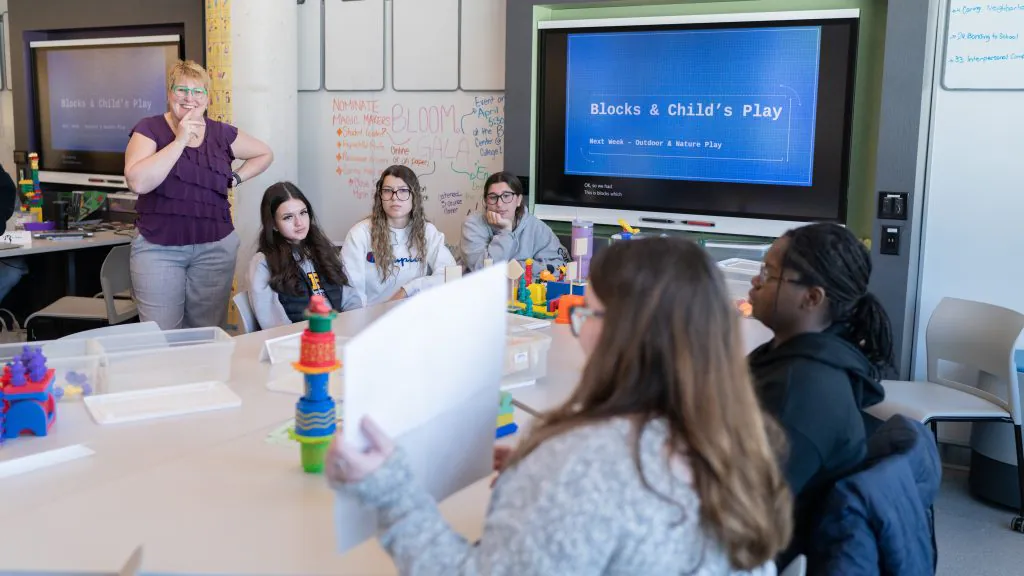

The University of Guelph-Humber is a joint venture between the University of Guelph and Humber Polytechnic, offering integrated programs that award both a university degree and a college diploma. Its Early Childhood Studies program leads to an Honours Bachelor of Applied Science from the University of Guelph and an Early Childhood Education diploma from Humber Polytechnic, giving graduates the legal ability to work as an ECE right away.
What You’ll Learn
Guelph-Humber’s four-year Early Childhood Studies program explores children’s development from prenatal stages through age 12. Students study physical, cognitive, emotional, and social development, along with how relationships, environments, culture, and community shape learning and well-being. The curriculum also covers mental health, inclusive and culturally responsive practice, child advocacy, and the thoughtful integration of technology in early learning settings.
Applied learning is built into every year. Students complete more than 800 hours of workplace experience across a range of settings, which may include early learning and care programs, children’s mental health centres, primary school classrooms, therapeutic environments, hospital child life units, and community organizations.
Program Options
In third year, students may choose one of three specializations or continue with a generalist path:
- Children’s Futures – Focuses on forward-looking, ethical, and innovative approaches to supporting children in changing social and technological environments. Courses include Ethics & Privacy with Children, Technology & Innovation, and Designing for the Future.
- Infant & Child Mental Health – Examines the factors that shape social-emotional development from infancy through early childhood. Coursework includes Developmental Neuroscience, Social Epigenetics, and Grief & Loss.
- Pathway to Child Life – Prepares students for roles in pediatric healthcare settings and aligns with coursework required for Certified Child Life Specialist eligibility. Courses include Development in Adolescence, Introduction to Child Life, and Grief & Loss.
Locations
Toronto, Ontario
Algonquin College


Algonquin College is one of Ontario’s largest colleges, with campuses in Ottawa, Pembroke and Perth. Its Early Childhood Education (ECE) Ontario College Diploma prepares students to work with children from birth to age 12 in licensed childcare, early learning programs, and community settings. The program is offered in multiple delivery formats to meet the needs of full-time students and working professionals.
What Students Are Saying
Jennifer C., Early Childhood Education (Intensive)“I studied at the Pembroke campus where I found my calling! The community of professors and students is close and the curriculum balances the practical and theoretical side of things very well with in-class lectures and many workshops. I also loved that I got three field placements, which is more than other programs. Everyone is working to support your success here and send you off into a secure and in demand job where you get to care for and help develop children. Dream come true. ”
What You’ll Learn
Algonquin’s ECE curriculum blends theory with applied learning, focusing on child development, observation and documentation, play-based curriculum design, family engagement, and inclusive practice. Students learn how to plan, implement, and evaluate early learning experiences that support children’s cognitive, social, emotional, and physical development.
All students complete two supervised field placements, working in licensed childcare programs, early learning centres or school-based environments. These placements allow students to apply course concepts, practice professional communication, and develop confidence working with infants, toddlers, preschoolers, and school-age children.
Program Options
Algonquin offers several pathways to complete the ECE diploma: Full-time on campus (Ottawa or Pembroke), Full-time online, or Part-time online. The content and credential are the same across all formats; the difference is scheduling and delivery style.
Algonquin also offers the Honours Bachelor of Early Learning and Community Development, a four-year degree for students interested in leadership roles, program development, or work in community, social service or educational settings. Diploma graduates may receive transfer credit toward the degree.
Locations
Ottawa, and Pembroke, Ontario
Centennial College


Centennial College, Ontario’s oldest public college, delivers career-focused programs across its campuses in Scarborough and East York. Its Early Childhood Education (ECE) diploma program is designed to prepare graduates for frontline roles in licensed childcare, early learning programs, school-age settings, and community organizations.
What Students Are Saying
Mélissa Lee“Best college experience one could ask for. Terrific faculty and selection of programs for individuals looking to reach their highest potential and develop /sharpen very practical skills, all in the heart of Scarborough. Priceless. ”
What You’ll Learn
Centennial’s Early Childhood Education (ECE) diploma covers child development, observation and documentation, curriculum design, family engagement, and inclusive practice for infants, toddlers, preschoolers and school-age children. Students learn to plan and implement play-based, responsive programs while supporting the diverse needs of children and their families.
A key feature of the program is access to two on-campus lab schools: the Ashtonbee Campus Early Learning Centre and the Progress Campus Early Learning Centre. These centres give students opportunities to observe and participate in high-quality childcare environments and apply course concepts under the guidance of experienced educators.
Centennial combines classroom learning with applied activities and supervised placements, giving students practical skills in communication, program planning, documentation, and professional practice.
Program Options
The ECE diploma is offered in full-time and part-time through the School of Community and Health Studies. Both formats lead to the same Ontario College Diploma and meet the educational requirements for registration with the College of Early Childhood Educators (RECE designation).
Locations
Toronto, and Scarborough, Ontario
Toronto Metropolitan University


Toronto Metropolitan University (TMU) is a public research university located in downtown Toronto. Its School of Early Childhood Studies offers one of Canada’s most established degree programs in early learning, combining academic study, research experience and extensive field education.
What You’ll Learn
TMU’s Bachelor of Arts in Early Childhood Studies provides a comprehensive understanding of development from birth to age eight. Students examine biological, psychological, and social perspectives on early childhood, and build skills in curriculum design, inclusive practice, family support, arts-based learning, literacy, and disability studies.
Field education is a core component. Students complete a placement every year in settings such as licensed childcare programs, EarlyON centres, public schools, special needs programs, family resource centres and children’s hospitals. TMU also offers opportunities for international placements and research involvement.
Students graduate prepared to:
- plan and evaluate early learning environments
- design inclusive programs for children with disabilities
- observe, assess and document development
- use creative and therapeutic approaches (art, music, play, communication supports)
- advocate for children and families
- work collaboratively across multidisciplinary teams
TMU houses two research and practice hubs that enrich the program: the Early Learning Centre, a licensed lab school, and the Gerrard Resource Centre, supporting families and community learning.
Program Options
TMU offers multiple pathways into the BA in Early Childhood Studies:
- Four-year full-time program for students entering from high school
- Full-time or part-time Direct Entry for graduates of accredited ECE diploma programs (final two years of the degree)
- George Brown–TMU bridge pathway, where students complete a George Brown ECE diploma followed by two years at TMU and graduate with both credentials
TMU is also the only university in Ontario offering a 16-month consecutive BA/BEd pathway, letting ECS students earn their BA at TMU and then complete a Primary/Junior BEd through York University. This combined route allows graduates to enter the teaching workforce sooner than students in traditional teacher education programs.
TMU also offers a Master’s of Early Childhood Studies for graduates pursuing advanced or specialized roles.
Locations
Toronto, Ontario
George Brown Polytechnic
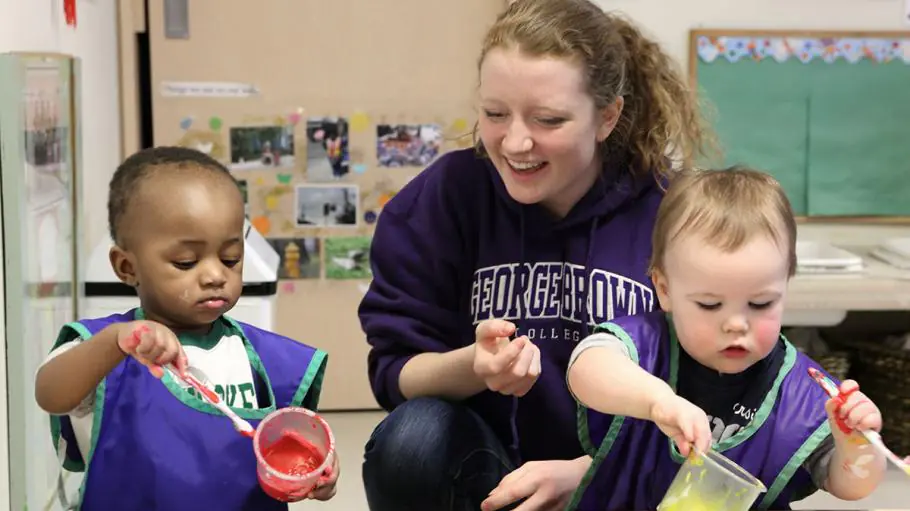

George Brown Polytechnic is located in downtown Toronto and offers one of the most extensive Early Childhood Education ecosystems in Canada. Its School of Early Childhood operates 13 college-managed childcare lab schools, the largest network of its kind in Ontario. These centres model the practices taught in class and give students access to real learning environments throughout their studies. The college also partners with more than 150 community organizations, including school boards, childcare centres, hospitals, family resource programs, and social service agencies.
What Students Are Saying
Jane Kim, Early Childhood Education Program (Accelerated)“This program is all hands-on all the time. The lessons and strategies I learned in the classroom helped prepare me for the exact challenges I faced in the classroom. Instructors were dedicated and empathetic. Best of all, there were more available field placements than there were students. Early childhood educators can't go wrong at George Brown in my opinion. ”
What You’ll Learn
George Brown’s Early Childhood Education programs combine foundational theory with ongoing practical experience. Students study child development, observation and documentation, inclusive practice, play-based curriculum design, family and community engagement, and professional practices for working with children from infancy through age 12. Practical learning takes place through supervised field placements and in the college’s 13 lab schools, where students engage directly with children in licensed early learning environments.
Program Options
George Brown offers several ECE pathways through its School of Early Childhood:
Early Childhood Education Diploma:
- A standard two-year Ontario College Diploma for students entering directly from high school or elsewhere.
- Offered in classroom and some online formats, with required field placements.
- Meets educational requirements for registration as a Registered Early Childhood Educator (RECE) in Ontario.
- A 16-month continuous diploma program (four consecutive semesters including summer).
- Same credential as the standard diploma, delivered in a condensed timeframe.
ECE (Fast-Track):
- Designed for applicants who already hold a related diploma or degree.
- Completed in approximately 10 months plus orientation.
ECE Consecutive Diploma/Degree (TMU Partnership):
- A four-year combined pathway in partnership with Toronto Metropolitan University.
- Students graduate with both the George Brown ECE Diploma and a Bachelor of Arts in Early Childhood Studies from TMU.
ECE Consecutive Diploma/GBC Degree:
- A four-year integrated program where students earn a George Brown Honours Bachelor of Early Childhood Education while completing the diploma curriculum. Practical placements are integrated throughout.
Honours Bachelor of Early Childhood Leadership (Fast-Track):
- For students who already hold an ECE diploma and wish to complete a degree with leadership focus.
- Emphasizes supervision, program design, advocacy and professional leadership.
George Brown also offers a part-time ECE diploma stream for learners balancing study with work or other commitments. All diploma streams include supervised placement hours that are required for RECE eligibility.
Locations
Toronto, Ontario
Mohawk College


Mohawk College in Hamilton offers a well-established Early Childhood Education program that blends classroom learning with hands-on experience through its dedicated ECE Living Lab and extensive community partnerships. The program prepares graduates to work with children from birth to age 12 in early learning and care settings across Ontario.
What You’ll Learn
Mohawk’s ECE diploma focuses on developing the knowledge and practical skills needed to support children’s growth and learning. Students study:
- child development and behaviour
- intentional, play-based program planning
- observation, documentation and reflective practice
- inclusive and responsive relationships with children and families
- legislation and guiding principles in Ontario’s early years system
Coursework includes subjects like Responsive Care for Infants and Toddlers, Child Development and Behaviour, Curriculum Design, Family Dynamics, and Health, Safety, and Nutrition. Learning is reinforced through supervised field placements in licensed childcare programs, family and community agencies and school-based early years environments.
Program Options
Mohawk currently offers two active pathways to earn the ECE diploma:
- ECE Diploma: The standard program delivered over four semesters, with scheduled breaks.
- Fast-Track ECE: A continuous-study option that allows students to complete diploma requirements more quickly by studying through summer terms.
Mohawk’s one-year Intensive ECE option is not being offered for the current academic cycle.
All diploma pathways meet the educational requirements for registration with the College of Early Childhood Educators (RECE).
Locations
Hamilton, Ontario
Canadore College


Canadore College, located in North Bay with additional campuses in Parry Sound, offers Early Childhood Education programs designed to prepare students for work with children from infancy through school age. The college emphasizes hands-on, activity-based learning and maintains strong relationships with local childcare and community settings.
What Students Are Saying
Nancy Leblanc, Early Childhood Education Intensive (Accelerated)“A wonderful local option for anyone in northern Ontario. Very good facilities, excellent teachers and I had no trouble finding a field placement and a job after graduation. With degree inflation, some of the students had BA's in education and came to Canadore to get certified. Something to keep in mind for those of you unsure about which path to take. I have since moved into a management role at a private centre. ”
What You’ll Learn
Canadore’s ECE curriculum focuses on child development, inclusive practice, play-based learning, communication skills, and family engagement. Students learn to design, implement and evaluate programs for infants, toddlers, preschoolers, kindergarten-aged children, and school-aged groups.
Course areas include:
- Language and Literacy Development
- Socio-emotional Development
- Health, Safety and Nutrition
- Curriculum Planning
- Special Education and Inclusive Strategies
- Outdoor and Environmental Learning
Students participate in supervised field placements that help them apply theory in real early learning environments and develop professional competence.
Program Options
Canadore offers two ECE diploma programs and an apprenticeship:
- Early Childhood Education Diploma: A full ECE diploma program for students entering directly from high school or other fields.
- ECE Intensive (Accelerated): A condensed program for applicants who already hold a Bachelor of Education or a related bachelor’s degree. Completed in one year, including a minimum 175-hour field placement.
- Child Development Practitioner Apprenticeship: A work-based apprenticeship pathway combining paid experience with college-level training for those employed in the sector.
All ECE diploma pathways meet the educational requirements for registration with the College of Early Childhood Educators.
Locations
North Bay, Ontario
University of British Columbia (UBC)

UBC is a global centre for teaching, learning and research, consistently ranked among the world’s top public universities.
UBC’s Faculty of Education offers the coursework required for the BC Early Childhood Education Assistant and BC ECE Basic Certificates, which are the provincial qualifications for working in licensed early childhood programs for children from birth to five. Students complete the prescribed courses online and, after finishing the program, apply to the BC ECE Registry for certification.
What You’ll Learn
UBC’s Faculty of Education offers several undergraduate and graduate programs focused on the early years (children from birth to age nine). ECED programs allow teachers, early childhood educators, and other early childhood education professionals to inquire into their work with young children and offers opportunities to explore issues in early childhood research, theory, and practice.
UBC’s BC Early Childhood Education Assistant & Basic Certificate program is offered 100 percent online, with practica in the Lower Mainland, allowing students the flexibility to work and manage other responsibilities while preparing for their career in Early Childhood Education.
Program Options
UBC’s early childhood programs examine learning and development from birth through the early primary years. Students explore child development, observation and documentation, play-based learning, inclusive and culturally responsive practice, children’s rights and the policy framework that guides early learning in British Columbia.
The BC ECE Assistant and Basic Certificate programs are delivered fully online, with in-person practica completed in licensed early childhood settings across the province. This structure gives students flexibility while they build foundational knowledge and gain supervised experience in real learning environments.
UBC also offers programs such as the Infant Development and Supported Child Development Certificate and the Early Years Education Diploma, which support specialization and professional development. Students may pursue an Education minor with an early childhood focus or continue on to related graduate programs (MEd, MA, MSc) in early childhood education and development.
Locations
Vancouver, British Columbia
Georgian College


Georgian College works with industry and community partners to offer applied, career-focused programs across Central Ontario. Its Early Childhood Education diploma emphasizes hands-on learning, supported placements, and strong connections with local early learning and care organizations. Their Early Childhood Education programs are available across several campuses in Central Ontario, along with a fully online part-time option for students balancing work, family or other commitments.
What Students Are Saying
Tania Walker, Early Childhood Education“Great school! The best school I've attended. Awesome program choices and great professors. Very friendly staff! Completed the ECE program and found work before I even graduated. ”
What You’ll Learn
Georgian’s ECE diploma prepares students to support the learning and development of children from birth to age 12. Students learn to design and implement play-based programs, observe and document development, create inclusive learning environments, and build responsive relationships with children and families.
Coursework includes:
- Child Development
- Inclusive and Responsive Caregiving
- Observation and Documentation
- Social-Emotional Learning
- Creative Expression and STEAM
- Partnerships with Families and Communities
- Ethics and Advocacy in ECE
Placements provide supervised experience in licensed early learning programs, giving students the opportunity to apply theory in real settings and build confidence in their professional role.
Program Options
Georgian offers its ECE diploma full-time and part-time.
- Early Childhood Education (Full-Time): Includes classroom study and two in-person field placements in licensed early learning settings.
- Early Childhood Education (Part-Time, Online):
- Designed for working professionals or students needing flexibility
- All coursework delivered online
- Two supervised 280-hour in-person placements (minimum 500 hours total) with options for full-time 7-week placement blocks or 14-week part-time placements
- Personalized learning plans available
- Up to 75 percent of credits may be granted through PLAR or transfer credit for eligible students
Locations
Orillia, Orangeville, and Owen Sound, Ontario
Loyalist College

Loyalist College sits on a 200-acre campus in Belleville and serves communities across the Bay of Quinte region. The college offers more than 70 diploma, certificate, and apprenticeship programs across community services, health, media, trades, and applied sciences. Its Early Childhood Education program is one of its longest-running community service offerings.
What You’ll Learn
Loyalist’s ECE program combines child development theory with practical experience in early learning environments. Students learn to design and implement developmentally appropriate, play-based curriculum for infants, toddlers, preschoolers and school-aged children. The program emphasizes inclusive practice, partnerships with families, communication, observation and documentation, evidence-informed programming, and the ability to adapt learning experiences to diverse needs.
Students complete multiple field placements in community early learning programs, gaining hands-on experience working with children, educators and families.
Program Options
Loyalist’s Early Childhood Education diploma program is offered in person on the Belleville campus and in a part-time/online format that allows learners to balance study with work or other commitments. Both delivery options lead to the same Ontario College Diploma and meet the requirements for registration with the College of Early Childhood Educators (RECE).
Locations
Belleville, Ontario
Red Deer Polytechnic

Red Deer Polytechnic, formerly Red Deer College, has served learners in central Alberta since 1964 and became a degree-granting polytechnic in 2018. The institution offers certificates, diplomas, applied degrees, apprenticeships, and micro-credentials, with a strong focus on workforce-ready education.
What You’ll Learn
Red Deer Polytechnic’s Early Learning and Child Care programs prepare students to work with children from infancy through school age. Coursework focuses on child development, guiding behaviour, inclusive practice, health and safety, curriculum planning, and play-based learning. Students also learn how to support children with diverse needs and work effectively with families and community partners.
Practicum placements are a core part of the program and give students the chance to apply theory in licensed early learning settings. Many students complete their placements in their home communities, and these experiences often lead directly to employment after graduation.
Program Options
Red Deer Polytechnic offers ECE diplomas and certificates, including:
Early Learning and Child Care Diploma: A two-year program designed to prepare graduates for professional practice in early learning settings. It is available on a full-time or part-time basis and can be completed on campus, online, or through a blended format. Students who choose the full-time on-campus or blended option may complete the diploma in one year by studying over three consecutive terms. The program includes two supervised practicum placements in licensed early learning environments such as daycares, family day homes, preschools, and after-school programs. The first year of the diploma is equivalent to the Early Learning and Child Care Certificate.
Early Learning and Child Care Certificate: A one-year foundational credential for those entering the field and also serves as the first year of the diploma for students who continue their studies. The certificate can be taken full- or part-time, either on campus or online, and includes supervised practicum experience in licensed early learning and childcare settings.
For students who have completed the certificate or first year of the diploma and are already working in the field, Red Deer Polytechnic offers the Early Learning and Child Care Workplace Advancement Specialization. This pathway is equivalent to the second year of the diploma and allows students to complete more than half of their learning in the workplace, with the remaining coursework delivered online. Assessment is competency-based and takes place within an Early Lear development ning and Child Care centre.
Red Deer Polytechnic also offers an Early Childhood Education Leadership Development Certificate, a stand-alone post-credential program designed for experienced early learning professionals seeking to move into supervisory, mentoring or leadership roles. This certificate focuses on leadership , program quality, and professional practice and does not replace an ELCC diploma.
Locations
Red Deer, Alberta
Bow Valley College


Bow Valley College is Calgary’s only community college, and a primary entry point into early childhood education for learners across the city and surrounding region. Its Early Childhood Education and Development programs emphasize applied skills, practicum experience, and alignment with Alberta’s certification framework.
What You’ll Learn
Bow Valley College’s Early Childhood Education and Development programs focus on preparing students for day-to-day practice in licensed early learning and childcare settings. Students develop a solid understanding of child development from infancy through early childhood, along with the skills needed to support learning through play, relationships, and responsive programming.
The curriculum emphasizes play-based and emergent learning, inclusive practice, behaviour guidance, health and safety, and working in partnership with families and communities. Learning is grounded in professional standards and expectations for early childhood educators in Alberta.
Applied learning is a core part of the program. Students gain experience through hands-on activities and supervised practicum placements, allowing them to connect classroom learning to real early learning environments and build confidence before entering the workforce.
Program Options
Bow Valley College offers two Early Childhood Education and Development credentials:
- Early Childhood Education and Development Certificate: A foundational credential designed for Alberta residents entering the early learning field. The program can be taken full-time or part-time and is delivered primarily online, with most courses offered asynchronously. Students complete two required practicum placements in licensed early learning and childcare settings in Alberta. Graduates of the certificate are eligible for Level 2 Early Childhood Educator certification from the Alberta Government.
- Early Childhood Education and Development Diploma: A four-term program that builds on foundational early learning knowledge and prepares graduates for leadership and supervisory responsibilities within early learning environments. The diploma is offered full-time or part-time, with flexible delivery options that include classroom-based and online learning, as well as daytime and evening classes. Each term includes a required practicum placement completed in person at a licensed childcare program in Alberta.
Graduates of the diploma meet the educational requirements for Level 3 Early Childhood Educator certification from the Alberta Government (formerly known as Child Development Supervisor) certification.
Both programs incorporate applied learning through supervised practicum placements, and students in the diploma program also use Bow Valley College’s dedicated ECED learning lab, a structured environment designed to support observation, curriculum planning, and responsive practice.
Locations
Calgary, Alberta
Fanshawe College


Fanshawe College serves the greater London region through applied, career-focused education with strong ties to industry and community partners. One of Ontario’s largest colleges, Fanshawe delivers programs across campuses in London, St. Thomas, Woodstock, and Clinton, along with flexible online options. The college serves tens of thousands of learners annually across Southwestern Ontario and beyond.
What Students Are Saying
Phyllis Carter, Early Childhood Education (Fast Track)“When I signed up for this program, I wasn't sure if becoming an ECE was going to be the best fit for me. I was worried that there would be so much to learn. The professors made everything so interesting and I learned so much. They helped to bring the confidence out in me. The program showed me how my creative side can be a huge benefit to working with children. I found work in my new career within a weeks of graduating. ”
What You’ll Learn
Fanshawe’s Early Childhood Education programs prepare students to work with children in the early years through a blend of theory, practical coursework, and supervised field placements. Students study child growth and development, curriculum planning, inclusive and responsive practice, and the professional role of early childhood educators within families and communities.
Graduates are prepared for employment in a range of early years settings, including licensed childcare centres, early learning and family centres, before- and after-school programs, and school board–affiliated programs. The curriculum reflects current practices in Ontario’s early learning sector and emphasizes ethical practice, collaboration, and reflective learning.
Program Options
Fanshawe offers multiple pathways in Early Childhood Education:
- ECE diploma, available on campus or online
- Fast-Track ECE diploma, designed for students with relevant prior education or experience
- Accelerated ECE diploma, a continuous full-time option completed in a shorter timeframe
Graduates of the ECE diploma may be eligible, after completing a required bridge, to enter Level 5 of Fanshawe’s Honours Bachelor of Early Childhood Leadership program.
There is also a four-year Honours Bachelor of Early Childhood Leadership degree designed for those seeking supervisory, administrative, or leadership roles in early years settings. The program includes applied learning, research, community-based field placements, a 14-week internship, and a final-year capstone research project, with a focus on leadership, pedagogy, and systems-level practice.
Locations
London, Clinton, St. Thomas, and Woodstock, Ontario
Sheridan College


Founded in 1967, Sheridan College is a well-established Ontario postsecondary institution known for applied learning and strong connections to professional practice. Sheridan educates more than 40,000 students annually across three campuses in Oakville, Brampton, and Mississauga, with a long-standing reputation in early learning, education, and community services.
What Students Are Saying
Shweta Nanda, Early Childhood Education (Intensive)“Whenever we call at sheridan college, they respond quickly and always assist us properly. Teachers and staff are very cooperative and helpful. ”
What You’ll Learn
Sheridan’s Early Childhood Education program focuses on building practical, professional skills grounded in current research and Ontario early learning frameworks. Students study child growth and development, curriculum theory, and the roles and responsibilities of early childhood educators across a range of settings.
Coursework covers programming for infants, toddlers, preschoolers, and school-age children, with attention to inclusion, observation, documentation, and responsive practice. Students also examine professionalism, ethics, advocacy, and collaboration with families and community partners.
Learning is reinforced through hands-on instruction in Sheridan’s Early Childhood Education lab and through three mandatory field placements. Placements may take place in licensed childcare centres, before- and after-school programs, kindergarten classrooms, or other approved early learning environments, allowing students to apply theory in real settings and build confidence before entering the workforce.
Program Options
Sheridan offers multiple pathways in Early Childhood Education:
- Early Childhood Education Ontario College Diploma, offered as a standard two-year program
- Early Childhood Education (Intensive), a condensed one-year diploma option with a full course load delivered over two semesters
Sheridan also offers an Honours Bachelor of Early Childhood Leadership, a five-semester degree program focused on preparing early childhood educators for leadership and supervisory roles.
While students may apply directly to the bachelor’s program without prior ECE credentials, Sheridan recommends completing the ECE diploma first. Diploma graduates can apply their credits toward the degree, complete four required transition courses, and then advance directly into Year 3 (Semester 5) of the bachelor’s program.
Locations
Brampton, and Oakville, Ontario
Seneca Polytechnic

Seneca Polytechnic (formerly Seneca College), is a multi-campus public institution serving the Greater Toronto Area and Peterborough, Ontario. Seneca offers full- and part-time programs at the degree, diploma, certificate, and graduate levels, with a strong focus on applied learning and career pathways in education, health, and community services.
What Students Are Saying
khaula khakwani, Early Childhood Education (Accelerated)“My experience with Seneca College was Ok. It has multiple programs and program delivery options which made it easy to fix my schedules. the instructors are great, very understanding, and knowledgeable. My skills and management were enhanced and became very professional. However, the service hub and other departments made navigation complicated but you can solve your problem by communicating regularly. Lack of organization and communication can make the whole experience very difficult. So my studies went smoothly. I am happy to be part of Seneca team and the community is very supportive especially SSF and other student organizations. ”
What You’ll Learn
Seneca’s Early Childhood Education diploma program prepares students to support the physical, cognitive, social, and emotional development of children from infancy through school age. The curriculum emphasizes inclusive, developmentally appropriate practice aligned with Ontario’s early learning frameworks.
Students study child development, curriculum and pedagogy, philosophy of early childhood education, communication, working with families, and foundational administrative concepts. Coursework focuses on observation, documentation, and reflective practice, helping students understand how learning environments shape children’s development.
Seneca supports applied learning through two on-campus lab schools, which are licensed childcare centres. These lab schools serve as model environments where students observe professional practice and participate in programming as part of their coursework.
Program Options
Seneca offers several Early Childhood Education pathways:
- Early Childhood Education Diploma: Delivered in a standard format, with the option for students to reduce overall completion time by studying through the summer.
- Early Childhood Education (Accelerated): A one-year intensive diploma option designed for students with relevant prior postsecondary education.
Graduates who meet GPA requirements may be eligible to continue their studies at Seneca, including progression into the Honours Bachelor of Child Development, a four-year degree that prepares graduates for expanded roles across early learning, health, and social service sectors.
Seneca also offers additional early childhood–related credentials, such as Infant and Early Child Mental Health and Child Development Practitioner, supporting career pathways beyond traditional early childhood education settings.
Locations
Toronto, and Peterborough, Ontario
Niagara College

Located in Ontario’s Niagara Region, Niagara College offers more than 130 programs across its Welland Campus and Daniel J. Patterson Campus in Niagara-on-the-Lake. The college is known for applied, community-focused education and strong partnerships in the early learning and community services sectors.
What You’ll Learn
Niagara College’s Early Childhood Education Diploma prepares students to support children’s learning, development, and well-being from infancy through school age. The curriculum emphasizes child development, inclusive and responsive practice, and the creation of safe, engaging early learning environments in partnership with families and communities.
Students develop skills in designing and facilitating play-based and inquiry-driven programming that supports children’s cognitive, social, emotional, and physical development. The program also addresses professional responsibilities, ethical practice, and collaboration within Ontario’s early learning system.
The program includes over 600 hours of practical field placement experience, completed concurrently with coursework. Field experiences are supported by a dedicated field placement officer. The program meets the registration requirements of the College of Early Childhood Educators (Ontario).
Students also have the option to graduate with three additional certificates: the Hanen Learning Language and Loving It certificate; the Quality Child Care Niagara certificate; and the Red Cross Anti-Bullying Certificate.
Program Options
Niagara College offers the Early Childhood Education Diploma with two distinct program options. Both lead to the same Niagara College credential, meet the registration requirements of the College of Early Childhood Educators, and include the full field placement hours.
- Delivered by Niagara College faculty, based at the Welland Campus, with a planned transition to the Niagara-on-the-Lake campus effective September 2026. This option follows the standard Ontario ECE curriculum and prepares students to work across a range of early learning settings.
- Delivered in partnership with Six Nations Polytechnic at the Brantford Campus. Students complete the same diploma requirements while learning through a program grounded in Hodinohsó:ni’ and Indigenous pedagogy. Coursework and field experiences emphasize learning in both Indigenous and Canadian contexts, with additional cultural supports and community-based learning opportunities. This program also offers an international employment and field placement partnership in Thailand for eligible students.
Niagara College also offers a dual admission pathway to Niagara University (New York State), allowing eligible ECE students to pursue a Bachelor of Arts (Liberal Arts) aligned with elementary teacher education studies in the United States. This pathway supports students seeking further academic study or U.S.-based teaching credentials and does not provide Ontario teacher certification on its own.
There are also preferred admission pathways into the ECE diploma for graduates of select Niagara College preparatory programs, providing streamlined entry for qualified applicants.
Students interested in careers beyond early learning environments may also explore Niagara College’s three-year Child and Youth Care diploma.
Locations
Welland, and Brantford, Ontario
Capilano University


Capilano University attracts students from around the world and enrolls approximately 11,600 students each year, 8,300 in for-credit programs and 3,300 in non-credit courses. Through its School of Education and Childhood Studies, CapU offers a structured suite of early childhood education credentials aligned with professional practice and provincial licensing requirements.
What You’ll Learn
Capilano University’s Early Childhood Care and Education programs prepare students to work with young children in licensed early learning settings, with a strong emphasis on ethical practice, inclusion, and reflective pedagogy.
In the ECCE Diploma, students develop the knowledge and competencies required to support children from birth to age five, with attention to child development, curriculum design, observation and documentation, and professional practice. Coursework emphasizes culturally responsive and ethical pedagogical approaches, including consideration of local and global issues affecting early childhood education.
The curriculum is designed to meet the academic requirements of the BC Early Childhood Educator Registry. Depending on completed coursework, graduates may be eligible to apply for additional certificates such as ECE Certificate to Practice, Infant/Toddler Certificate to Practice, and Special Needs Certificate to Practice.
Field experiences are integrated throughout the program to support applied learning in licensed early childhood settings.
Program Options
Capilano University offers a tiered set of Early Childhood Care and Education credentials:
- Early Childhood Care and Education Certificate: An entry-level credential focused on foundational knowledge and practice.
- Early Childhood Care and Education Diploma: A comprehensive program preparing students for professional practice in licensed childcare and preschool settings. Graduates of the diploma are eligible to apply to CapU’s degree program.
- Bachelor of Early Childhood Care and Education: A four-year degree designed for those seeking advanced practice, leadership, or further academic study in early childhood education.
- Post-Baccalaureate Diploma in Early Childhood Care and Education: Designed for students who already hold a bachelor’s degree and wish to qualify as Early Childhood Educators in British Columbia.
Capilano University also offers specialized ECCE certificates and a pathway for international students enrolled in English for Academic Purposes, allowing progression into ECCE programs once language requirements are met.
Locations
North Vancouver, British Columbia
Vancouver Community College

Vancouver Community College (VCC) is a public community college located in Vancouver, British Columbia. Founded in 1965, VCC is one of the province’s oldest and largest community colleges, serving learners through two urban campuses and a strong focus on workforce-ready, applied education.
What You’ll Learn
VCC’s Early Childhood Care and Education programs prepare students to work with young children in licensed early learning environments, with a strong emphasis on observation, reflective practice, and applied skill development.
Students study child growth and development, curriculum planning, inclusive practice, professionalism, and collaboration with families. Coursework integrates current research and frameworks used in British Columbia, including exposure to resources such as the Science of Early Child Development.
Hands-on learning is supported through VCC’s ECCE Lab, a dedicated instructional space designed to simulate early learning environments. The lab is used to practice curriculum planning, observation, documentation, and educator-led activities prior to and alongside practicum experiences.
All programs include supervised practicums, with on-site support from college instructors and qualified early childhood educators. These placements allow students to apply theory in licensed childcare settings and build confidence before entering the field.
Program Options
Vancouver Community College offers a laddered set of Early Childhood Care and Education credentials aligned with BC certification requirements:
- Early Childhood Care and Education Certificate: An entry-level credential that meets the academic requirements for ECE Certificate to Practice in British Columbia.
- Early Childhood Care and Education Diploma: A more comprehensive program that builds on the certificate and supports eligibility for additional certification, such as Infant/Toddler and Special Needs credentials, depending on completed coursework.
Programs are delivered in person, with some courses available in online or blended formats, depending on intake and program stream. VCC also delivers ECCE programming for international students, with curriculum aligned to the same professional and licensing standards.
Locations
Vancouver, British Columbia
University of Alberta


The University of Alberta is one of Canada’s leading public research universities, recognized nationally and internationally for teaching and research across education, health sciences, humanities, sciences, engineering, and business. In early childhood education, the university offers distinct pathways serving different learners, including francophone early childhood educators and practicing professionals seeking graduate-level study.
What You’ll Learn
At the Centre collégial de l’Alberta, located at Campus Saint-Jean in Edmonton, early childhood education programs are delivered entirely in French and are specifically designed for the francophone minority context in Alberta.
The curriculum is grounded in contemporary child development research and focuses on understanding the child as an individual learner developing within social, cultural, and linguistic environments. Emphasis is placed on language development, identity, and inclusion in multicultural francophone early learning settings. Instruction is delivered by faculty with extensive professional experience in francophone childcare centres and early childhood programs, particularly in minority-language contexts.
Separately, the University of Alberta also offers a graduate-level certificate in Early Childhood Education, focused on pedagogy, inclusive learning environments, and applied research for educators working with young children across a range of settings.
Program Options
The University of Alberta offers two distinct early childhood education pathways that serve different stages of professional development.
- Early Childhood Education Certificate, which leads to Government of Alberta Child Development Worker (CDW) certification
- Early Childhood Education Diploma, which builds on the certificate curriculum and leads to Government of Alberta Child Development Supervisor (CDS) certification
Both programs are offered at the Centre collégial de l’Alberta, located at Campus Saint-Jean, available through in-class or online study and are specifically designed for educators working in francophone and bilingual early learning environments.
The University of Alberta also offers a Graduate Certificate in Educational Studies – Early Childhood Education through its Faculty of Education. This post-degree certificate is intended for educators and professionals who already hold an undergraduate degree and want to deepen their understanding of early childhood teaching and learning. The program focuses on play-based pedagogy, inclusive and supportive learning environments, early literacy and mathematics, and reflective teaching practice, with an emphasis on how pedagogical decision-making contributes to improved learning outcomes for young children. Coursework is designed to be accessible for working professionals.
Locations
Edmonton, Alberta
York University

York University is one of Canada’s largest public research universities, with an annual enrolment of approximately 55,000 students and a strong national reputation in education, social sciences, and interdisciplinary research. Through its Faculty of Education and related academic units, York offers programs focused on the study of childhood, youth, and early learning from research-, policy-, and theory-based perspectives.
York is also home to the LaMarsh Centre for Child and Youth Research, a leading research hub supporting interdisciplinary work in child and youth health, development, education, relationships, and social policy. The university hosts the Alexander F. Chamberlain Speaker Series, which brings scholars and practitioners together to explore critical issues in childhood and youth studies.
What You’ll Learn
York’s early childhood–related programs focus on research, theory, policy, and interdisciplinary analysis, rather than professional educator training or certification. Students examine early childhood education as a field of study, exploring how learning, development, culture, policy, and social structures shape the experiences of young children and families. Emphasis is placed on critical inquiry, research methods, and the social contexts of education, rather than classroom-based teaching practice.
Program Options
York University offers graduate-level and undergraduate academic pathways related to early childhood and youth studies.
Graduate Diploma in Early Childhood Education: This program provides formal academic recognition for graduate students who complete a concentrated course of study focused on the education of young children from birth to age eight. This diploma is offered either concurrently with a master’s or doctoral degree in education or as a stand-alone diploma for eligible applicants. It is important to note that this program is academic in nature and does not lead to Early Childhood Educator certification or professional licensing.
At the undergraduate level, York offers the Children, Childhood and Youth Studies program, an interdisciplinary humanities-based degree. This program draws on fields such as sociology, psychology, anthropology, literature, history, and equity studies to examine childhood and youth within social, cultural, and global contexts. Students develop research, analytical, and applied skills relevant to child- and youth-focused organizations and may pursue careers or further study in areas such as advocacy, education policy, counselling, health and wellness, community development, and international work. The program includes research courses, applied learning opportunities, and an honours research project or practicum.
Locations
Toronto, Ontario
 Editorial Team
Right here is the perfect website for anyone who hopes to find ECE programs.Thank you for your guidance.
I’ll be starting in Conestoga’s Bachelor program in the fall. Thanks again for connecting me!
Hello, any information for ECE in Cambrian College? Thank you.
Hi Gem,
We would be happy to help you with information. If you would like to email us at hello@coursecompare.ca, we can arrange for you to speak to a Learning Advisor.
Thanks,
Nicole
Learning Advisor